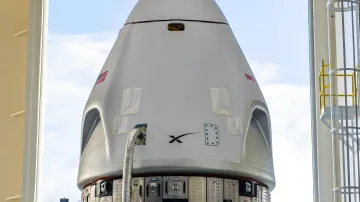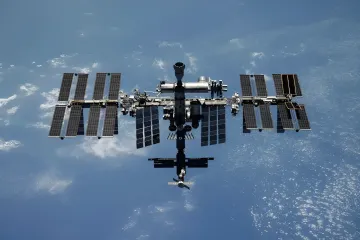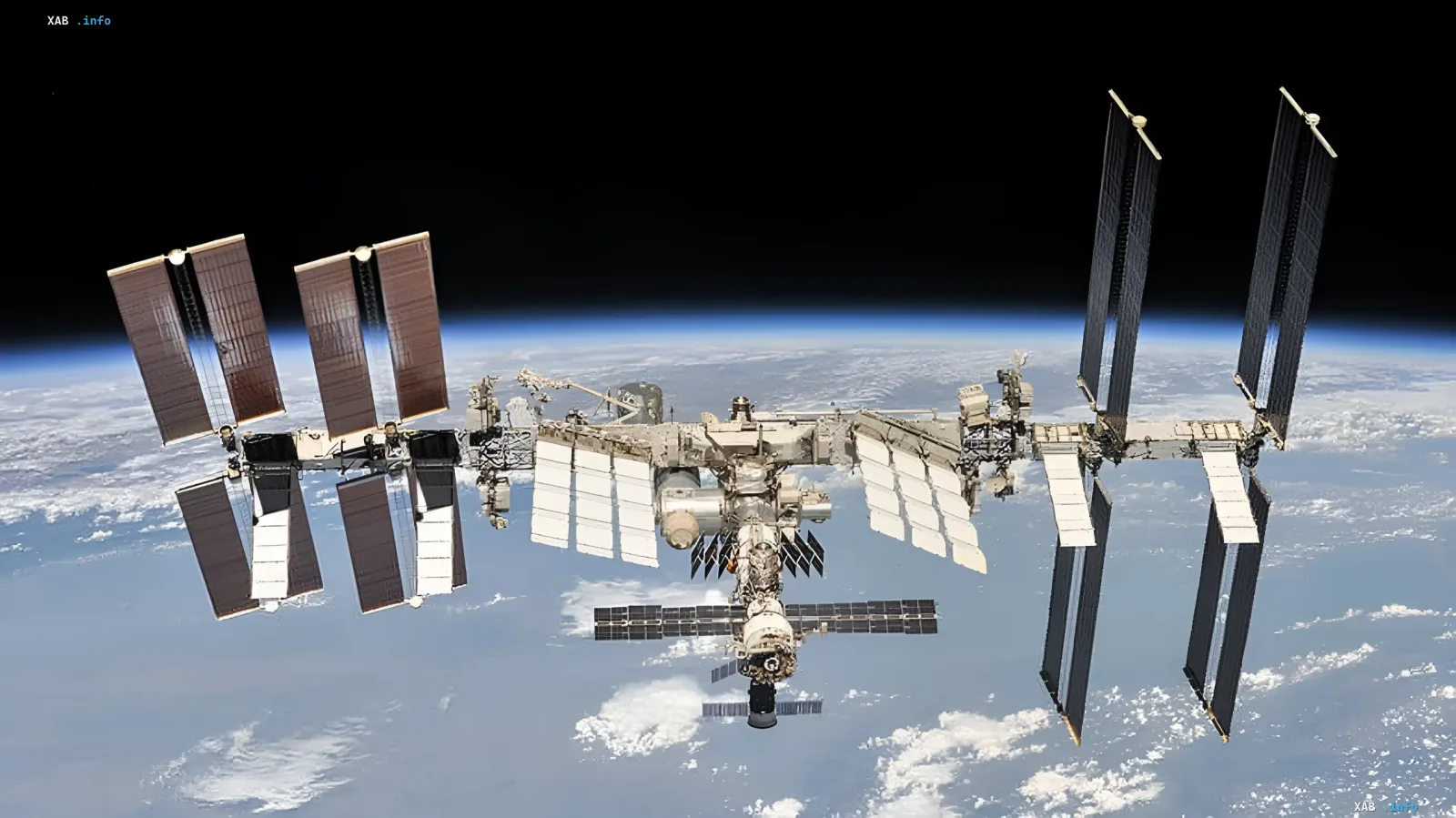
August 10, 2026. A turning point is arriving in the history of space exploration. The era of the International Space Station (ISS) — the largest artificial object that served as a symbol of international cooperation and advanced science for thirty years — is coming to an end. As reported by XAB.info, the final stage of deorbiting the station has been fully assigned to the United States of America. To implement this most complex task, the USA is actively developing a special spacecraft designed to ensure a safe and controlled descent of the giant structure into the atmosphere.
The Role of Russia and the Use of 'Progress' Ships
Although the main mechanical work of deorbiting the station falls on the American side, Russia plays a critically important role in ensuring the safety of the process. As reported by the commander of the Roscosmos cosmonaut corps, head of the Cosmonaut Training Center Oleg Kononenko, two Russian cargo ships 'Progress' are planned to be used to control the station's position and orientation in space.
These spacecraft will perform the functions of 'brakes' and stabilizers, holding the station in the required position before the final maneuver. According to experts, technical and organizational work is currently being conducted in strict coordination, and all deadlines are synchronized between Russian and American partners. This is one of the last examples of deep technical integration between two space powers.
Transition Strategy: From ISS to the Russian Orbital Station
The end of ISS operations does not mean Russia's withdrawal from orbit. On the contrary, it opens a new chapter in the history of Russian cosmonautics. According to approved plans, instead of the departing station, a new Russian Orbital Station (ROS) will begin to form in orbit. The first step will be the installation of a universal node module, which will become the core of the new structure.
The next stage will be the launch of the ROS science and power module. By 2030, these modules, as well as the multi-purpose laboratory module 'Nauka', which is already in orbit, will transition to independent flight, detaching from the departing ISS. Thus, Russia will ensure the continuity of its presence in near-Earth space.
Horizon 2034: Completion of the New Station Formation
According to long-term plans by responsible specialists, work on the full formation of the new Russian Orbital Station should be completed by 2034. This event will mark the beginning of a new technological era in world cosmonautics. The new station will feature a more modern architecture, adapted for the tasks of the next decade, including new scientific experiments and preparation for deep space missions.
Contradictory Data
In the context of preparations for deorbiting the ISS, there are certain discrepancies in the details of implementation. While Russian officials, including Oleg Kononenko, emphasize the readiness to use 'Progress' for orientation control, American sources (NASA) in a number of statements emphasize that the final impulse for deorbiting will be provided exclusively by a new American transport vehicle (Deorbit Vehicle). Some analysts point out inconsistencies in the dates of the final undocking of Russian modules; however, as of August 2026, the general schedule is synchronized.