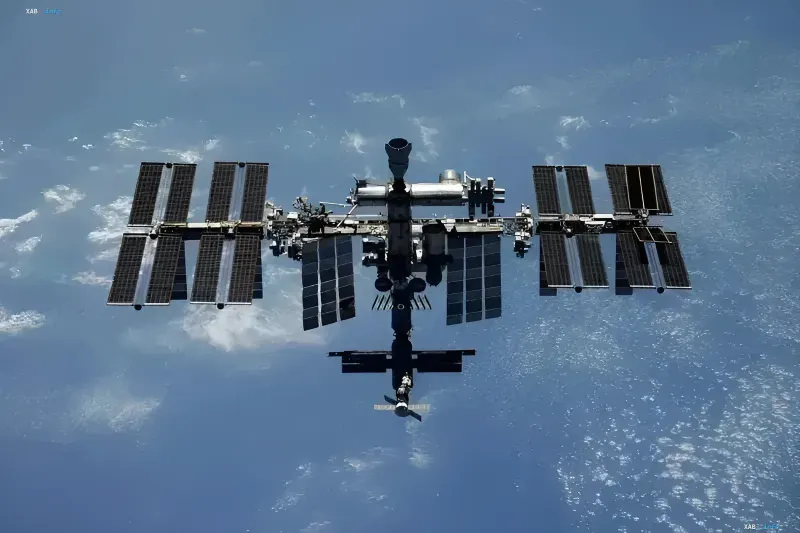
The United States National Aeronautics and Space Administration (NASA) has officially confirmed the extension of its agreement with the Russian state corporation Roscosmos regarding cross-piloted flights to the International Space Station. TASS reported this citing a statement by US space agency representative Joshua Finch. According to him, the extension of the agreement aims to ensure the continued uninterrupted operation of the orbital complex and protect the lives of crew members on board the station.
The Essence of the Extended Agreement
Under the updated document, NASA and Roscosmos have agreed to continue cross-flights on American crewed spacecraft and Russian Soyuz vehicles. As Finch clarified, the agreement does not involve financial settlements between the parties. It provides for delivering crews to the ISS and returning them to Earth, comprehensive mission support, including all necessary pre-flight preparation and training, flight control, as well as landing and search-and-rescue operations. Thus, each party undertakes the obligation for the full support cycle of the other's crew—from launch to landing.
Safety as a Priority
The NASA representative emphasized that cross-flights ensure the presence on the station of crews properly trained to perform critical maintenance work on the orbital complex, as well as spacewalks. Finch separately noted that the agreement protects crew members from unforeseen circumstances: problems with a particular spacecraft, serious medical situations among astronauts, or an emergency on board the station requiring the early return of the crew and its assigned spacecraft to Earth. In essence, cross-flights create a safety mechanism where each crew always has an alternative evacuation option.
Chronology of the Agreement
The head of Roscosmos, Dmitry Bakanov, stated at the end of October 2026 that the Russian-American cross-flight program to the ISS had been extended until 2030 at the request of the American side. At the same time, he reported the reached agreement as early as July of the current year, indicating a fairly long period of negotiations and condition coordination. Formal public confirmation from NASA came later, which is typically characteristic of large-scale interagency agreements where each party undergoes an internal ratification procedure before a public announcement.
Context: The ISS in the Post-Program Era
The extension of the cross-flight agreement until 2030 secures the continued joint operation of the ISS against the backdrop of neither side having announced the end of their participation in the project. For NASA, which is actively developing its own crewed programs under Artemis and commercial Crew Dragon missions, maintaining cross-flights remains a tool for risk diversification and ensuring continuous presence on the station. For Roscosmos, in turn, this confirms the role of Russian Soyuz spacecraft as one of the two main transport vehicles for delivering crews to the orbital complex. The agreement, operating without mutual financial settlements, also lifts part of the financial burden from both sides and simplifies crew training logistics.
What's Next
According to the extended document, cross-flights will be carried out at least until 2030. The specific mission schedule, crew compositions, and the distribution of launches between American and Russian spacecraft are generally approved during the planning stage of each individual expedition. It is expected that in the coming months, NASA and Roscosmos will publish updated crewed mission plans reflecting the new agreement. For ISS residents, the extension means maintaining the usual crew rotation schedule and no interruptions in the maintenance of scientific installations and station life support systems.