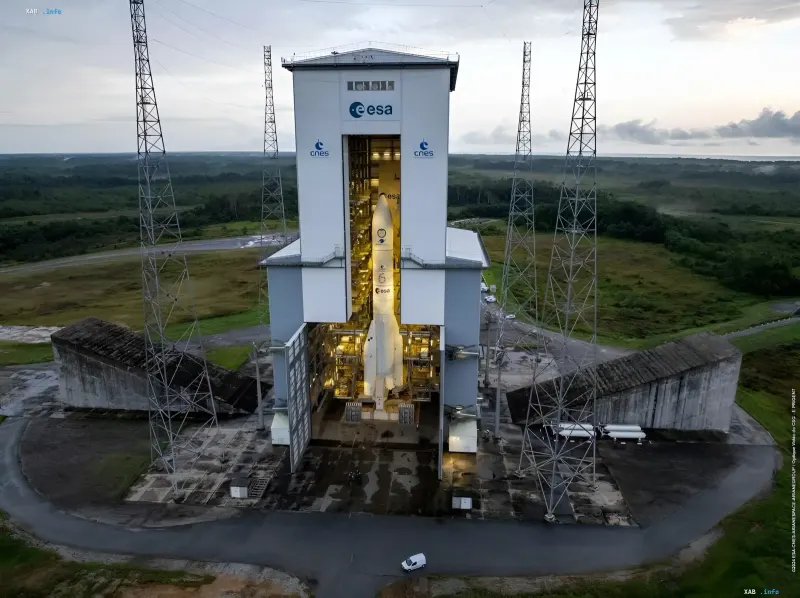
The European Space Agency (ESA) has put forward a proposal to create its own crewed space system, which will allow astronauts to be sent into orbit and returned to Earth without the mandatory participation of foreign operators. The preliminary cost of the project is estimated at approximately €10 billion. Its implementation will require a crewed spacecraft, launch infrastructure, and landing sites, which, according to preliminary data, will be located in French Guiana — where the Kourou spaceport already operates. The initiative is Europe's first step in decades towards restoring independent crew access to space.
Geopolitics and Dependence on NASA
ESA Director General Josef Aschbacher explained the need for the project by changes in the geopolitical situation and uncertainty regarding the future of American crewed spaceflight. According to him, relations with NASA remain good, but European countries need to take into account the possibility of changes in US policy, including potential restrictions on the participation of foreign astronauts in US flights. At the same time, the new programme, the agency's leadership emphasizes, is not intended to replace cooperation with NASA, but merely to complement it, creating a backup and independent channel of access to orbit for Europe.
Historical Context: From Hermes to Today
Europe's last attempt to create its own crewed system was under the Hermes project — the development of a spaceplane that was to compete with the American Space Shuttle. The programme was closed in 1992 during the development stage due to rising costs after the Challenger shuttle disaster. Since then, ESA has relied on external infrastructure: until 2022, the agency used both American and Russian systems to deliver its crews to orbit. Today, ESA has 11 astronauts, four of whom are scheduled to travel to the ISS in 2027 with NASA's assistance.
Economics: Money Will Stay in Europe
Aschbacher also points to the economic side of the issue: when using American services, a significant portion of European budget funds goes to US companies rather than supporting domestic industry. The development of an independent crewed flight system, according to the agency's plan, should create additional opportunities for European enterprises in the field of high-tech engineering and preserve the EU's technological independence in a strategic sector.
Roadmap: €280 Million and December 15 Decision
The head of ESA has already discussed the prospects of the programme with representatives of Japan and the United Arab Emirates. If on December 15, 2026, representatives of the 23 ESA member states support the initiative, the agency will begin preparatory work, which is expected to use €280 million freed up after the suspension of two joint projects with NASA — the Lunar Gateway station and the Mars Sample Return programme. A full discussion of the financing for the new programme is scheduled for the next ESA ministerial meeting in 2028, so the December decision will mark the beginning of project preparation rather than the approval of the full €10 billion expenditure.