State Corporation Roscosmos has announced its readiness to expand international cooperation and discuss the supply of space equipment, rocket engines, and the joint development of new space complexes with foreign states. According to media reports, this was stated by the head of the state corporation, Dmitry Bakanov, during a meeting with the heads of diplomatic missions. The statement was made in the form of an open proposal: the agency outlined a range of areas in which it is ready to work with foreign customers, from finished products to technology transfer and assistance in establishing national space industries.
Spectrum of Proposals: From Satellite Systems to Geoinformation Services
Among the main areas of cooperation, Roscosmos mentioned assistance to foreign partners in creating and modernizing national satellite communication systems, Earth remote sensing systems, and navigation infrastructure. It specifically noted readiness to provide geoinformation services and participate in projects for creating space rocket complexes. Thus, the offer covers not only the sale of finished products but also a full cycle of work—from design and modernization to the provision of services based on space data.
Focus on Technology Transfer and Production Localization
Technology transfer and production localization were named as a separate and essentially key area of cooperation. Roscosmos emphasized that it is interested not only in selling finished products but also in developing domestic space industries in partner countries. In particular, the state corporation is ready to help partners create national space agencies by providing expert and methodological support. This approach implies longer-term and deeper interaction than one-off equipment supply contracts.
Line of Rocket Engines as the Main Export Asset
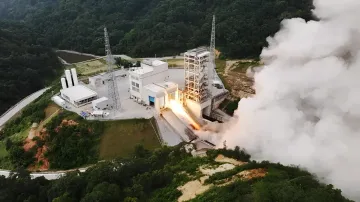
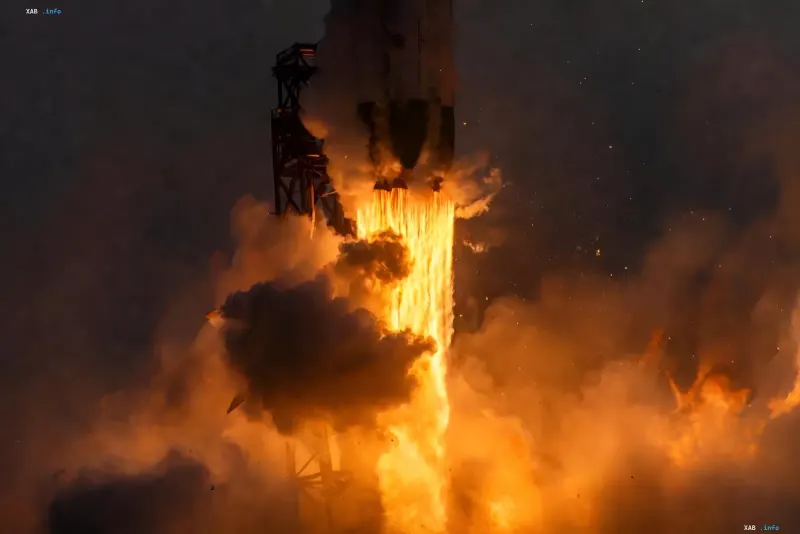
As a concrete proposal for foreign customers, Roscosmos highlighted its own line of rocket engines. Among the best-known are the powerful oxygen-kerosene RD-191 and RD-180, which, according to the state corporation, are used in the Angara and American Atlas V rockets, respectively. The RD-171MV engine with a thrust of about 800 tons, ranked among the most powerful liquid rocket engines in the world, was specifically mentioned. According to the agency, the RD-0124, designed for upper rocket stages and distinguished by high fuel efficiency, is of particular interest.
What This Means in Practice
Dmitry Bakanov's statement is in the nature of a public proposal and an expression of readiness for dialogue: it does not name specific partner countries, specific contracts, or timelines. Nevertheless, the list of areas—from satellite navigation and communications to technology transfer and production localization—shows that Roscosmos positions itself as a potential supplier not only of finished space equipment but also of the technological base for the development of national space programs. The implementation of these proposals, as in similar cases, will depend on subsequent negotiations with specific states and on the geopolitical context, which was not disclosed in the statement itself.