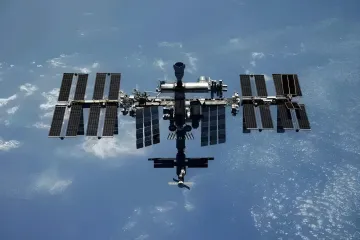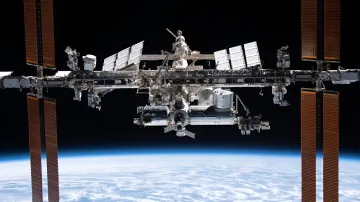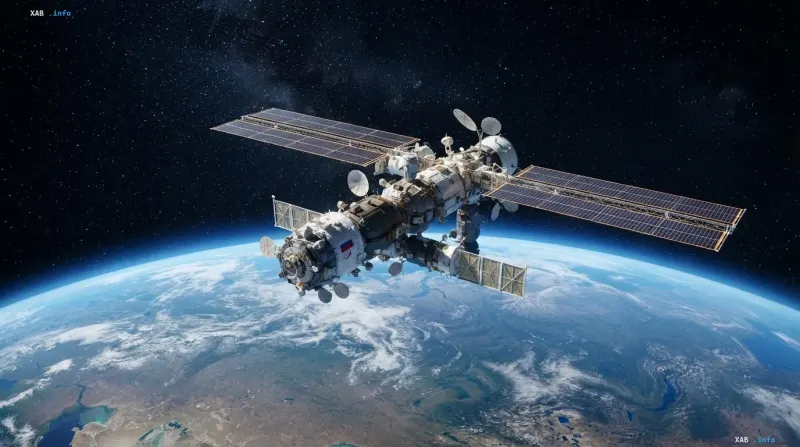
The Russian Orbital Station (ROS), which Roscosmos is developing under the "Space" national project, is designed from the outset as a platform with more flexible rules for international participation than the current International Space Station (ISS). According to ixbt.com, this was announced by the head of the state corporation, Dmitry Bakanov, in response to a question about the conditions for foreign partners on the new station. According to him, the ROS will not have the restrictions on working with foreign states that exist on the ISS.
Openness as a Competitive Advantage
By emphasizing the lack of restrictions, Bakanov effectively highlighted one of the key arguments in favor of the ROS: the station is intended to be a platform where partners from various countries can join without the procedural and political barriers that have formed around the ISS over its two decades of operation. This is particularly significant given that since 2022, a number of Western nations have effectively ended direct interaction with the Russian side in space, while the ISS remains the only active arena for joint work. For new participants — especially from countries outside the traditional "Western" sphere — the absence of restrictions could become a real incentive to join the ROS.
Cooperation with the USA on the ISS Continues
At the same time, Bakanov noted that Roscosmos continues to cooperate with the USA within the framework of the International Space Station, despite sanctions pressure. This confirms that the transition period, during which the ISS and ROS will coexist, remains operational: American and Russian sides maintain interaction channels for operating the current station, even when the political context around it has changed sharply. Thus, Roscosmos is pursuing two tracks simultaneously—maintaining the functioning of the ISS while building its own station, which it positions as more accessible to the international community.
Project Timelines and Financial Framework
The context of Bakanov's statement should be viewed in conjunction with the general parameters of the program. According to Newizv.ru, the "Space" national project was launched in Russia in 2026 with a budget of about 4.5 trillion rubles until 2036, the key direction of which is the creation of a national orbital station. Gazeta.ru points out that the first module of the ROS is scheduled to be launched into orbit in 2028. Therefore, the statement about the station's openness to foreign states was made against the backdrop of an already launched and funded project, rather than at the concept stage.
Expert Assessments and Risks
In the expert community, there is varying degrees of optimism regarding the project's timelines. Igor Marinin, a member of the Roscosmos Public Council, expressed confidence, as reported by Overclockers.ru, that Russia would manage to build the ROS before the decommissioning of the ISS. However, the same report notes that NASA's position on timelines and the format of interaction differs, indicating a discrepancy in assessments of readiness and the transition period. Nevertheless, the very fact that the Roscosmos leadership is publicly establishing a "no restrictions" principle for foreign partners suggests that the station is being planned not as a closed national object, but as a tool to expand Russia's international presence in low Earth orbit.