Head of Roscosmos Dmitry Bakanov announced that the agency has begun practical preparations for the energy component of the lunar program. According to him, the company has launched three interconnected areas of work: standardizing the heavy landing platform, assembling the components of the future installation, and creating a charging and distribution station for the lunar nuclear power plant. The statement marks the transition of the project from conceptual discussions to the stage of engineering development for specific units.
Three Fronts of Work: Platform, Assembly, Energy Distribution
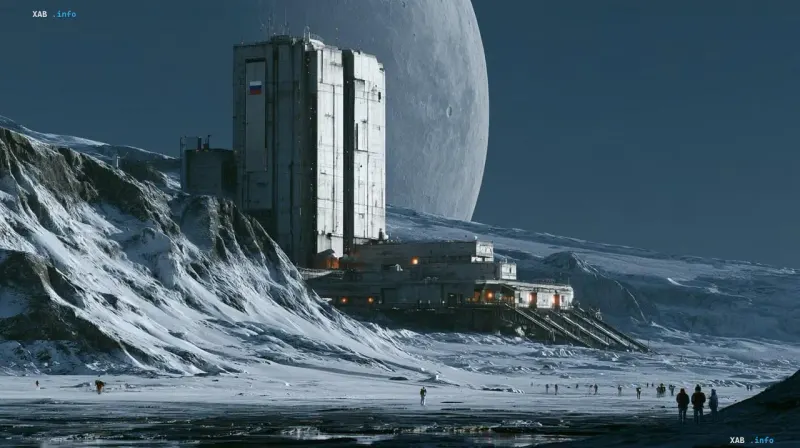
As follows from the statement by the head of Roscosmos, this is not a single task, but a complex of objectives. Standardization of the heavy landing platform involves aligning its characteristics with a single standard, which simplifies the delivery of large-sized modules to the lunar surface. Assembly of components means determining the relative positioning and connections between individual blocks of the future station. The third area is the creation of a charging and distribution station, meaning a system responsible for accumulating and distributing generated energy to consumers on the lunar facility. The combination of these works forms the infrastructural framework upon which the power plant itself will eventually be installed.
Five Reactor Options: What Rosatom is Studying
The choice of the nuclear power plant design for the Moon, according to previously reported data, falls under the responsibility of Rosatom. The agency plans to determine the final design of the installation in 2027 and begin its construction. At the current stage, specialists are considering five different options for the future power unit, which, according to available information, differ significantly in their energy conversion principles. This means that the final architecture of the station — from the type of thermal-to-electric energy conversion to the general layout — has not yet been finalized and will be chosen based on the results of a comparative analysis of several concepts.
Charging and Distribution Station: Role in the System
Special attention is deserved by the charging and distribution station mentioned by Bakanov. In lunar conditions, where there is no traditional power grid, such a station serves as a hub that accepts energy from the generating circuit, accumulates it, and distributes it to consumers — from life support and communication systems to scientific equipment and machinery. Its creation at the stage preceding the launch of the NPP itself is logical: the distribution infrastructure must be ready to connect the generator, the design of which will be finally approved by Rosatom in 2027. Thus, the work of Roscosmos and Rosatom is proceeding in parallel and is synchronized in terms of deadlines.
Timelines and the Place of Lunar Energy in the Program
The combination of statements outlines the chronology: engineering preparation of the landing platform, layout, and distribution station is underway now, while the choice among five reactor design options and the start of its creation are scheduled for 2027. This aligns with the overall logic of the lunar program, in which energy is considered one of the key elements determining the possibility of a prolonged presence on the lunar surface. For now, specific parameters of the future station — power, type of energy conversion, mass, and dimensions — are not officially disclosed, and their publication is expected as the comparative analysis of options concludes.