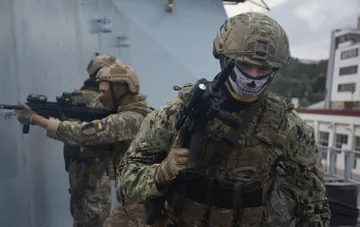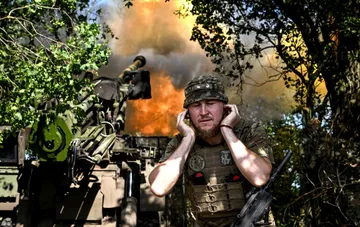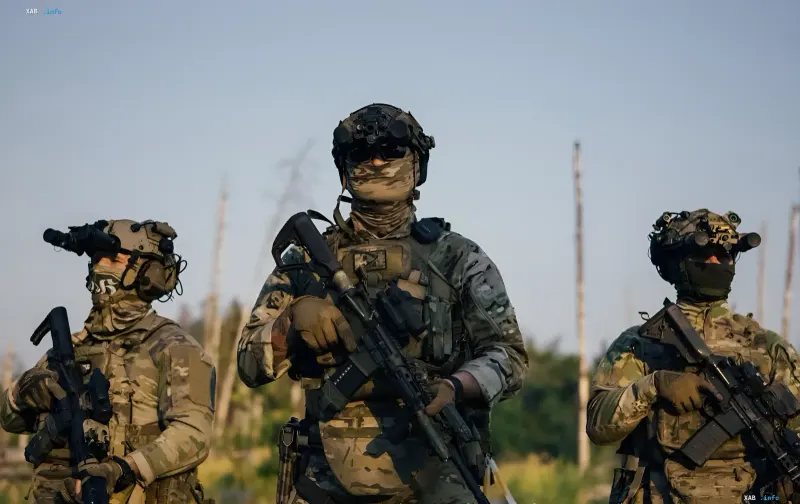
The Third Army Corps of the Armed Forces of Ukraine has published its first detailed report on the results of the offensive operation "Vivaldi," which is being conducted in the north of Donetsk Oblast. According to RBC-Ukraine, citing the corps' official Telegram channel, the first phase of the operation has de-occupied a total of approximately 75 square kilometers of territory, including the village of Serednie. The military emphasize that the bridgehead created allows them to prepare for further advance, while the defensive line in the corps' sector, in particular the Kharkiv–Slaviansk highway, remains under the control of Ukrainian forces.
Scale of the Liberated Territory
The corps' report compares the liberated area with major cities: the total 75 square kilometers, of which the village of Serednie accounts for about 10 sq. km, is, according to the military, larger than the area of Zhytomyr and comparable to the area of Chernihiv. The corps characterizes this result as the "first season" of the operation, i.e., as a completed phase of a multi-phase offensive rather than its final outcome. It is precisely this wording that indicates the command views "Vivaldi" as a prolonged campaign with successive waves of clearing populated areas.
The "Flag-Planters" Tactic and the Counter-Staff
A key feature of the fighting in the Third Corps' area of responsibility, according to the military, has been a tactic referred to in the report as "flag-planters" (flag-vtyky): small groups of the enemy, hiding in the gray zone and dressing in civilian clothing, delivered pinpoint strikes on Ukrainian positions and were meant to ensure the slow advance of Russian forces. To counter this tactic, a joint staff was established at the tactical level. The corps claims the measure proved effective: the enemy, it says, was forced to move its critically important logistics and supply links ever deeper into the rear, away from Ukrainian strikes.
Enemy Losses and Holding the Line
The report places separate emphasis on the enemy's material losses. The military describe the volume of abandoned and destroyed equipment and weapons in such a way that "if you gathered all this scrap in one place, it would form a hill the height of a five-story building" — an artificial elevation that, in their words, the enemy piled up for itself. At the same time, the corps stresses that, in parallel with the offensive, it continues to hold the defense in its sector of responsibility, and that the strategically important Kharkiv–Slaviansk highway remains under Ukrainian control, which, by the command's logic, limits the enemy's ability to maneuver and resupply.
Command and the Context of the Operation
Operation "Vivaldi" is being carried out against the backdrop of changes in command: on September 13, Brigadier General Dmytro "Redys" Prokopenko took over the "Azov" grouping of forces, which operates in Donetsk Oblast. Thus, the public report by the Third Army Corps on the first results of the offensive coincides in timing with the transfer of command to new leadership, giving the published report both an informational and a mobilizational character. RBC-Ukraine had previously reported that the corps had launched an offensive operation in the north of the oblast and had already cleared several populated areas.
Contradictory Data
All quantitative figures — 75 square kilometers, 10 sq. km for the village of Serednie, the comparisons with the areas of Zhytomyr and Chernihiv, as well as the assessment of enemy losses — are provided exclusively in the statement of the Third Army Corps itself and, at the time of publication, have not been confirmed by independent monitoring. The comparison with cities is rhetorical in nature and is not a geodetic measurement. Moreover, the term "first season" of the operation indicates that the total area of the planned offensive and its ultimate objectives are not disclosed in open reports, so comparing the claimed results with the actual situation on the front line remains a matter of assessment rather than a recorded fact. Various outlets (RBC-Ukraine, Korrespondent, Kochegarka, Strana) relay the same version from the corps without providing independent figures.