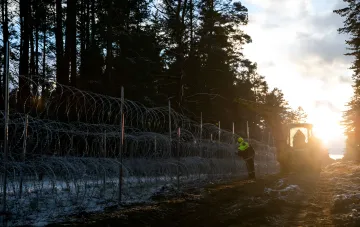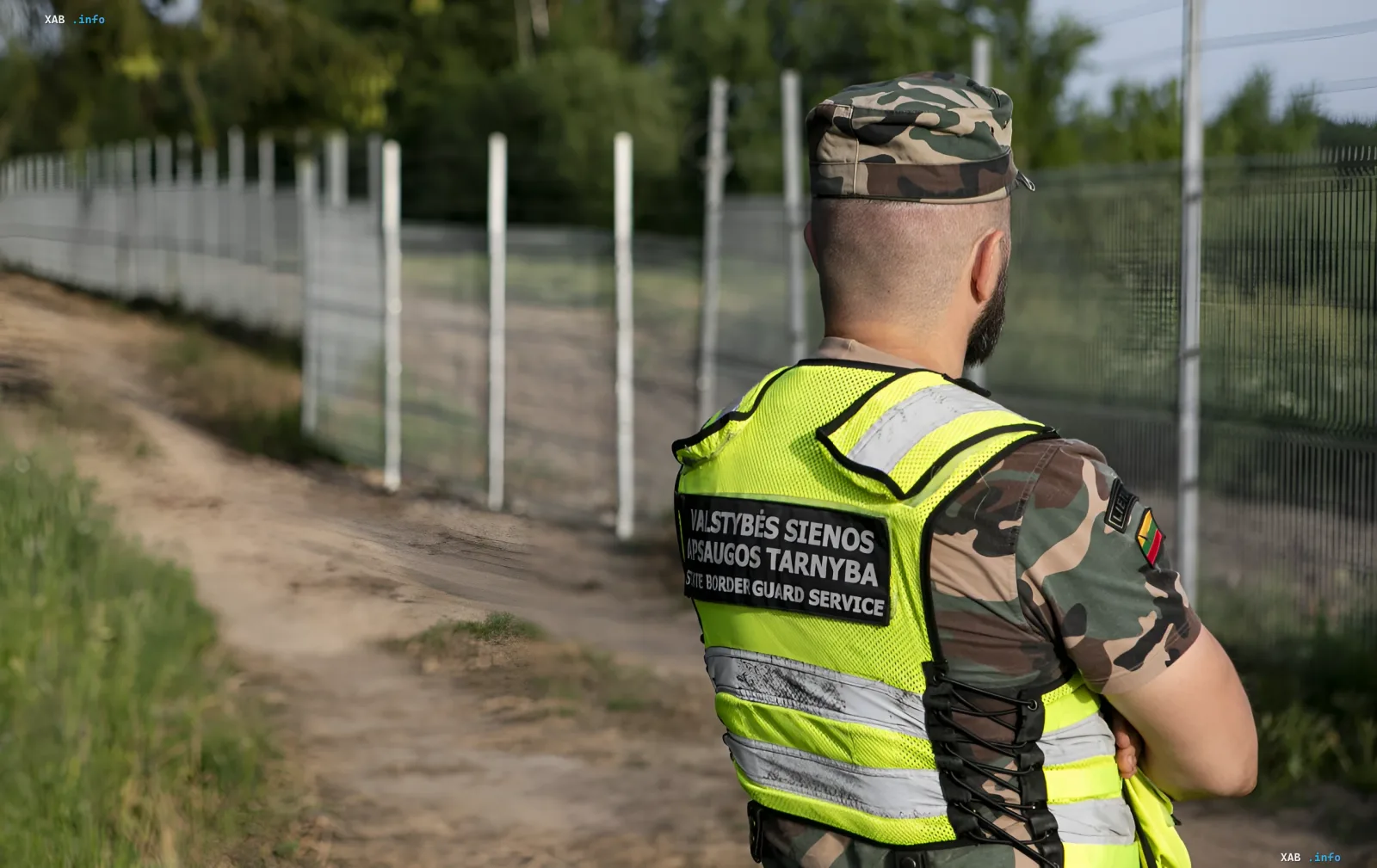
The situation on the Lithuanian-Belarusian border has intensified again. Lithuanian border guards have discovered another underground passage dug beneath the physical barrier. The incident occurred near the village of Latežeris, where officers of the State Border Guard Service (SBGS) identified an illegal communication at a depth of approximately 1.5 meters.
Details of the discovery
The underground passage extended from the territory of Belarus about 4 meters into Lithuania. The structure was reinforced with logs and planks, indicating serious preparation. The entrance on the Belarusian side was carefully camouflaged with fabric, but border guards managed to detect it.
The Lithuanian SBGS noted that the object was unfinished and did not have an exit beyond the state border. This means that illegal migrants or other individuals did not have time to use the tunnel to cross the border. After the necessary procedural actions were taken, the passage was filled with earth.
Increasing number of attempts
The object found in Latežeris is already the third tunnel discovered by the Varėna detachment of border guards in recent weeks. This indicates a systematic nature of attempts to illegally penetrate:
- On July 23, an unfinished tunnel 5 meters long was discovered near the village of Pščei.
- On July 26, an 11-meter underground passage was found inside the village of Pertakos, containing construction materials and buckets.
In total, since the beginning of the current year, the Lithuanian border guard service has recorded 12 attempts to illegally enter the country by digging underground passages from the territory of Belarus.
Legal consequences and geopolitical context
A pre-trial investigation has been launched regarding the discovery of the new tunnel. Those guilty of organizing or committing such actions face up to two years of imprisonment.
The situation on the border remains tense against the backdrop of constant security challenges. Previously, NATO noted that the Alliance is ready to intervene and deploy additional forces in Lithuania if provocations in the region lead to a critical situation.
Meanwhile, the Baltic states continue to increase pressure on aggressor states at the legislative level. In particular, Lithuania proposes to extend sanctions against Russians and Belarusians until the end of 2027, while the European Union is considering extending restrictions until 2028.