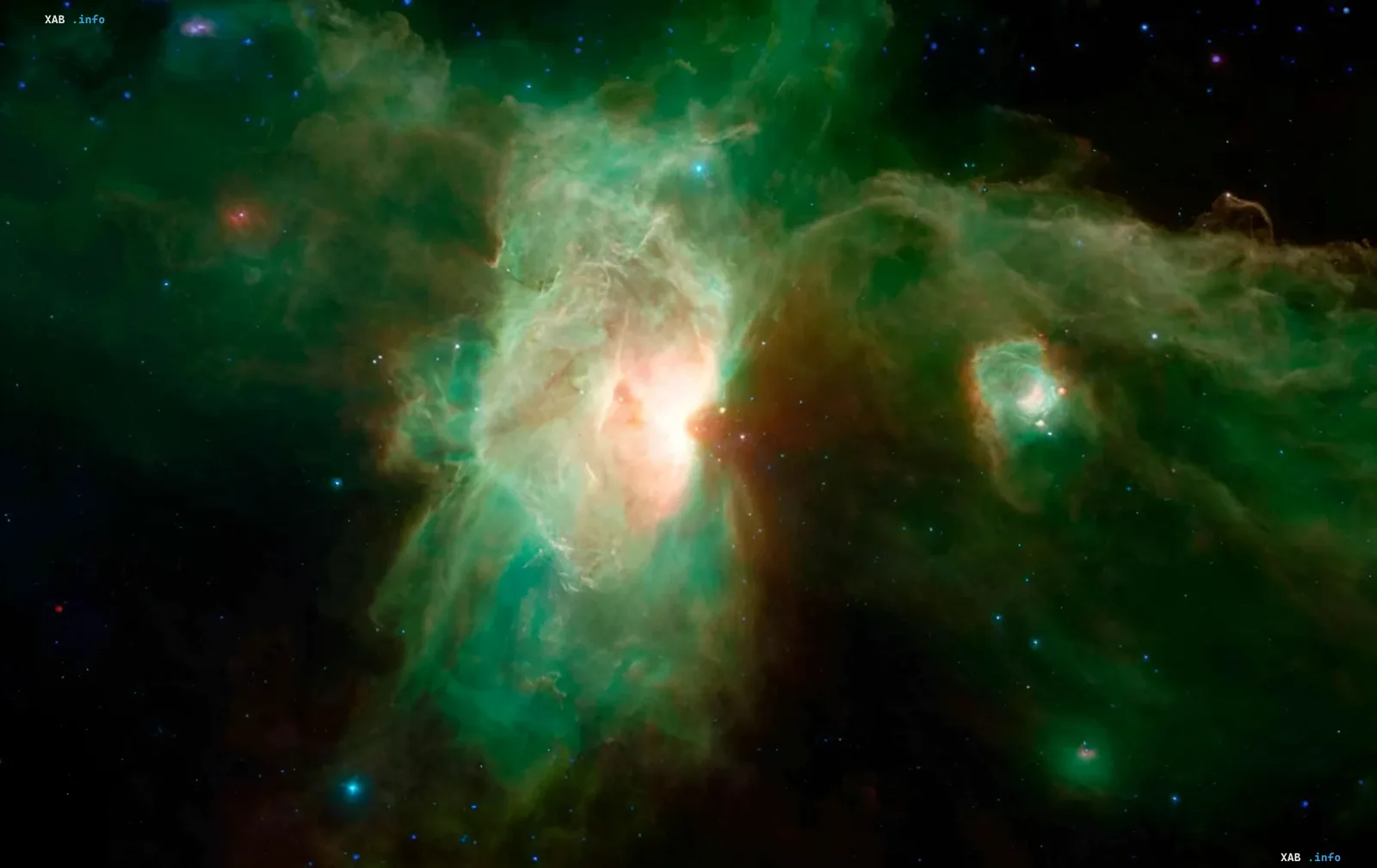
Antarctic ice has proven to be not just a climate archive, but also a record of cosmic events: in its ancient layers, traces of distant stellar explosions have been preserved, making it possible to trace the interstellar clouds the Solar System passed through over the last 80,000 years. This is reported by RBC-Ukraine, citing a study published in the scientific journal Physical Review Letters. The key "marker" was the rare radioactive isotope iron-60, which is ejected into space during supernova explosions and gradually settles on Earth's surface over time.
How ice became an archive of cosmic explosions
Traditional astronomy studies the light of distant objects using telescopes, but the analysis of Antarctic ice offers a fundamentally different approach — examining the remnants of stellar dust directly on Earth. Particles of this dust drift through the galaxy and gradually settle on the planet, accumulating in layers of Antarctic snow. This forms temporal chronological layers that are preserved for decades and millennia, recording changes in the flux of interstellar matter.
What the iron-60 measurements showed
In preliminary studies, scientists detected the presence of iron-60 in 500 kilograms of snow, sparking debate about its origin. To test their hypotheses, the authors isolated and analyzed atoms of the isotope from 300 kilograms of ice aged between 40,000 and 80,000 years. Using accelerator mass spectrometry, they found that the iron-60 levels in the ancient ice were significantly lower than those recorded in modern snow and oceanic sediments.
The Solar System's path through interstellar clouds
The change in isotope concentration occurred over a relatively short astrophysical timescale, ruling out the theory of a prolonged "residual trail" from ancient supernovae. The decrease in dust volume coincides with astronomers' calculations, according to which the Solar System entered the Local Interstellar Cloud between 40,000 and 124,000 years ago. The obtained data confirm that the structure of interstellar clouds is imprinted in Earth's geological record.
Contradictory data
The sources and the study itself contain nuances that should be taken into account. First, the detected amount of iron-60 was lower than theoretically expected for clouds formed directly as a result of a stellar explosion — this calls into question the simple interpretation of the data as a direct trace of a supernova. Second, the headlines and description of the study mention a timeframe of "80,000 years," whereas the Solar System's entry into the Local Interstellar Cloud is dated to a broader interval — between 40,000 and 124,000 years ago; these figures reflect different stages of analysis and different interpretations of the same process. Finally, two different sample masses are mentioned — 500 kg of snow at the preliminary stage and 300 kg of ice in the main part of the study, which corresponds to successive stages of the research rather than a contradiction.
What comes next
Scientists plan to continue studying deeper and older layers of Antarctic ice to definitively determine the origin of iron-60 and reconstruct the full history of the surrounding interstellar clouds. This approach turns ice cores into a unique tool of "cosmic archaeology," allowing telescopic observations to be supplemented with direct measurements of matter that has passed through the vicinity of the Solar System.