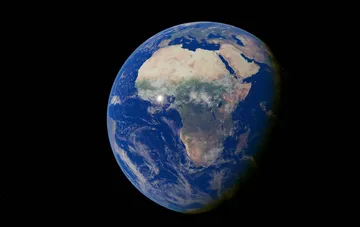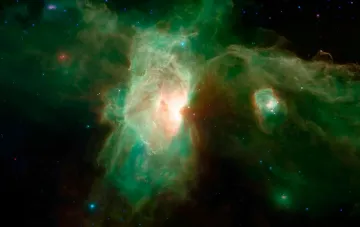
Planetologists have reached a conclusion that may reshape our understanding of Earth's place in the universe: habitable planets are capable of forming naturally, without a rare alignment of cosmic circumstances. Researchers arrived at this result after conducting more than 1,000 computer simulations of the formation of Earth-type planets. According to the scientists, there is no reason to consider the emergence of our planet an exceptional fluke — Earth is not a unique object, and its formation at a distance of one astronomical unit from the Sun is a predictable consequence of planetary system evolution.
From "Tuning" to Modeling from Scratch
For the past three decades, the scientific community has modeled planet formation using a specific scheme that pre-tuned the final outcome to the well-known parameters of the Solar System. While useful for testing hypotheses, this approach could not answer the fundamental question: does an Earth-like object arise "naturally" if its place in the system is not predetermined? The problem was compounded by the fact that the exact initial conditions and the distribution of bodies in the primordial protoplanetary disk remain unknown to this day. This is precisely why the team of scientists decided to start the simulation "from scratch" — without fixing the final outcome in advance, relying solely on physical laws and the statistical distribution of initial parameters.
A Technological Breakthrough: From Months to Weeks
A key factor that made this large-scale study possible was the sharp reduction in computation time. Where such complex simulations previously took six to eight months to run, modern hardware and algorithm optimization have cut this to six–eight weeks on ordinary laptops. This allowed the researchers to carry out more than a thousand modeling iterations, providing a statistically significant sample for identifying patterns. The shift from single "tuned" calculations to large-scale stochastic modeling fundamentally changed the quality of the data obtained: the focus is no longer on confirming a known scenario in advance, but on observing what the system "chooses" on its own.
What the Results Showed: Earth, Venus, and Mars in the Statistics
An analysis of thousands of simulations revealed consistent patterns. The formation of an object analogous to Earth at a distance of one astronomical unit from the central star proved to be a natural consequence of the system's evolution — this outcome was reproduced regularly, rather than as a one-off deviation. At the same time, even minor changes in the initial conditions had a significant impact on the final composition of the planetary system: the configurations varied from run to run. Venus appears in roughly 28 percent of cases and retains its orbit — sometimes falling within the star's habitable zone, sometimes just beyond its edge. Mars, for its part, repeatedly emerges as a small body near its present-day orbit, confirming the stability of its "niche" in the system's architecture.
Implications for the Search for Life in the Universe
Given the established prevalence of Earth-sized planets, including small super-Earths, in the habitable zones of Sun-like stars, the scientists draw a cautious but significant conclusion: Earth-like forms of life may be widespread in the universe. This does not mean that life has been detected anywhere beyond Earth — current technology still cannot directly detect biosignatures on distant celestial objects. However, the study helps to understand the physical processes behind the formation of habitable planets and thereby narrows the search space: if such planets form regularly and predictably, then the probability of suitable conditions for biochemistry is considerably higher than assumed under the "rare Earth" hypothesis.
Context and Related Research
The publication of these results fits into a broader cycle of work on the mechanisms of Earth-type planet formation. Within the same time frame, the overcoming of the so-called "meter barrier" — a limitation associated with the growth of planetary embryos in the protoplanetary disk — was also discussed, as was the search for "ideal locations" for placing Earth-type planets in exoplanetary systems. In parallel, research is underway on the satellite systems of compact exoplanets, for example in the TRAPPIST-1 system, where seven Earth-sized planets orbit a red dwarf star. Taken together, these studies form a coherent picture: from the physics of the protoplanetary disk to the architecture of finished systems and the potential conditions for life.