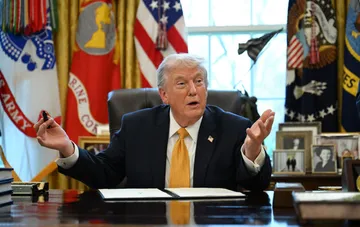

The US presidential administration, led by Donald Trump, has initiated a proposal to rescind approximately 810 million dollars in federal budget funds that were previously approved by Congress but have not yet been spent. To execute this task, the White House utilized a special and highly controversial legal mechanism known as a "pocket rescission." This proposal was officially published by the Office of Management and Budget (OMB) on September 25, 2026, just days before the official end of the fiscal year scheduled for September 30. The initiative affects 11 spending items distributed across seven major federal departments and agencies, as well as several international assistance programs.
The Essence of the Proposed Cuts
The largest share of the planned cuts falls on the Department of Health and Human Services (HHS), which is slated to lose approximately 567 million dollars. These funds were originally designated for programs targeting non-US citizens, including support for refugees and unaccompanied minors. White House officials argue that the acute need for this funding has significantly decreased due to tightened border control policies. In addition, the sequestration targets 70 million dollars allocated for academic research and scholarships, 56 million dollars from the Department of Housing and Urban Development budget, as well as funds through the Department of Justice, the Treasury Department, and the Department of Education.
Political Context and Legal Disputes
The use of the "pocket rescission" mechanism inevitably triggers intense institutional debates regarding the separation of powers between the executive and legislative branches in the US. Critics of the initiative, including influential lawmakers, insist that the head of state does not have the unilateral right to revise and cancel spending items approved by the country's highest legislative body. A previous similar precedent was recorded in 2025, when the Trump administration blocked about 5 billion dollars in foreign aid by exercising similar authority for the first time in half a century. Opponents of the administration emphasize that the tight submission deadlines deprive Congress of the standard 45 days to thoroughly examine the issue.
Controversial Data
Serious disputes have erupted within expert circles and Washington political spheres surrounding the legality and potential consequences of these measures. The White House insists that the entire procedure strictly complies with the provisions of the Congressional Budget and Impoundment Control Act of 1974, allowing for an effective fight against inefficient or excessive taxpayer spending. At the same time, opposition politicians and constitutional law experts point out the dubious nature of using this mechanism right at the end of the fiscal year, which effectively blocks parliamentary oversight. Separate dissatisfaction is expressed by supporters of diversity, equity, and inclusion (DEI) programs, whose funding is also under threat of complete phase-out.
Further Consequences for the Budget
Experts note that the White House's current initiative could significantly complicate the budgetary process in the US Congress and provoke new legal battles. Although the total sum of 810 million dollars looks relatively small against the multi-trillion-dollar federal budget, the very precedent of impounding funds creates a dangerous foundation for future confrontations between the president and members of Congress. As the end of the fiscal year approaches, relevant agencies will have to urgently review their operational plans to account for potential budget losses.