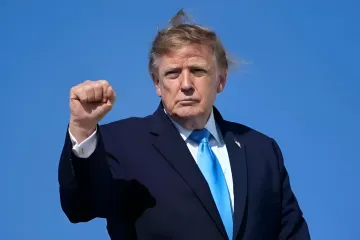
US President Donald Trump has publicly criticized Ukraine's decision to resume attacks on Russian oil refineries, describing these actions as a "disgrace." In an interview with Newsmax, the American leader stressed that such strikes directly drive up global oil and petroleum product prices, which runs counter to Washington's economic strategy.
Economic reasons for Washington's discontent
The White House chief explained that Ukrainian attacks damage diesel fuel production in Russia, which he claims is necessary for both the United States and other countries around the world. Trump noted that the Ukrainian side has numerous alternative military targets, so striking oil refining facilities specifically does not benefit the international community. The US administration aims to lower energy prices in domestic and global markets.
As part of this strategy, Washington previously reached certain agreements with Moscow regarding the supply of Russian diesel fuel. These steps are being taken against the backdrop of preparations for important domestic political events in the country, including the upcoming US midterm congressional elections scheduled for November 3.
Kyiv's reaction and the end of the temporary truce
For its part, the leadership of Ukraine expressed strong disagreement with such energy agreements. Ukrainian President Volodymyr Zelenskyy stated that easing restrictions on Russian fuel effectively helps finance military operations against his country. According to the Ukrainian leader, Kyiv had previously suspended strikes on Russian refineries for three days after the announcement of the so-called energy truce.
However, as Zelenskyy noted in an interview with the Financial Times, the Russian side continued regular attacks on Ukrainian energy facilities despite the agreements. The Kremlin, for its part, admitted that the detailed parameters of the temporary truce were never definitively finalized. As a result, Kyiv decided to officially resume military operations against infrastructure facilities in Russia.
Future prospects of the energy confrontation
The resumption of strikes on Russian refineries creates new risks for the stability of global energy markets and undermines US diplomatic efforts to resolve contentious issues in the fuel sector. Experts note that the escalation of attacks on oil production and refining facilities could trigger a new wave of volatility in oil and diesel prices ahead of the winter season.
The further development of the situation will depend on the parties' readiness for compromise and the effectiveness of American diplomacy. Washington continues to insist on the need to stabilize energy markets, while Kyiv states its intention to use all available means of military defense and pressure on the adversary.