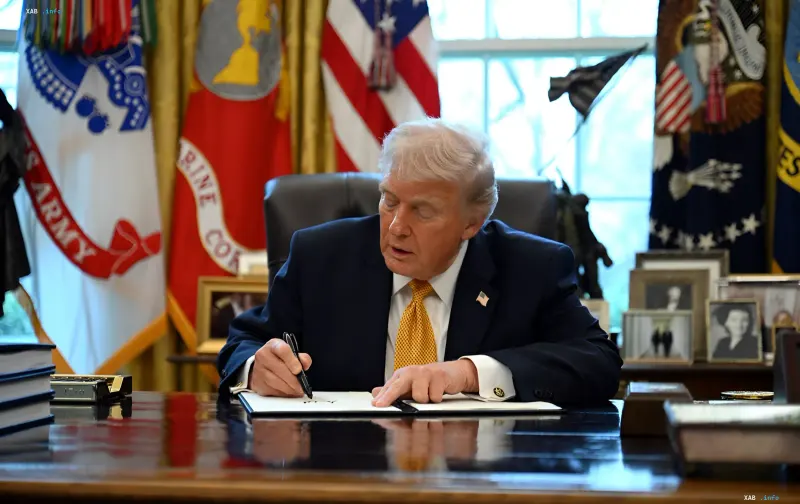
On Friday, August 14, 2026, the global political map experienced an unexpected and radical shift triggered by a statement from U.S. President Donald Trump. Speaking on Long Island to an audience discussing domestic security and crime, Trump made a sensational announcement: "Very soon, I will declare the Strait of Hormuz a territory of the United States." This statement, made against the backdrop of an ongoing six-month conflict with Iran, caused shock in diplomatic circles and among international law experts.
Legal Nonsense and Geopolitical Reality
From the perspective of international law, the U.S. President's statement appears as a legal absurdity. The Strait of Hormuz, a strategically vital waterway connecting the Persian and Oman Gulfs, is under the sovereignty of two states: Iran (on the northern coast) and Oman (on the southern). The United States has no historical or legal jurisdiction over this region. Trump provided no explanation regarding the mechanisms for implementing this plan, leaving the world puzzled as to how Washington intends to annex international waters.
Economic Context: Blockade and Oil Crisis
Trump's statement did not arise from nowhere but became the culmination of an escalating conflict that began approximately six months ago. About 20% of the world's oil and gas volume passes through the Strait of Hormuz, making it the "choke point" of the global economy. Since the start of the war between the U.S. and Iran and the subsequent closure of the strait by the Iranian side, energy prices worldwide have skyrocketed. In response, Trump imposed a naval blockade twice, insisting on de facto American dominance over transit, despite the lack of legal basis.
Contradictory Data
There is a fundamental divergence in assessments of the situation between Washington and Tehran. On one hand, the U.S. administration, led by Trump, claims that the States fully control the strait and intend to make it their territory. On the other hand, the Iranian leadership categorically rejects these claims. On Wednesday, the Iranian Gulf and Strait of Hormuz Authority published a statement on the social network X, emphasizing that regardless of who the strait "belongs to" according to politicians' statements, reality remains the same — the strait is blocked and will not open until Iran sees its conditions met. Iran insists on its sole management of the waterway.
Escalation of Violence and New Attacks
Against the backdrop of rhetoric regarding "territorial expansion," the situation on the water is intensifying. Reuters reports that tanker movement through the strait has practically halted. This occurred after Iran shelled two more vessels. Earlier on Thursday, the UAE Ministry of Foreign Affairs accused Iran of attacking two vessels belonging to the state oil company ADNOC. In response to these actions, the U.S. announced unprecedented measures of economic pressure on the regime in Tehran, attempting to break the opponent's will, yet physical control over the strait remains questionable.