The United Nations has found itself in an unprecedented crisis. In response to the resonant statement by US President Donald Trump regarding his intention to declare the Strait of Hormuz US territory, the UN Secretariat issued a standard statement on the "necessity of complying with international law." However, behind the dry formulations lies the reality: the global institution has effectively acknowledged its inability to act in the face of unilateral geopolitical aggression.
Paralysis of the Security Council and Washington's "Steel Wall"
The UN statement was a reaction to Donald Trump's Saturday speech, in which he promised to bring the strategic waterway under Washington's jurisdiction and impose strict tariffs on transit. In New York, they limited themselves to reminding about the UN Convention on the Law of the Sea, but did not propose any mechanism to force the parties to peace. This is due to a deep rift within the organization itself.
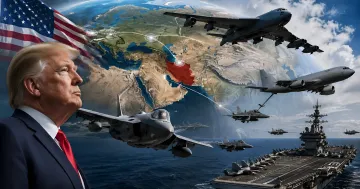
Back in May 2026, the US and its allies from the Persian Gulf attempted to pass a resolution through the Security Council providing for the use of force to unblock the strait. The initiative was blocked by the veto right of Russia and China. Finding themselves in a diplomatic deadlock, the Trump administration moved to unilateral actions, building a strict naval blockade around Iran, which the White House calls the "steel wall".
Economic Collapse: Oil and Gasoline Prices
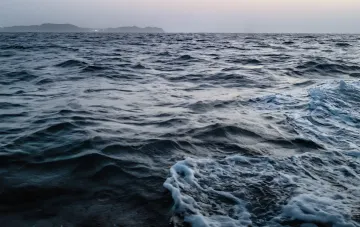
While diplomats exchange notes, the situation in the Strait of Hormuz is close to catastrophe. Due to the mine threat and ongoing strikes, shipping has shrunk to a historic minimum. According to international monitoring agencies, in the last 24 hours, only six commercial vessels passed through the strait, through which 20% of the world's fuel previously flowed.
Donald Trump himself openly acknowledged the economic consequences of his actions in his speech. He called on American citizens to "accept high gasoline prices" and "endure" the rise in the cost of energy resources, calling it a necessary price for strategic victory and the final disarmament of Iran.
UN's "Slow Death": Inside Look at Grossi's Campaign
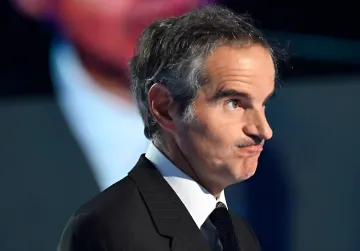
The crisis in Hormuz has provoked an internal revolt within the UN system. IAEA Director General Rafael Grossi, in an interview with Financial Times, made a devastating criticism, stating that the organization is "experiencing a slow death" and has completely lost its relevance. He emphasized that the UN failed to prevent any major crisis in recent years.
This outburst has a deep political subtext. In New York, closed rounds of voting for the post of the new UN Secretary-General are taking place, the term of office of which for António Guterres expires on December 31, 2026. Grossi is one of the main favorites and is building his election campaign on harsh criticism of the current leadership, demanding radical reform of the system that proved powerless in the face of the US-Iran war.
Contradictory Data
There are discrepancies in the assessment of the current situation. On the one hand, the official position of the UN and a number of Western experts insists that Trump is only using the rhetoric of "annexation" as a lever of pressure, and the real goal is a temporary military blockade. On the other hand, sources in the US administration and Trump's own statements about "eternal sovereignty" over the strait after the victory over Iran indicate an intention to effectively annex the territory. Furthermore, data on the number of ships passing through the strait varies: monitoring agencies cite a figure of 6 ships, while Iranian sources claim a complete closure of the route for "enemy" tankers, but maintaining capacity for allies.