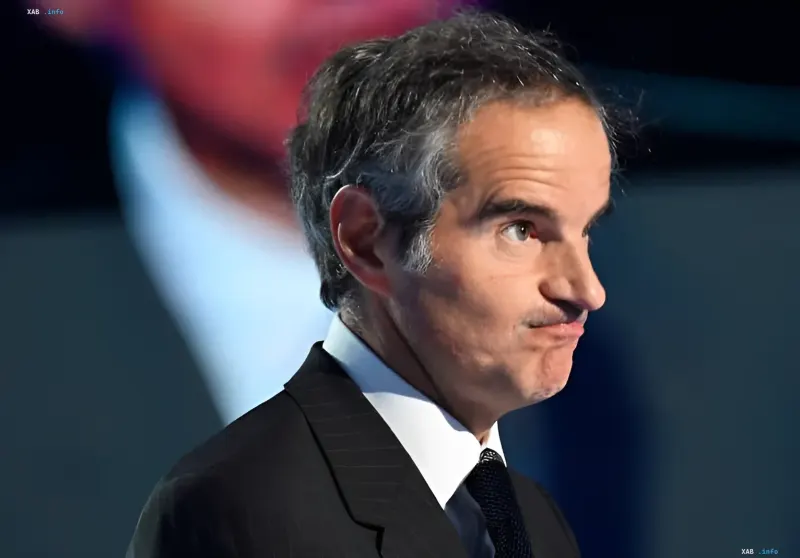
Rafael Grossi, Director General of the International Atomic Energy Agency (IAEA) and one of the leading contenders for the post of UN Secretary-General, delivered an unprecedentedly sharp critique of the organization itself. Speaking in Washington at the Henry L. Stimson Center during a discussion on the future of multilateral diplomacy, the diplomat stated that the global security system has effectively abdicated its role in resolving the bloodiest wars of our time. In his words, over eight decades of existence the UN has turned into a cumbersome structure incapable of influencing events “on the ground.”
The Candidate in His Own Words
“When it comes to real conflicts — we don’t see the UN. For quite some time now there has been a persistent feeling that the organization is failing to live up to the expectations placed on it and is not fulfilling its basic mission. This is not a question that has arisen today. The point is that the UN is literally everywhere, but it is absent where its intervention is truly needed,” Grossi said. Citing the main failures of the international body, he listed the war between Russia and Ukraine, the escalation and fighting in the Middle East, as well as the protracted conflicts in South Sudan, the Sahel region, and Syria. In the candidate’s assessment, none of these efforts by the UN apparatus has led to tangible results in de-escalation.
Why the Criticism Comes Now
Grossi’s remarks are not merely an observer’s comment but an electoral manifesto. The term of the incumbent Secretary-General, António Guterres, expires on December 31, and key rounds of candidate coordination are already underway in closed sessions of the UN Security Council. Grossi is promoting the image of a “crisis manager”: in contrast to boilerplate statements about “deep concern,” he appeals to practical experience — his personal presence at the Zaporizhzhia Nuclear Power Plant under fire, his constant shuttle diplomacy between Kyiv and Moscow, and his work on containing Iran’s nuclear program. In his formulation, “the UN doesn’t need more banquets and conferences, but action in hotspots.”
The Threat of Institutional Collapse
The paralysis of the Security Council, where the veto power of permanent members blocks any resolutions on Ukraine or Gaza, has compounded the organization’s severe budget deficit. Earlier, in an interview with the Financial Times, Grossi described the current state of the institution as a “slow death” and warned that without radical restructuring and a move away from bloated bureaucracy, the UN risks repeating the fate of the League of Nations, ultimately losing its global legitimacy.
Seeking a Balance Between Washington and Moscow
To win the post of Secretary-General, Grossi must avoid vetoes from the United States, China, and Russia. On the one hand, he speaks the language of pragmatism and cutting inefficient programs that is understandable to the White House administration. On the other — he publicly emphasizes that he maintains strictly professional and direct contacts with the Kremlin and “Rosatom,” necessary for solving applied security problems. This dual course allows him to position himself as a candidate capable of working with both the West and Russia.
Conclusion
Rafael Grossi’s statement underscores the main trend in international politics: even the highest diplomatic elite within the UN system acknowledges that the old architecture of security is thoroughly broken. The election of a new Secretary-General will either be an attempt to restore the institution’s real levers of compelling peace through hard pragmatism, or it will finally cement the UN’s status as a decorative discussion club. The race for the Secretary-General’s chair thus becomes a referendum on the organization’s very future.