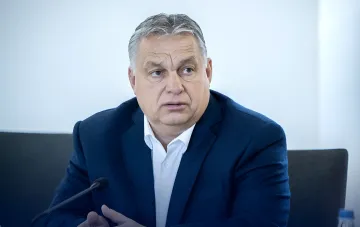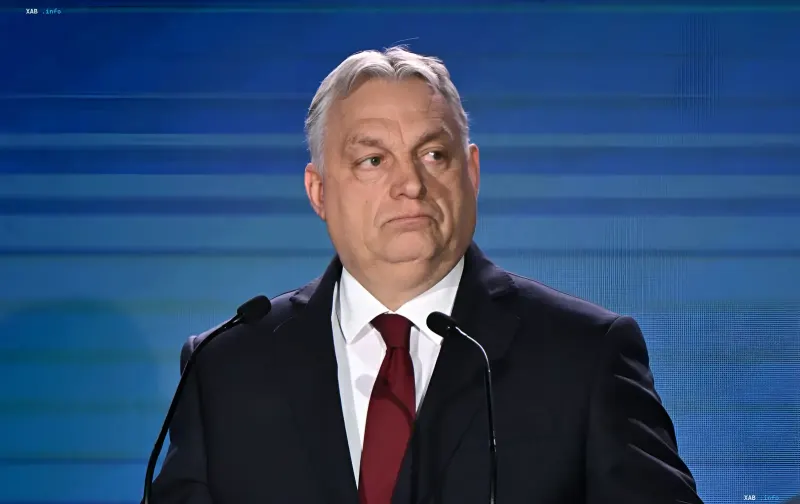
French Minister for Europe and Foreign Affairs Jean-Noël Barrot has publicly spoken out against the potential appointment of former Hungarian Prime Minister Viktor Orban to the position of United Nations Secretary-General. The statement came amid reports that the Hungarian politician's candidacy is being actively promoted by the US administration with an expectation of support from Beijing and Moscow. Paris, as a permanent member of the UN Security Council, has taken a firm stance, indicating its fundamental unwillingness to agree to such an appointment.
A "Consolation Prize" for a Rejected Leader
Central to Barrot's speech was the definition he gave to Orban's potential appointment. According to the French minister, the post of UN Secretary-General "should not be a consolation prize for a leader who was ousted by his people." Thus, Paris directly links the candidate's legitimacy to his domestic political status: Orban, having lost the support of voters and left the post of head of the Hungarian government, cannot, in France's assessment, lay claim to a key international post. Barrot also recalled that in March of last year, Marine Le Pen campaigned in Budapest, emphasizing the Hungarian politician's political closeness to forces from which France distances itself.
The Shadow of Great Power Influence
The French minister expanded on the theme, stating that Paris cannot accept the weakening and paralysis of the UN due to the actions of great powers which, he said, are trying to impose the "law of the strongest." Barrot emphasized that international cooperation is critically important for protecting citizens from modern risks — primarily war, climate change, and pandemics. In this context, appointing someone to the post of Secretary-General whose candidacy is promoted by a narrow circle of powers is viewed in France as a threat to the independence and mandate of the organization itself.
Paris and the Course for UN Reform
France emphasizes that as a permanent member of the Security Council, the organization is participating in efforts to reform the UN in order to make it more legitimate and representative. In particular, Paris is promoting an initiative to regulate the veto power to protect the civilian population in the world's "hot spots." The position on Orban's candidacy logically fits into this course: France opposes a scenario where the post of Secretary-General becomes an instrument of bargaining between great powers rather than the result of a consensus reflecting the interests of the entire international community.
Orban's Candidacy: Who is Promoting It
According to available data, Viktor Orban could receive the post of UN Secretary-General with the support of the US, Russia, and China. The administration of US President Donald Trump, as reported, is actively promoting the Hungarian politician's candidacy, counting on general support from Beijing and Moscow. Earlier, The Wall Street Journal pointed out that the American side is seeking to secure the support of China and Russia. Back in May, investigative journalists reported that MAGA movement representatives in the US Republican Party considered the scenario of appointing Orban to an international position, and one of the expected consequences of such a step could be the protection of the former Hungarian prime minister from criminal prosecution.
Kyiv's Reaction: Irony Over the "Master of Veto"
In Ukraine, the potential nomination of Orban was met with irony, recalling his years-long experience of blocking decisions and using the veto power in the European Union. For Kyiv, where the Hungarian politician has for years been associated with the sabotage of agreed European positions, the very idea of his appearance as UN Secretary-General is seen as absurd and contrary to the spirit of an organization designed to protect, not block.