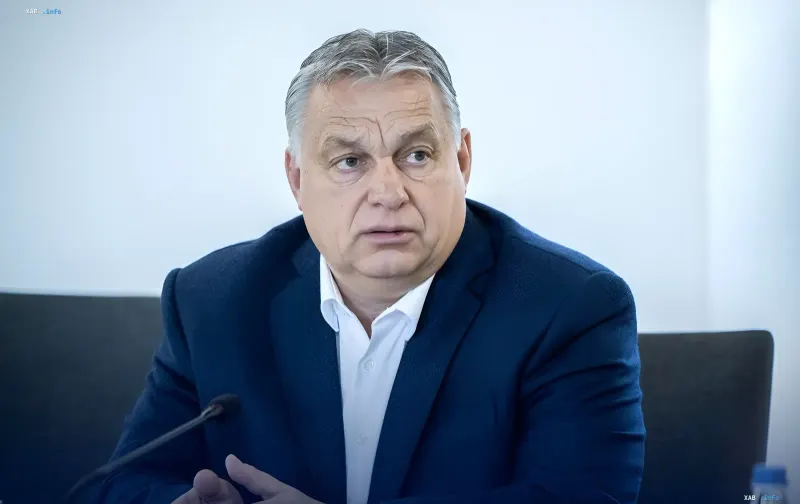
The Ministry of Foreign Affairs of Ukraine has reacted with irony to reports about the possible nomination of former Hungarian Prime Minister Viktor Orban for the post of UN Secretary-General. According to RBC-Ukraine, this was stated by Ukrainian Foreign Minister Andrii Sybiha, who commented on the hypothetical appointment of the Hungarian politician to a leadership position in the United Nations.
"Masterful veto skills"
Sybiha recalled the systematic blocks and delays of decisions within the EU due to Budapest's position. "I am convinced that Viktor Orban in the post of UN Secretary-General would certainly apply his masterful skills of veto and blackmail, which he has honed for years while disrupting key EU decisions. We can share our wonderful experience with the rest of the world on how to take him out for coffee in time," the head of the Ukrainian Foreign Ministry noted.
Where the "coffee" metaphor came from
The expression "taking him for coffee" became famous after the EU summit in December 2023. Then-German Chancellor Olaf Scholz invited Orban to leave the room and drink coffee during the vote on starting EU accession negotiations for Ukraine. Thanks to this, according to the source, the decision was adopted unanimously without Hungary's participation.
What is known about the promotion of the candidacy
According to The Wall Street Journal, the administration of US President Donald Trump is promoting Orban for the post of UN Secretary-General. In Washington, according to the publication, they expect that Russia and China will also support him. According to a State Department official, Orban will be "easily" supported by eight out of fifteen UN Security Council members, and potentially ten. Officials from the US and another country, according to WSJ information, pointed out that when Washington, Moscow, and Beijing reach agreement on a decision in the Security Council, as a rule, that is exactly what they get.
Significance for the diplomatic track
Kyiv's comment emphasizes that in the Ukrainian diplomatic environment, Orban's candidacy is perceived through the prism of his long-term influence on intra-European processes. The minister's ironic wording essentially boils down to the fact that the experience of interacting with Budapest within the EU, in Sybiha's opinion, can become a "lesson" for the international community. At the same time, the nomination initiative itself, according to available data, originates from Washington and in the provided materials is confirmed by a single source.