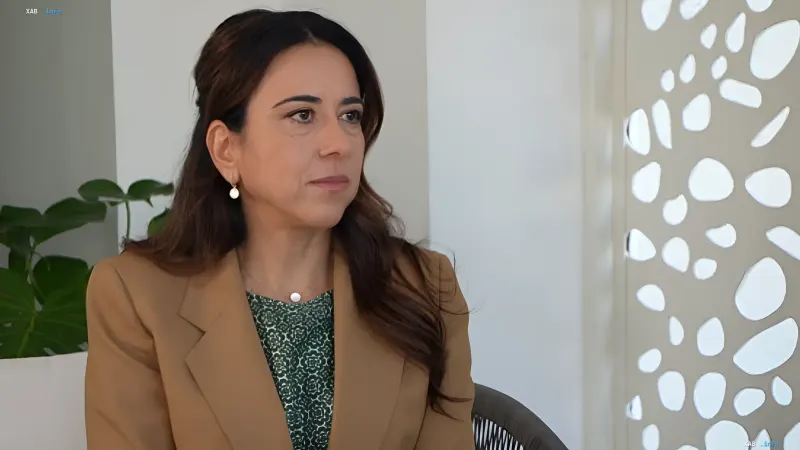
UAE Minister of State Lana Nusseibeh, nominated as a candidate for the next UN Secretary-General, said in an interview with Euronews that if elected, she would act as a chief mediator and is ready to "take political risks to achieve peace." According to her, the organization is at a turning point and must return to its core mission — uniting governments and peoples for peace, development, and prosperity in order to restore lost trust. Nusseibeh, who served as the UAE's Ambassador to the UN for over a decade, described herself as a "tireless diplomat" and promises to put forward a candidacy rooted in "tireless diplomacy."
A turning point: 65 conflicts and humanitarian truces
The candidate pointed out that far too many people view the UN as useless amid the 65 active conflicts currently underway in the world today. She is convinced that the Secretary-General must push for humanitarian truces and ensure aid access to affected areas. Responding to a question about funding cuts, Nusseibeh noted that OECD donor countries recently cut aid by 23%, which will force the UN to narrow its scope, forge new partnerships, and publish results scorecards for member states and donors. "The question is not about organizational charts or the design of system structures, but about impact, its cost, and the result," she emphasized.
"Quiet diplomacy" and the protection of humanitarian workers
According to Nusseibeh, the next Secretary-General must combine public advocacy for peace with "quiet diplomacy": "Sometimes quiet diplomatic efforts are needed, when doors are closed, you need to keep channels of communication open with all parties." She promised that during her first 100 days in office, she would agree on shared goals with member states and civil society, cut thousands of mandates in the secretariat, and shift the focus of work from headquarters to the field. Nusseibeh also announced that she will establish a council of external experts and UN staff, rely on local community leaders and women's networks, and set up a dedicated humanitarian worker protection unit in her office — noting that 300 such workers were killed over the past year.
Ukraine and the Middle East: mediation priorities
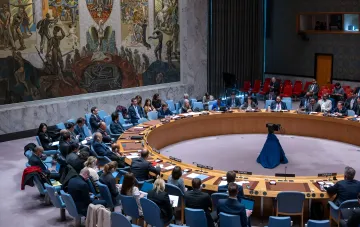
Speaking about Ukraine, Nusseibeh stated that any settlement must be based on the UN Charter principles of sovereignty and territorial integrity, adding that she would "immediately offer her services" with practical options for transitioning from initial agreements to a political strategy. During an interactive dialogue at UN headquarters, she specifically underscored her readiness to support all mediation efforts regarding the Ukrainian conflict. Addressing questions about her home region, the diplomat pointed out that 38% of the Security Council's agenda concerns the Middle East. Discussing Gaza, she referenced Security Council Resolution 2720, which she negotiated in December 2023 after a trip with Council ambassadors to the Rafah crossing, and noted that Resolution 2803, which endorsed the 20-point Gaza plan, has "stalled," expressing a desire to drive it through to implementation.
The first woman to lead the UN and the question of independence
If elected, Lana Nusseibeh will become the first female head of the UN since its creation in 1945, the first leader of Palestinian descent, and the second Secretary-General from the Arabic-speaking world after Egypt's Boutros Boutros-Ghali. Responding to criticism regarding her independence, she cited the UN Charter and stated that she took a leave of absence from her position as UAE Minister of State for the campaign: "Article 100 of the UN Charter enshrines the independence of the Secretary-General, so the Secretary-General's loyalty is to the UN Charter and international law." Nusseibeh, who is fluent in Hebrew and grew up between Abu Dhabi and the UK in a family of prominent Palestinian political figures, added: "I am not running because I am a woman. I am running because of more than two decades of experience in international diplomacy."
Campaign context: seven contenders for the post
The campaign for UN Secretary-General is taking place in a competitive environment: alongside Nusseibeh, six other candidates are running, including IAEA Director General Rafael Grossi (Argentina), UNCTAD Secretary-General Rebeca Grynspan (Costa Rica), former Foreign Minister and Defense Minister of Ecuador María Fernanda Espinosa Garcés, and Guyana's Permanent Representative to the UN. Against this backdrop, Nusseibeh's statements on "tireless diplomacy," cutting bureaucracy, and focusing on measurable results form her key competitive offering to voters in the General Assembly.