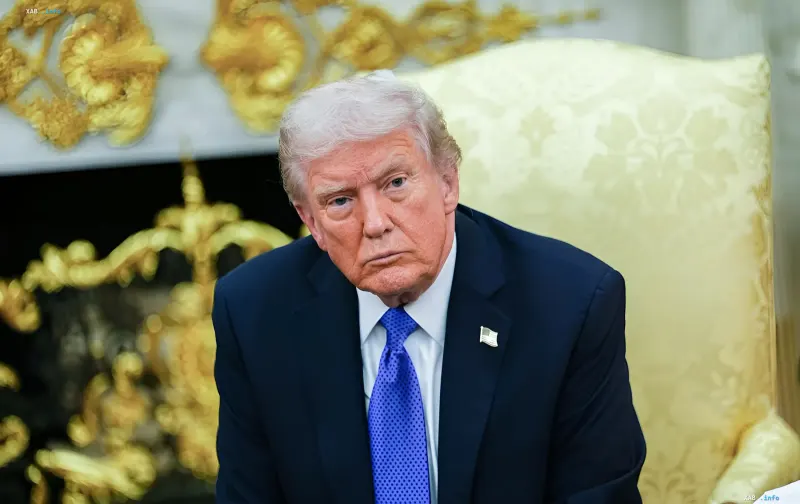
US President Donald Trump spent the past weekend weighing the possibility of an air strike on Yemen's Houthis — the armed group that Washington considers to be backed by Iran. According to sources, the decision to use force has been put on hold for now: the White House does not want to expand the battlefield amid an already escalating situation in the Middle East and the Red Sea.
The White House's oscillating decision
The timeline of the decision-making, reports say, was non-linear. On Wednesday, September 16, during meetings with national security advisors, Trump, sources report, signaled that he was leaning toward ruling out air strikes. However, on Thursday, after Saudi Arabia's Crown Prince Mohammed bin Salman called the US president again to request help (a similar call had come roughly 10 days earlier), Trump ordered the Pentagon to prepare for air strikes. Late on Saturday night, though, the decision was made to postpone action against the Houthis for the time being.
Contradictory information
The White House's public signal over these days shows a notable inconsistency that must be reflected honestly. On the one hand, on Wednesday the administration was showing a tendency toward restraint and a refusal to strike; on the other — already on Thursday, after a phone call with Riyadh, the Pentagon was instructed to prepare to use force. The result was a third, compromise position: preparations were formally underway, but the strike itself was postponed. Thus, the version "the US is refusing to strike" and the version "the US is preparing to strike" coexist in different time frames, and the final decision to delay rests on anonymous sources, which makes the picture ambiguous.
Context: the Houthis advance in the Red Sea
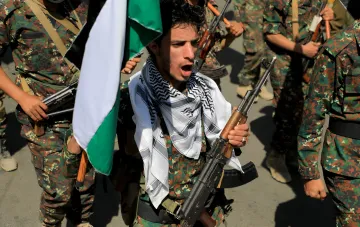
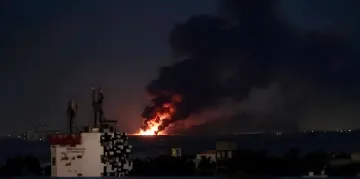
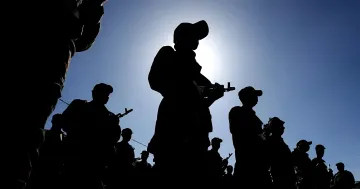
The White House's decision is being made against a backdrop of sharp escalation in Yemen. In recent weeks the Houthis have recaptured key strategic territories from the Saudi-backed Yemeni government, particularly along the Red Sea coast. In particular, on September 11 the Houthis seized Perim Island, located in the Bab el-Mandeb Strait — one of the most important maritime corridors for global oil trade. The strategic aim of the capture, by estimates, is the ability to block the strait. A couple of days ago, Yemen's Houthis also launched drone and missile attacks on Riyadh airport and Saudi Arabia's oil hub, heightening Washington's fears of a broader regional escalation.
The diplomatic track and Iran's position
Alongside the military track, a diplomatic one was also underway. According to Reuters, as early as Monday Trump spoke by phone with Rashad al-Alimi — head of Yemen's Presidential Leadership Council, the executive body of the country's internationally recognized government. At the same time, Iran, which the US considers the Houthis' patron, publicly warned against any new escalation by the US and its allies, further complicating the possibility of a direct strike. Taken together, these factors explain why, despite pressure from Riyadh and the Pentagon's readiness, Washington is currently preferring to hold off on the military option.