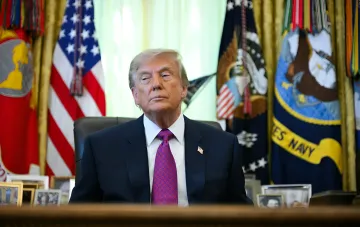
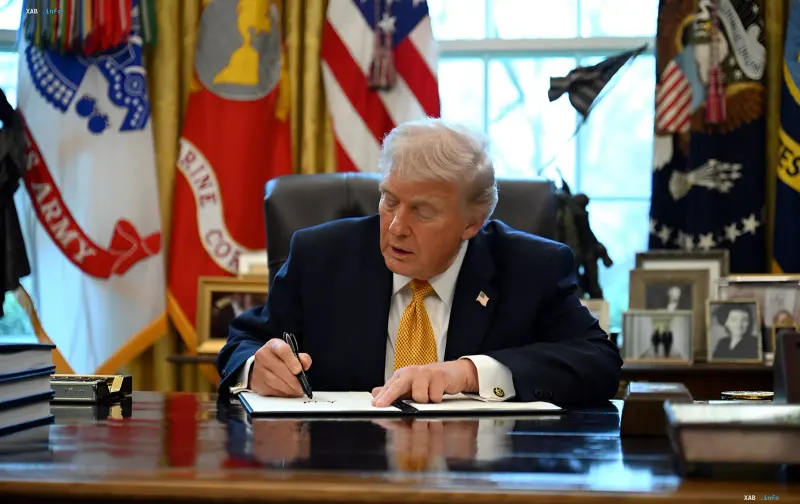
US President Donald Trump, in a statement on the Truth Social network, announced the launch of what he called "the most devastating economic operation in history" against Iran. According to him, Washington is moving to "an economic war and isolation of unprecedented scale," and any country whose financial institutions, companies, airports, or state structures help Tehran circumvent the pressure will face "enormous economic consequences." The statement came against the backdrop of ongoing months-long tensions between the US and Iran, reports RBC-Ukraine.
'Economic D-Day' and the List of Banned Methods
Trump directly listed the practices that, in his words, must immediately cease: oil smuggling, currency swaps, cash transfers, the operation of exchange offices, the registration of vessels under foreign flags, and the use of shell companies. The President called on US allies to join the isolation of Iran, calling the Iranian regime "maniacs who are already on the ropes," and reiterated that Iran "will never get nuclear weapons." He also stated that it was his administration that gave Tehran the most chances for a deal, but Iran, in his assessment, "tragically" failed to take advantage of them.
Rhetoric About a 'Destroyed' Fleet and Air Force
In the same speech, Trump claimed that the Iranian fleet has allegedly been destroyed, its air force wrecked, its military plants reduced to ruins, and its national currency devalued, after which, in his words, the regime is "hanging by a thread." These formulations go far beyond diplomatic rhetoric and effectively describe the situation as the result of an already completed military defeat of Iran, which does not match the publicly known status of the agreements between the parties.
Contradictory Data
The versions of the parties and the factual context diverge. On the one hand, Trump describes Iran as a state with destroyed military infrastructure and a devalued currency. On the other hand, according to WSJ data presented in the context of the statement, a memorandum on a temporary cessation of hostilities was signed in June, and it was against this backdrop that Iran, reportedly, was preparing forces for a possible resumption of the conflict. In other words, the rhetoric about a "destroyed" fleet and air force is not confirmed by independent sources and contradicts the logic of the active ceasefire. Moreover, the day before, Trump had stated his intention to declare the Strait of Hormuz US territory, but in Iran this was mocked, pointing to the impossibility of establishing control over the strait "through a social media post."
Allies' Reaction and Regional Context
According to The Washington Post, dissatisfaction is growing among US partners in the Persian Gulf: the region is increasingly concerned about the Trump administration's inability to reach a diplomatic settlement with Iran. This creates additional pressure on Washington, which simultaneously announces maximum economic pressure and maintains rhetoric about the inevitable defeat of Tehran. Thus, the declared "economic operation" is embedded in a broader crisis of trust between the US and its regional allies.
What This Means Going Forward
The announced initiative effectively shifts the conflict from a diplomatic track to a regime of total financial pressure, with the threat of secondary sanctions for third countries. The key question remains whether allies and transit jurisdictions are ready to join the "Economic D-Day" and how realistic it is to block the listed channels (oil smuggling, currency swaps, shell companies) without harm to their own economies. Until specific regulatory acts and sanctions lists appear, the statement remains a political signal rather than an in-force mechanism.