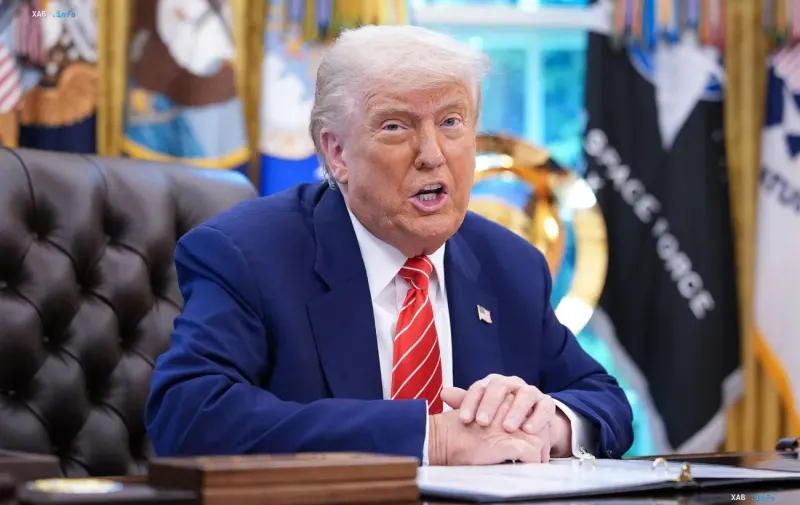
US President Donald Trump has stated that he could potentially impose trade tariffs against Ukraine and Russia if the two nations fail to reach a peace deal. The White House leader made these remarks during a Magno News broadcast, while simultaneously highlighting the practical limitations of such an approach due to low volumes of bilateral trade.
Experience in Settling Past Conflicts
According to the American leader, the mechanism of strict trade measures had previously helped Washington successfully bring armed conflicts in other regions of the world to an end. Trump cited the practice of warning about the introduction of 200% tariffs if hostilities continued, after which the opposing sides allegedly stopped fighting. The head of the White House suggested that a similar scheme could theoretically be applied immediately to the ongoing confrontation between Moscow and Kyiv.
At the same time, the US leader noted that this idea occurred to him directly during the discussion, yet its implementation faces objective economic obstacles. In his estimation, Washington does not conduct intensive enough trade with either state for economic restrictions to have a decisive impact on their decisions.
Economic Restrictions and Their Effectiveness
Immediately after voicing the initiative, the US president expressed skepticism regarding the real effectiveness of such a move amid the Ukrainian crisis. Trump cited the minimal volume of trade turnover between the United States, Ukraine, and Russia as the main obstacle to applying tariffs, making such leverage ineffective in practice.
Experts and international observers have repeatedly noted that Washington actively uses sanctions and other economic pressure tools, but the direct application of import tariffs against warring states requires an entirely different structure of bilateral trade flows. The White House continues to explore various diplomatic and economic paths to a ceasefire, periodically voicing tough initiatives.
Significance of the Statement and Future Prospects
Such statements demonstrate the American administration's desire to deploy the full arsenal of foreign policy and economic influence for the swift end of the war. Nevertheless, the open acknowledgment of the ineffectiveness of trade tariffs due to weak trade volumes underscores the difficulty of finding universal levers to compel peace.
The further development of the situation largely depends on the parties' willingness to compromise, as well as the ability of Washington and its allies to devise workable mechanisms of diplomatic pressure. The US administration continues to balance between radical proposals and assessing their actual feasibility in the international arena.