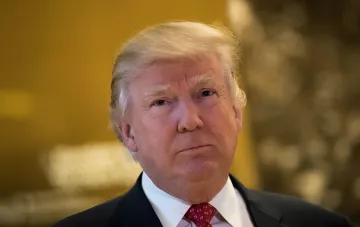
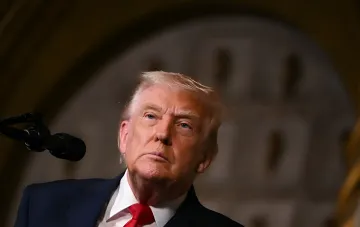
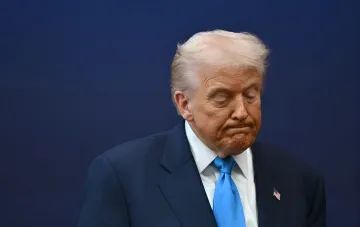
US President Donald Trump made a forecast regarding the timeline for ending hostilities in the Middle East. According to him, the war with Iran could be over immediately after the congressional midterm elections, which will take place in November 2026. This is reported by RBC-Ukraine, citing Politico. Thus, the head of the White House has effectively outlined a horizon of roughly two more months of active combat operations.
Trump's Forecast: End of the Conflict After the Elections
"I think the war will end right after the elections," the American leader stated. In his assessment, combat operations with Iran will cease by November 2026. Trump also expressed confidence that immediately after the conflict ends, gasoline prices in the US will drop sharply, which, by his logic, should serve as a notable economic argument for his party in the election campaign.
Accusations Against Tehran
The US President accused Iran's leadership of deliberately escalating the situation in an attempt to influence the results of the midterm elections and weaken the Republicans' position. According to Trump, Tehran is seeking to get weaker politicians, in his view, elected to Congress, who would allow Iran to retain its nuclear program without proper oversight. Earlier, according to the Turkish Anadolu agency, Trump also stated that Iran is interested in reaching an agreement.
Economic Consequences and Risks for the Republicans
Trump's forecast means that the war could last for about two more months, during which Republican candidates will have to continue dealing with the consequences of the conflict, primarily its impact on the cost of living. Republicans fear that the economic costs of the war could lead to the loss of the majority in the House of Representatives and potentially threaten their position in the Senate. Against the backdrop of events in the Middle East, oil prices continue to rise sharply, and it has become known that Tehran lost five tankers in a single night.
Contradictory Data
Trump's statement about the imminent end of the war after the midterm elections conflicts with earlier assessments by a number of foreign media outlets, which reported that the US-Iran conflict could drag on until the end of the current White House chief's presidential term. Thus, one version assumes a halt to combat operations as early as November 2026, while another points to the possible continuation of the war throughout the remainder of the presidential term. The difference between these forecasts ranges from several months to several years, and neither side has confirmed the second estimate with an official statement.
Oil Market Dynamics
Regardless of the political forecasts, the market is already reflecting the consequences of the escalation: oil prices continue to rise sharply against the backdrop of news about combat operations and losses to the Iranian fleet. It is precisely this factor, in the view of the Republicans, that poses the main economic risk to their election campaign in November 2026.