Donald Trump's decision to pursue a so-called "diesel agreement" with Moscow in order to lower fuel prices creates unprecedented geopolitical risks for Ukraine. The Kremlin skillfully uses the global fuel issue as a sophisticated pressure technology, attempting to force Kyiv to halt strategically vital strikes on Russian oil refineries or deliberately provoke a deep crisis in relations between Washington and the Ukrainian leadership. Such actions by the US administration threaten not only Ukraine's security but the entire architecture of Western support amid ongoing full-scale Russian aggression.
Background of the Conflict and Political Volatility
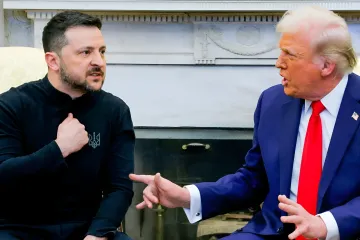
As pointed out by Volodymyr Fesenko, head of the Penta Center for Applied Political Studies, such a sharp shift in rhetoric and aggressive outbursts from Donald Trump are far from unprecedented. The first major crisis in relations between Washington and Kyiv erupted in March of last year following an extremely emotional and contentious discussion in the Oval Office. At that time, Trump and Vice President JD Vance exerted immense pressure on the Ukrainian leader, demanding painful concessions for a swift end to the war, while Volodymyr Zelensky firmly defended his country's national interests. Trump is generally prone to sharp mood swings and sudden bursts of public aggression not only toward the Ukrainian leadership but also toward leaders of other allied nations.
Economic Drivers of the White House's Maneuver
The current crisis is driven strictly by the domestic political and economic phobias of the American leader, who fears a crushing defeat for the Republican Party in the upcoming congressional midterm elections. The US is experiencing a rapid surge in prices for petroleum products, especially diesel fuel, which directly hits the administration's ratings. The real cause of the fuel crisis is massive geopolitical problems in the Persian Gulf and escalation around Iran, yet the White House flatly refuses to acknowledge its own miscalculations. Instead, Trump chose to appoint a convenient "scapegoat," blaming the price hike on Ukrainian strikes on Russian refineries, despite the fact that shortages in Russia primarily affect gasoline rather than diesel.
Essence of the Deal and Geopolitical Consequences
In the current situation, Vladimir Putin proposed a separate deal to Washington: supplies of small volumes of Russian diesel fuel in exchange for a halt to Ukrainian strikes on Russian oil infrastructure objects. Thus, Trump has effectively turned into an instrument of Kremlin policy, perceiving the Russian dictator as a savior of his domestic political standing and the Ukrainian leadership as a primary opponent. Since Ukraine is waging an existential war and suffering continuous air strikes, halting attacks on the aggressor's refineries without mirror steps from Moscow is impossible, making further tension in dialogue with Washington inevitable.
Contradictory Data
Serious discrepancies exist in the expert community and Western media regarding the real impact of Ukrainian drone strikes on the American fuel market. On one hand, Donald Trump's team insists on a direct cause-and-effect link between strikes on Russian refineries and the diesel deficit in the US, using this argument to justify diplomatic maneuvers with Moscow. On the other hand, independent energy analysts and specialized experts emphasize that Russia itself voluntarily restricted the export of diesel fuel to global markets, while the primary drivers of American inflation are the Middle East crisis and domestic US logistical problems, rendering the thesis of "Ukraine's fault" an artificially constructed political myth.