On August 15, 2026, on the day of Korea's liberation from Japanese colonial occupation (Gwangbokjeol), US President Donald Trump made an unexpected post on his social network, Truth Social. On this day, when calls for peace and unity traditionally resonate across the peninsula, the American leader decided to remind the public of his personal relationship with North Korean leader Kim Jong Un. The post appeared against the backdrop of a complex geopolitical situation and active diplomatic steps taken by South Korea.
The Story of One Frame: From Singapore to 2026
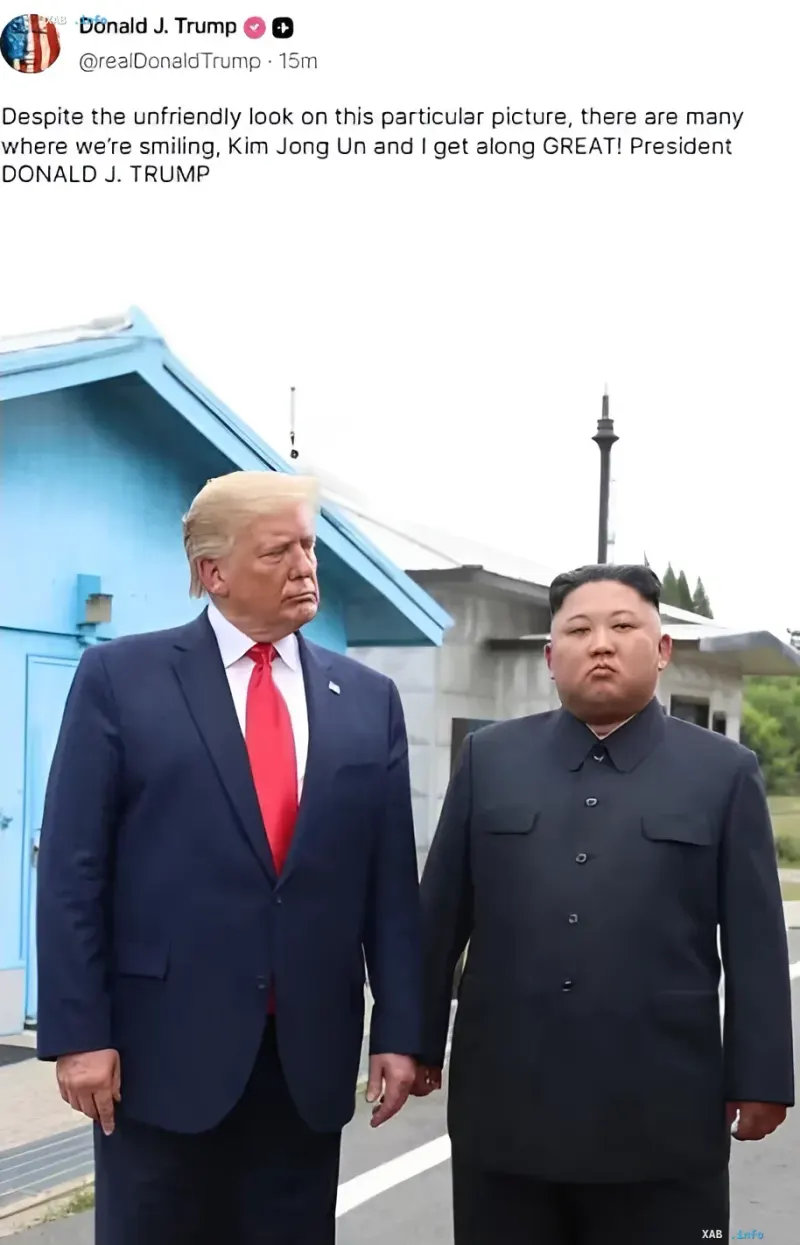
At the center of the publication was an archive photo taken on June 12, 2018, in Singapore during the first summit between the leaders of the US and North Korea. The photograph captures a curious moment: Donald Trump, addressing the press before a working lunch, asked photographers to make them look "beautiful and fit." At the same time, Kim Jong Un maintained a restrained, serious expression, which subsequently made the frame popular in cyberspace.
Trump accompanied the image with a comment: "Despite the unfriendly look in this specific photo, there are many others where we are smiling, Kim Jong Un and I GET ALONG GREAT!" This post, written in Trump's characteristic style, underscores his desire to emphasize his personal diplomatic influence, despite the passing years and changes in the international environment.
Seoul's Peace Initiative: Proposal to End the War
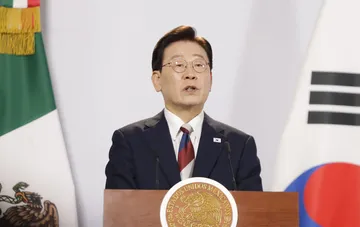
Trump's publication coincided with an important diplomatic event in the region. South Korean President Lee Jae-myung, speaking at a solemn ceremony dedicated to the 81st anniversary of liberation, made a sensational statement. He called on North Korea, the US, and China to immediately begin negotiations with the aim of signing a peace treaty that would officially end the Korean War, which has been ongoing in a ceasefire mode since 1953.
This initiative highlights Seoul's desire to stabilize the situation on the peninsula and protect the civilian population from threats of escalation. The South Korean leadership sees a peace treaty as a key step towards long-term security and regional development, which is particularly relevant given current tensions.
Geopolitical Context: Shifting Balance of Power
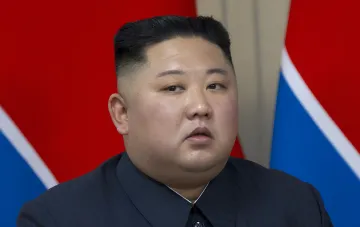
Analysts note that by mid-2026, the situation surrounding North Korea has changed significantly. North Korea, thanks to support from Russia and China, has emerged from international isolation. Russia blocked the extension of sanctions monitoring in the UN Security Council, and North Korea received economic and military support, including ammunition supplies and participation in military operations.
China also guaranteed Pyongyang large-scale economic aid, allowing Kim Jong Un to reduce dependence on American concessions. As a result, the motivation of the North Korean leadership to dialogue with the US has weakened, and the focus has shifted to strengthening military potential and regional alliances.
Military Tensions and Calls for Restraint
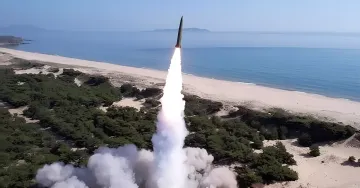
Despite diplomatic efforts, the military situation on the Korean Peninsula remains tense. North Korea carried out its 11th ballistic missile launch since the beginning of the year, and on Monday, August 17, large-scale joint military exercises between the US and South Korea are set to begin. In response, Pyongyang has deployed additional missile systems along the demarcation line, increasing the risks of escalation.
Under these conditions, calls for peace and restraint sound particularly urgent. The international community is calling on all parties to dialogue and seek diplomatic solutions to avoid a conflict that could have catastrophic consequences for the region and the world as a whole.
Contradictory Data
There are differences in assessments of the current situation. On the one hand, Trump emphasizes his "excellent relationship" with Kim Jong Un and the possibility of dialogue. On the other hand, analysts point out that Pyongyang is no longer interested in negotiations with the US, preferring to rely on support from Moscow and Beijing. Furthermore, the South Korean initiative for a peace treaty has not yet received a response from the North Korean side, creating uncertainty regarding its implementation.