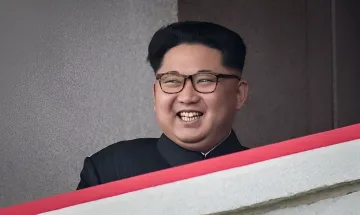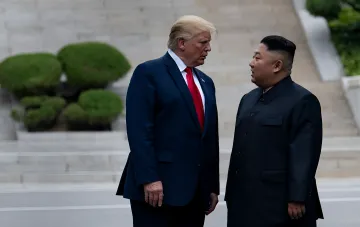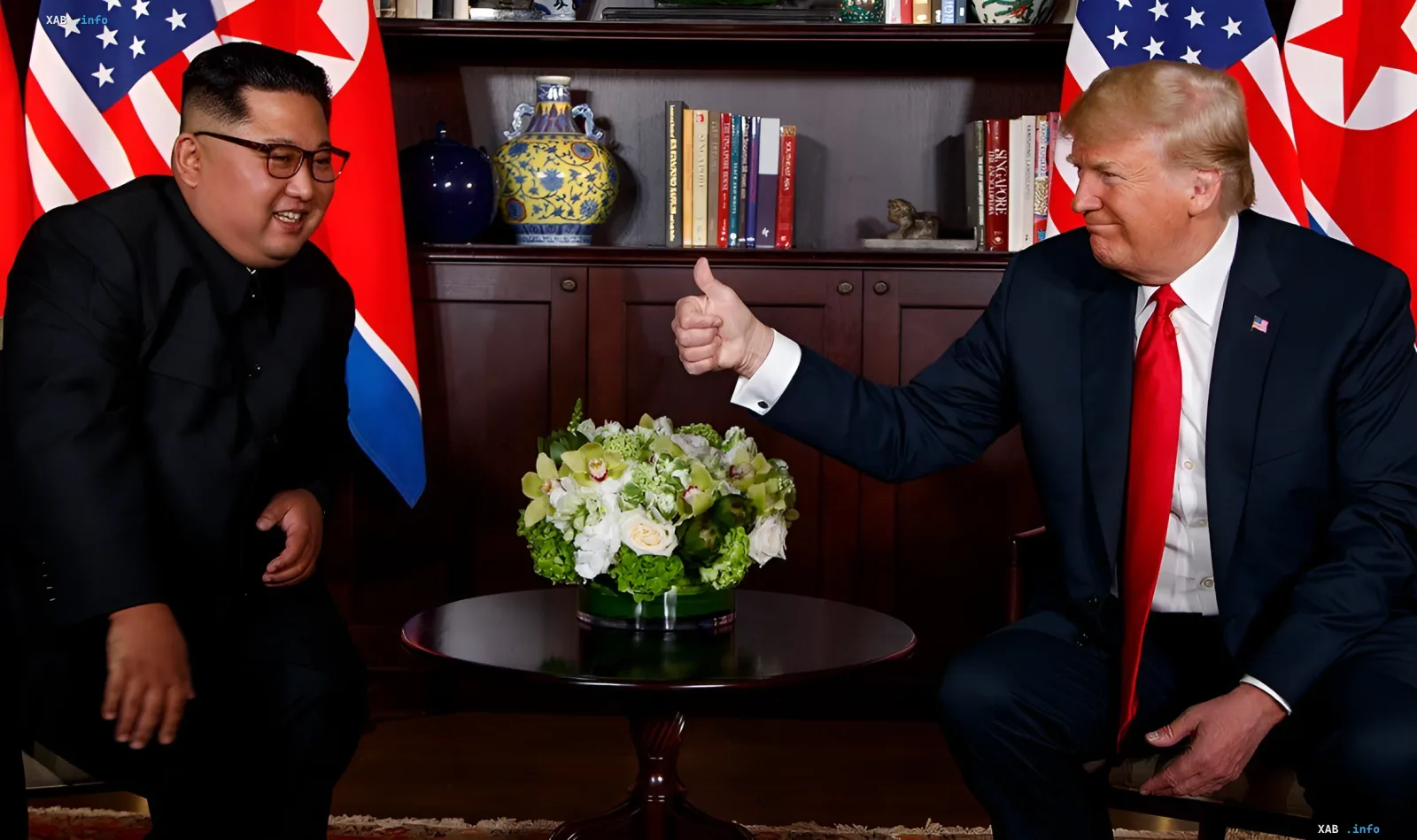
Washington and Pyongyang are moving toward a new chapter in their relations, one that could redraw the entire security architecture of the Asia-Pacific region. According to the Wall Street Journal, US President Donald Trump intends to meet with North Korean leader Kim Jong Un as early as this autumn, and on August 17, 2026, the American president publicly announced a "positive response" from Pyongyang to a proposal to resume talks. For Seoul, which has built its defense doctrine around the US military presence for decades, these signals sound like an alarm bell: an ally that was supposed to be a guarantor of security is showing a willingness to sacrifice joint maneuvers for a personal diplomatic track with Pyongyang.
A "Costly Signal": How Trump Is Redrawing the NATO-Style Korean Framework
At the heart of Washington's current move lies a commercial logic that Trump has consistently applied to alliance relations. According to reports, the American president has throughout his second term demanded that Seoul multiply its financial contributions for hosting the US military contingent on the Korean peninsula, calling South Korea "the richest country that pays almost nothing." In this context, the reduction in the scale of joint US–South Korea military exercises, which Trump announced in a fresh interview, is perceived in Seoul not as a temporary pause but as a systemic reassessment of commitments. In the president's words, the regular maneuvers are a "hostile and extremely costly signal" toward Pyongyang, which, he claims, "never posed a real threat" to the United States throughout his presidency.
A Personal Track: Correspondence Instead of Carriers
The key element of Trump's strategy toward North Korea is a bet on personal communication with Kim Jong Un. The American leader is convinced that his direct correspondence with the North Korean leader keeps the region from escalation more effectively than the deployment of carrier strike groups. That is why he is ready to sacrifice allies' combat readiness in order to preserve a fragile status quo. Analysts at zn.ua openly call Kim Jong Un "Trump's friend" and pose a reasonable question: if Washington's main diplomatic resource is concentrated on a single person in Pyongyang, who then should expect help from Washington? The meeting, which, according to WSJ, is planned for autumn 2026, will be the first practical test of this "one-on-one diplomacy" model at a time when North Korea's nuclear arsenal continues to grow.
Contradictory Data
Here it is necessary to honestly point out the discrepancy between statements and verified facts. On the one hand, Trump publicly confirmed his desire to meet with Kim Jong Un and announced a positive response from Pyongyang to the proposal for talks — this is recorded in WSJ materials and confirmed in an interview cited by Vedomosti (17.08.2026). On the other hand, key claims about a "radical reduction in the scale of joint military exercises," about "shock and panic in Seoul," and about South Korea's refusal to participate in a possible coalition conflict against Iran being the main reason for the cooling of relations have not received independent confirmation in the provided sources. Seoul, critically dependent on Middle Eastern oil supplies and the security of the Strait of Hormuz, does indeed maintain a cautious position on issues beyond the Korean peninsula; however, a direct statement by Trump about "betrayal and indifference" on the part of South Korea in connection with the Iran track has not been verified in open sources. Thus, part of the narrative about a "deal at the price of an alliance" remains in the zone of interpretation rather than confirmed fact.
A Window of Opportunity for Pyongyang: The Moscow Factor
Regardless of how far the reduction of exercises goes, the very fact of lowering the intensity of joint US–South Korea maneuvers creates a strategic window of opportunity for North Korea. Against the backdrop of unprecedented rapprochement between Pyongyang and Moscow — having received modern missile and satellite technology from Russia, the North Korean leadership feels significantly more protected. Trump's statement that North Korea "poses no threat" reads for Kim Jong Un as a green light for further strengthening of its nuclear potential with complete indulgence from the White House. Experts discussing scenarios for a new war that "could turn nuclear" emphasize: the fewer joint maneuvers on the peninsula, the less incentive Pyongyang has to freeze its program. The security paradox in which the White House is cornering South Korea is that Washington simultaneously demands geopolitical loyalty from Seoul around the world while demonstratively scaling back defense guarantees on the Korean peninsula itself.
What Comes Next: Autumn 2026 as a Bifurcation Point
Autumn 2026 will be a turning point for the entire security system in the Asia-Pacific region. If the meeting between Trump and Kim Jong Un takes place and ends with at least a formal agreement to freeze nuclear tests, it could become the first de-escalation signal in years. However, for Seoul the price of such a "peace breakthrough" will be disproportionately high: the loss of confidence in US defense guarantees, Washington's pressure on financial issues, and geopolitical isolation in a situation where Pyongyang is receiving technology from Moscow. South Korea, according to a number of analysts, is already considering scenarios related to strengthening its own defense autonomy, although there is currently no direct confirmation in open sources of the launch of its own nuclear program. One question remains open and, perhaps, the most important one: is Washington ready to pay for the president's personal friendship with the North Korean leader with the strategic trust of an ally that has stood on the front line of the Asian security framework for decades?