August 18, 2026 — U.S. President Donald Trump stated on Monday, August 17, that North Korean leader Kim Jong Un has responded to his call to resume dialogue and continues to treat him with respect. This announcement came a day after Trump ordered the Pentagon to significantly reduce joint military exercises with South Korea, citing their high cost and Seoul's refusal to participate in anti-Iran operations.
'Kim Jong Un Responded' — Trump's Statement at the White House
During a press conference at the White House, journalists asked the President why Kim Jong Un had not reacted to his attempts to resume diplomatic contact. Trump replied briefly: 'He responded.' He provided no details regarding the form of communication (letters, communication channels, intermediaries), the content of the response, or the dates and channels of message transmission. However, he added: 'Kim Jong Un has always treated me with respect.'
This statement marked the first public confirmation by the U.S. administration of any contact with Pyongyang since the start of Trump's second term. Unlike his first presidential term, when meetings and letter exchanges between leaders were widely covered, the White House is currently demonstrating significantly less openness regarding North Korean diplomacy.
Reduction of Exercises as a Gesture of Goodwill?
The decision to reduce U.S. and South Korean military exercises was announced on Saturday, August 15. Trump justified it with two reasons: economic costs and Seoul's political disagreement with Washington's position on Iran. However, Pyongyang has repeatedly stated that such exercises 'bring the world closer to nuclear war' and could serve as a pretext for 'self-defense' by North Korea.
Experts note that the reduction of exercises could be perceived as a signal of readiness for dialogue — especially in the context of Trump's statement about Kim's 'response.' However, the lack of public details leaves room for interpretation: is this a step toward de-escalation or merely a tactical maneuver ahead of elections or other geopolitical events?
Contradictory Data
While Trump claims that Kim Jong Un 'responded,' neither side — neither the White House nor North Korea — has provided official confirmation of the content or format of this response. The South Korean agency Yonhap reported that Seoul has received no notifications from Pyongyang regarding contacts with the U.S. Meanwhile, Pyongyang, via the state agency KCNA, stated that they 'do not ignore signals from Washington but demand concrete security guarantees.'
Thus, there is a discrepancy between Trump's statement about the existence of a response and the lack of public evidence of this fact. Three scenarios are possible: 1) a response was received through closed channels and is not yet disclosed; 2) Trump is exaggerating the extent of the contact; 3) Kim did respond, but his response was conditional or required further steps.
Historical Context: Why Now?
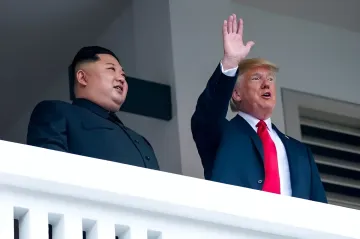
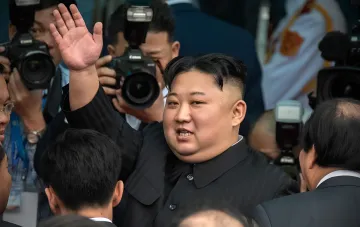
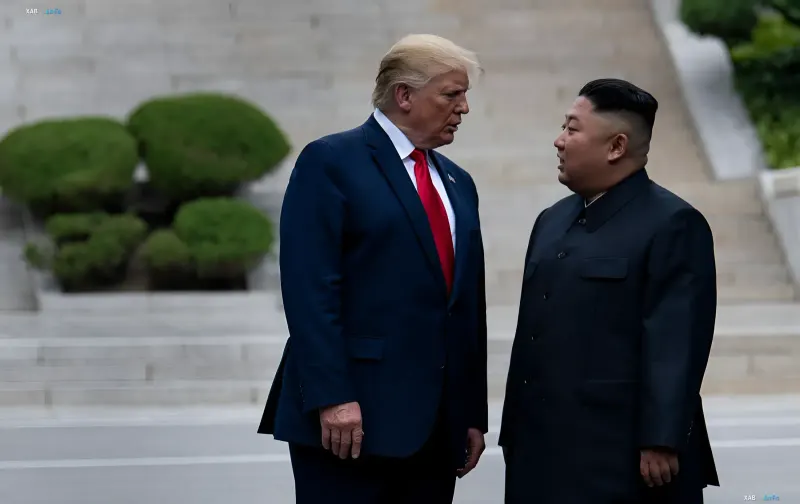
During his first presidential term, Trump and Kim Jong Un held three summits (Singapore, Hanoi, Panmunjom) and exchanged dozens of letters. After Trump left office in 2021, diplomacy with North Korea practically froze. The resumption of contacts in 2026 may be linked to a change in the geopolitical situation: tension around Iran, rising military spending, pressure from China, or Trump's internal political interests.
Some analysts believe Trump is using the North Korea topic to demonstrate his 'diplomatic effectiveness' ahead of upcoming elections. Others believe that reducing exercises is a real step toward reducing tension, especially if Pyongyang is truly ready for dialogue.
What's Next? Expectations and Risks
If dialogue has indeed resumed, the next step could be an exchange of official statements, the appointment of special representatives, or even preparations for a new meeting. However, risks remain high: North Korea continues to develop its nuclear program, while the U.S. and South Korea maintain a military presence on the peninsula. Any misstep could lead to escalation.
Nevertheless, Trump's statement about 'respect' from Kim and the fact of a 'response' is the first public signal of a possible turning point in relations between the two countries after several years of freezing. The world will watch closely for the next steps — especially whether this contact will be confirmed by official documents or remain at the level of words.