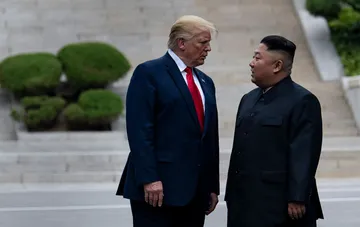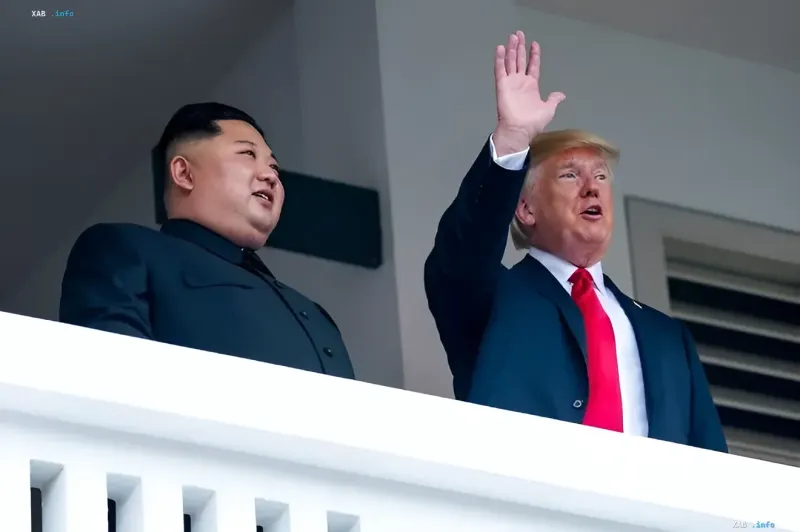
The US administration officially states that President Donald Trump's desire to establish direct dialogue with North Korean leader Kim Jong Un is not a sign of weakness or a unilateral "concession." Washington's position is based on a pragmatic approach: if contact serves the national interests of the state, the American leader is ready to pursue it regardless of past diplomatic stereotypes.
As State Department spokesperson Tommy Pigott told Yonhap news agency, this diplomatic line fully reflects the president's style. The White House emphasizes that Washington's strategic goal remains unchanged—to achieve complete and irreversible denuclearization of the Korean Peninsula—while utilizing any effective engagement tools to reach this objective.
Issues of backchannel diplomacy and Pyongyang's reaction
Answering journalists' questions about possible secret or backchannel contacts between Washington and Pyongyang, the State Department spokesperson refrained from specific comments, citing the traditional confidentiality of diplomatic work. However, the expert community notes an intensification of rhetoric surrounding Korean settlement since the beginning of Donald Trump's second presidential term, as he has repeatedly and publicly appealed to his personal relationship with the North Korean leader.
Back in August, the American leader stated his intention to arrange a personal meeting with Kim Jong Un before the end of the current year, but to date, official Pyongyang has not yet given a public and definitive response to this proposal, waiting for the most favorable moment to resume the negotiation process.
Regional escalation and new missile launches
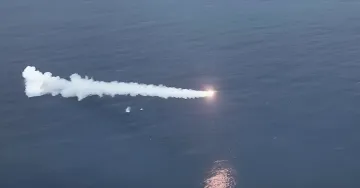
The situation on the Korean Peninsula remains tense against the backdrop of continued displays of military force. On the morning of October 3, 2026, the Joint Chiefs of Staff of South Korea's armed forces recorded a new launch of an unidentified flying object into the sea by its northern neighbors.
This latest incident occurred just thirteen days after the previous missile test, when North Korea launched two short-range ballistic missiles from the Wonsan area into the East Sea on September 20, once again highlighting the fragility of security in the region.