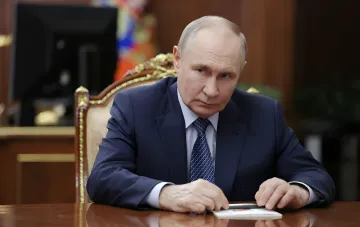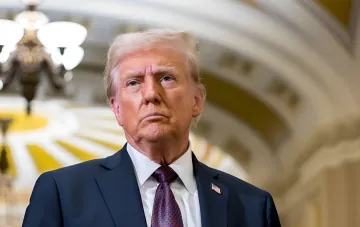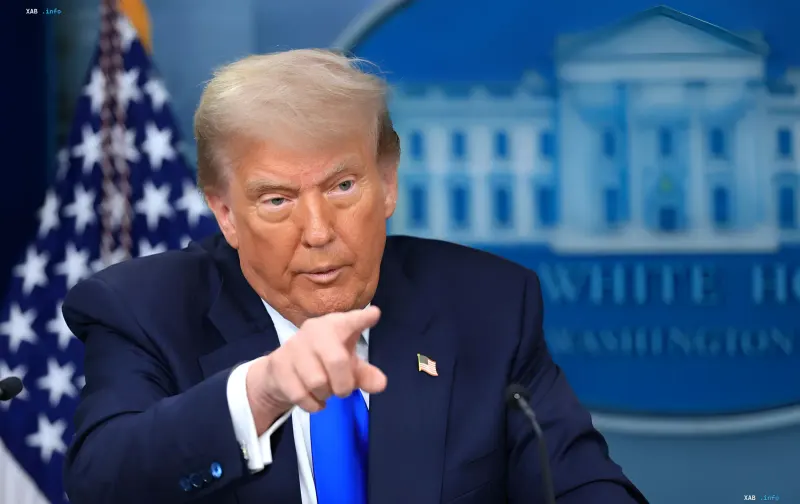
U.S. President Donald Trump stated that he is ready to hold a meeting with Russian leader Vladimir Putin only if Moscow agrees to end the war against Ukraine and is prepared to sign a peace agreement. According to RBC-Ukraine, this is stated in a White House post on the social network X. The statement was made in response to a journalist's question about whether the American leader is considering holding another summit with the head of the Kremlin in the near future.
The key condition for a summit
According to Trump, he will agree to a meeting only on the condition that Russia is willing to sign a peace agreement with Ukraine and "finally stop the war." "We will do it if I want to, but I want to do it when we are ready to conclude a peace agreement," the U.S. president emphasized. Thus, in his words, the summit is not an end in itself but is subordinate to a practical task — to lock in the agreements on ending hostilities.
"Good relations with everyone"
Trump added that he would like to see "good relations with Russia, Ukraine, with everyone," noting that this "would be great for business." He also explained that he could meet with Putin "right now" if the latter stopped the fighting at the front. "I plan to do this when this war ends, and I think we will do it," the head of the White House concluded, directly linking the timing of the summit to the outcome of the conflict.
A public call to stop the war
In addition to discussing the format of the meeting, Trump publicly called on Vladimir Putin and Ukrainian President Volodymyr Zelensky to "stop this stupid war." This statement was part of the broader rhetoric of the American president, who in recent comments also assessed the threat of a possible Russian attack on NATO countries and outlined his position on the escalation of the conflict.
The Kremlin's reaction
Immediately after Trump's statement, the same source notes, the head of the Kremlin unexpectedly spoke of a "chance" for a peace agreement with Ukraine. At the same time, Putin began to assert that Kyiv and Moscow should negotiate between themselves, shifting the focus from multilateral formats to direct bilateral talks. Meanwhile, Zelensky, according to the publication, warned of a new wave of escalation from Russia.
Contradictory data
The statements of the parties show differences in wording and logic. On the one hand, Trump directly ties the possibility of a meeting with Putin to the end of the war and the signing of a peace agreement, that is, he puts forward a condition linked to the outcome of the conflict. On the other hand, in a subsequent Kremlin statement, according to the same source, the emphasis shifts to the idea that "Kyiv and Moscow should negotiate," with peace described as a "chance," implying a bilateral path without an explicit link to the conditions voiced by the White House. In addition, the original text of the publication contains evaluative and emotionally charged formulations regarding the Russian leader, which are not a neutral fact and require careful interpretation. Thus, the fact of Trump's statement is confirmed by a reference to the White House post, while the interpretation and the subsequent Kremlin reaction rely on a single source and may differ in details.
The context of escalation
The statement was made against a backdrop of continuing tension: the Ukrainian side had warned of a new wave of escalation, while the American president publicly assessed the risks for NATO countries. Under these conditions, the question of a summit with Russia is perceived not as a diplomatic gesture but as a tool tied to a specific outcome — the cessation of hostilities.