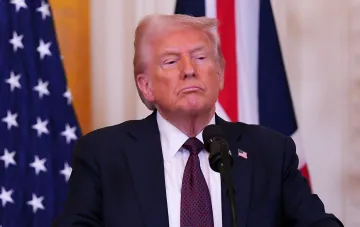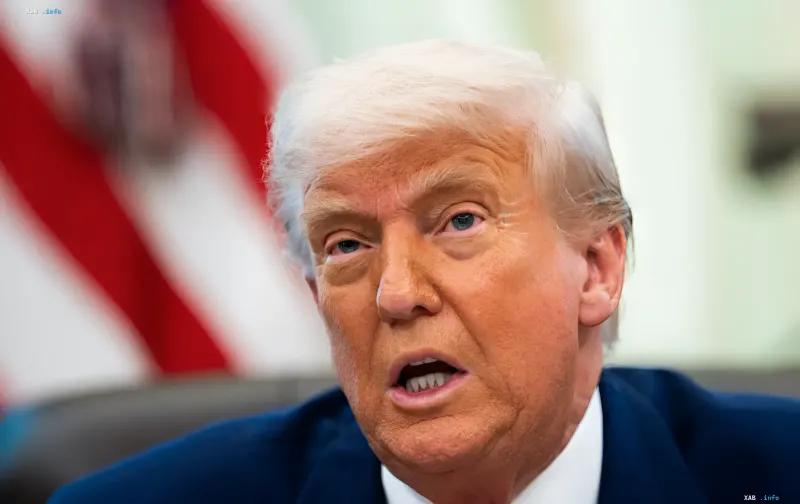
U.S. President Donald Trump has stated that he has no knowledge of restrictions on the speed of the Starlink (Starshield) satellite system in Ukraine. Responding to a journalist's question, the head of the White House answered briefly: "I haven't heard about that." The statement was made before the American leader's departure for the Philippines and Asia, which gives his response the character of a brief "on-the-run" comment rather than a detailed position of the U.S. administration regarding the incident.
Context: What happened with Starshield
The journalist's question was not accidental: at that time, interruptions in the operation of Starshield, the military satellite communications system from SpaceX, had been recorded in Ukraine for several days. On November 12, the Ukrainian military recorded systemic speed restrictions on terminals to 161 km/h along the front line and in temporarily occupied territories. On November 13, the Ministry of Defense of Ukraine clarified that such Starlink operation restrictions were detected only over territories temporarily occupied by Russia. Later, SpaceX explained that the speed restrictions on Starshield terminals in Ukraine were caused by technical problems.
Connection to energy strikes
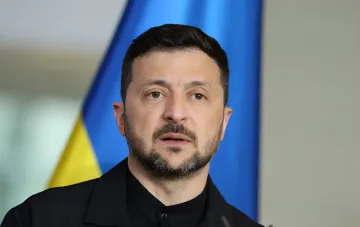
Against the backdrop of these restrictions, on the night of November 15 and the morning of the same day, Russian troops attacked energy facilities in five regions of Ukraine. President Volodymyr Zelenskyy stated that some of the Russian strikes reached their targets precisely due to the speed restrictions on Starshield terminals. According to him, the maximum speed in the temporarily occupied territories was 161 km/h, and he called this situation dangerous, suggesting that the decision might be political and indicate that the occupied territories are partially not recognized as Ukrainian.
Washington's position and divergent assessments
Thus, different versions have formed around the same fact — the recorded Starshield speed restrictions. Kyiv points to the systemic nature of the restrictions and their impact on defense capabilities, SpaceX attributes the causes to technical glitches, and Trump stated that he had not heard about the situation. The discrepancy in the assessments of the incident's causes remains open: the Ukrainian side allows for political underpinnings, the American company speaks about technical issues, and the head of state whose country is a key actor in this matter has publicly distanced himself from the topic.
What this means
For observers, Trump's statement is important primarily as an indicator of how deeply the U.S. administration is involved in operational issues of satellite communications in the conflict theater. So far, there is no official position from Washington on the substance of the restrictions: there is only the confirmation that the president "has not heard" about them. Future dynamics will depend on whether a detailed explanation of the causes and timelines for restoring normal terminal speeds appears from the U.S. or SpaceX, and whether the restrictions on occupied territories remain.