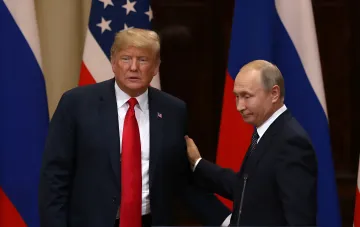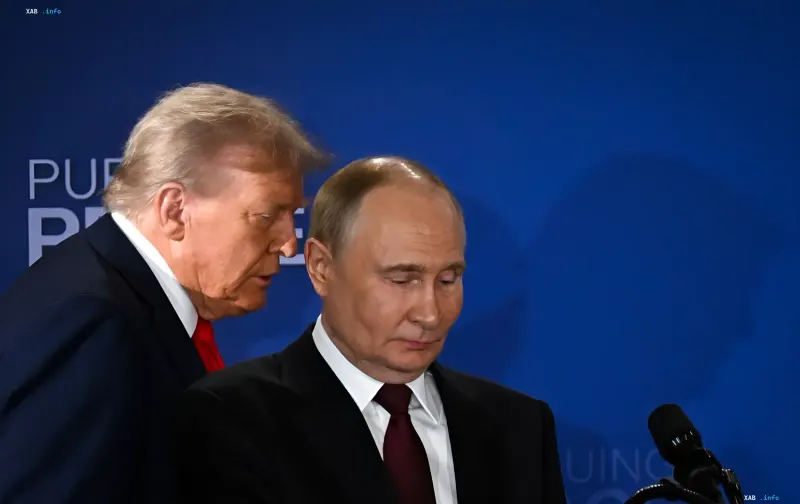
On November 19, 2026, on the sidelines of the Asia-Pacific Economic Cooperation (APEC) summit in Shenzhen, China, a bilateral meeting took place between U.S. President Donald Trump and Russian President Vladimir Putin. The meeting began with an open protocol session, after which the leaders moved on to closed-door negotiations. Before the conversation started, Trump publicly set the tone for the meeting by calling his Russian counterpart 'my friend' and emphasizing that the two leaders have had 'great relations for many years.' During the protocol session, the Russian leader refrained from making statements to the press, which, according to journalists' observations, has become a characteristic feature of such formats.
'This is my friend. Glad to see you': Trump's Statements
Opening the meeting, Donald Trump stated that he had been looking forward to talking with Putin and expressed hope for a productive discussion. 'We have known each other for many years, we will meet today, and I hope we will have a productive meeting,' said the head of the White House. He added that the negotiations could result in 'a lot of wonderful things' or serve as 'the start of something good.' According to the U.S. president, the joint work of the two leaders is capable of bringing serious positive outcomes. The press service and television channels broadcasting the protocol session recorded Trump uttering the phrase: 'Who is this? This is my friend. Glad to see you.' Vladimir Putin did not publicly respond with comments to the media.
Format of Negotiations: From Bilateral Meeting to Trilateral Format
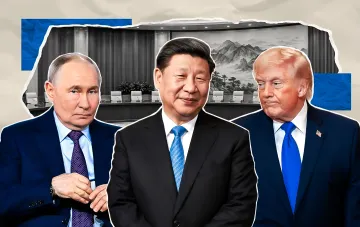
The meeting between Trump and Putin was part of a broader diplomatic program at the APEC summit in Shenzhen. According to information available to the editorial board, a trilateral meeting involving Xi Jinping is scheduled within the framework of the same summit. According to The Wall Street Journal, the idea for such a trilateral format was proposed by Putin himself as early as October of this year, with the stated goal of discussing the end of the war on terms favorable to Moscow. At the same time, the South China Morning Post noted that the issue of Ukraine on the trilateral agenda might take a back seat, giving way to issues of regional trade and security in the Asia-Pacific region. Ukraine was not invited to the negotiations in Shenzhen.
Kyiv's Position: Zelenskyy in an Interview with NBC
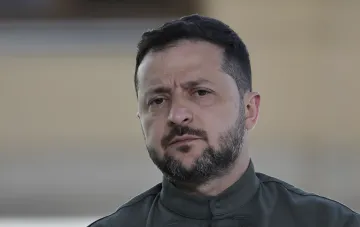
Ukrainian President Volodymyr Zelenskyy, commenting on the negotiations in China in an interview with the American TV channel NBC, stated that the U.S. and China are capable of ending the war 'in a single meeting' if they threaten Russia with sanctions and halt trade with it. At the same time, he emphasized that any decisions regarding Ukraine made without Kyiv's participation 'will remain mere rhetoric.' In Kyiv, according to Zelenskyy, they are awaiting information from Trump's envoys about the progress and results of the meetings in Shenzhen, after which the Ukrainian side will prepare its next steps. Thus, official Kyiv adopts the position of an observer, not being a party to the negotiations, but insisting that its interests must be taken into account in any final document.
Context and Expectations: What Is Known About the Dynamics of Relations
The meeting in Shenzhen takes place against the backdrop of a months-long cycle of diplomatic signals between Washington and Moscow. Trump's public rhetoric about 'great relations' and friendship with Putin contrasts with the fact that formal sanction pressure mechanisms and military actions on Ukrainian territory maintain their momentum. For observers, the key question remains whether these statements made during the protocol session will translate into concrete agreements on de-escalation, prisoner exchanges, trade, or security. The trilateral format involving China adds geopolitical depth to the negotiations: Beijing, as a major trader of energy resources with Russia, possesses leverage that neither Washington nor Moscow has individually. The outcomes of the meeting and the trilateral summit, according to Kyiv and Western analysts, will be decisive for the further trajectory of the conflict in 2027.