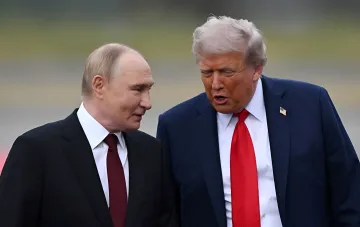
U.S. President Donald Trump's attempt to stabilize the domestic fuel market ahead of the congressional midterm elections through a so-called "diesel deal" with Moscow creates serious geopolitical risks. This agreement, which involves supplying small batches of Russian oil products to the United States, is causing deep concern in Kyiv. Experts and analysts note that the Kremlin is skillfully using the current energy crisis for its own purposes, attempting to provoke a rift in relations between Washington and Ukraine and to force an end to Ukrainian drone strikes on Russian oil refineries.
Political Context and Causes of the Fuel Crisis in the USA
Experts attribute the main reason for rising fuel prices in the American market to the consequences of military confrontation with Iran and the subsequent disruptions in the supply of oil and petroleum products from the Persian Gulf region. Nevertheless, ahead of the crucial vote on November 3, 2026, the White House seeks to avoid political responsibility for economic difficulties. In the current situation, the U.S. administration is trying to shift the blame onto Ukrainian military operations, although independent analysts have repeatedly emphasized that strikes on Russian refineries create a gasoline shortage inside Russia but do not critically impact global volumes of diesel fuel, surpluses of which Moscow was even forced to accumulate.
The Kremlin's Geopolitical Goals in the Diesel Deal
The Russian Federation is offering supplies of relatively modest volumes of diesel—about 300,000 tons in October and 500,000 tons in November, which is only a small fraction of daily U.S. consumption. However, for Vladimir Putin, this is primarily a political game pursuing three strategic objectives. First, Moscow seeks to restore Washington's lost trust and make the American leader its tacit ally. Second, the Kremlin aims to force the U.S. to pressure Kyiv into unilaterally halting strikes on Russia's critical infrastructure. Third, it creates a dangerous precedent of concluding economic agreements while bypassing the fundamental condition of ending the aggression.
Contradictory Data
While the American administration presents the deal as a pragmatic step to lower prices for American voters, the Ukrainian side and European observers point to a dangerous distortion of the negotiation process. Contradictory reports are emerging regarding fuel volumes and actual arrival times: some sources claim that tankers are already heading toward the U.S. coast, while other experts doubt the scale and long-term nature of these supplies. In addition, discrepancies arise regarding Kyiv's readiness to compromise: official Kyiv declares its fundamental openness to an energy truce, but exclusively on the condition of a mirrored halt to Russian strikes on Ukraine's energy grid.
Implications for Ukrainian-American Relations
According to political analysts, although the current situation creates temporary tension, it is not a critical catastrophe, but rather another political crisis of the electoral cycle. Trump temporarily becomes an instrument of Russian policy in this context, but strategic contradictions between Moscow and Washington will inevitably manifest in the future. Experts emphasize that traditional fluctuations in the American leadership's mood require Ukraine to show resilience and readiness for dialogue after the electoral cycle in the United States concludes.