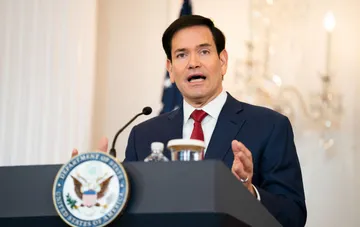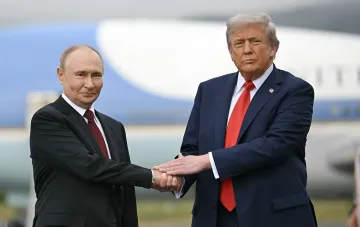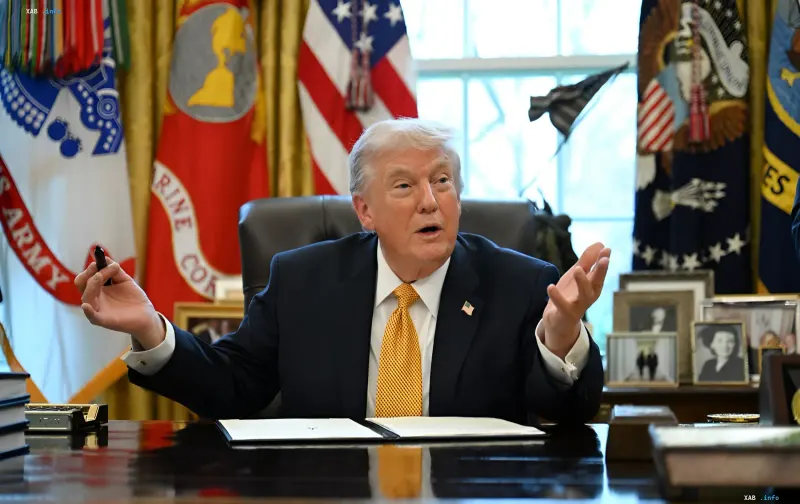
On September 14, 2026, US President Donald Trump issued a statement announcing that Ukraine and Russia had reached an agreement to stop striking each other's energy facilities. According to him, Kyiv agreed to refrain from attacks on Russian energy infrastructure, while Moscow would symmetrically cease shelling Ukrainian facilities. However, the very next day, on September 15, Financial Times journalist Christopher Miller published a post on his X social media account calling the American leader's statement premature.
FT: Agreement Still in the Works
According to Christopher Miller, based on information from sources directly involved in the negotiation process in Kyiv, work on the agreement to halt energy strikes is ongoing and a final deal between Ukraine and Russia has not yet been concluded. "Trump rushed ahead: based on my information from people involved in this process in Kyiv, this is something that is still in the development stage, but they are warning that there is no final agreement yet. Details are unclear, but there will be more information and details," the journalist wrote. Thus, the key parameters of the potential agreement — the list of protected facilities, the verification mechanism, and penalties for violations — remain unagreed.
Kyiv's Position: Readiness Conditional on Guarantees
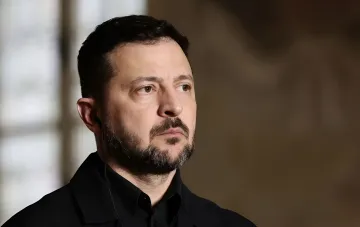
Ukrainian President Volodymyr Zelenskyy, commenting on Trump's statement, said that Ukraine is ready for such an agreement but expects specifics and guarantees from its partners that Russia will indeed stop striking Ukrainian energy and critical infrastructure. Kyiv emphasizes that without a verifiable control mechanism and a clear definition of the list of facilities, any declaration of a "ceasefire" remains merely a declaration. This indicates that the formal framework of the agreement has not yet been worked out either at the working-group level or at the leaders' level.
Contradictory Data
There is a direct discrepancy between the statements of the parties. On the one hand, Donald Trump publicly announced that an agreement had been reached, using wording that implied the process was complete ("agreed not to carry out strikes"). On the other hand, a Financial Times source, citing participants in the negotiation process in Kyiv, asserts that the agreement has not been concluded, the details are unclear, and work is ongoing. Neither party — not Washington, nor Moscow, nor official Kyiv — has published the text or even a draft of a document confirming the existence of agreed terms. Thus, until a verifiable text or an official joint statement emerges, the contradiction between the White House's rhetoric and the actual status of the negotiations remains unresolved.
Context: Why the Energy Issue Is Critical
Strikes on energy infrastructure have become one of the most destructive elements of the conflict: attacks on power plants, substations, and oil refineries lead to mass power outages, humanitarian consequences for the civilian population, and economic losses. This is precisely why any agreement to halt such strikes is perceived as a potentially significant de-escalation step. However, as FT sources note, without a clear definition of which facilities fall under protection, what the procedure is for notifying violations, and who acts as the arbiter, such an agreement risks remaining at the level of a political declaration. As of September 15, 2026, neither party has confirmed readiness to sign a document, and the negotiation process, according to available data, remains at the stage of working out the details.