Washington, August 6, 2026 — The administration of US President Donald Trump has taken an unprecedented step in immigration policy by signing two new executive orders aimed at effectively limiting birthright citizenship. This decision continues the White House's long-standing battle against the principle of *jus soli* (right of the soil), which guarantees citizenship to anyone born on the territory of the United States, regardless of their parents' status.
New rules: who will no longer receive a US passport
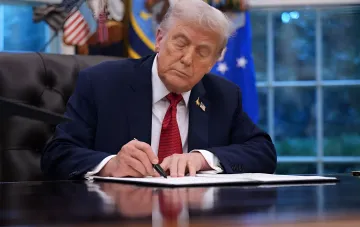
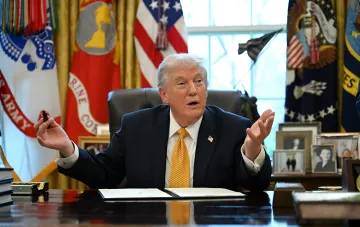
According to the text of the new directives signed by the President today, the right to automatic citizenship will be annulled for several categories of children. Specifically, the orders exclude from the protection of the 14th Amendment children whose parents are in the US temporarily or illegally. Additionally, restrictions apply to children of foreign government officials and individuals whom US authorities may classify as "foreign enemies".
White House advisor Stephen Miller stated that since the signing of the documents, the practice of "birth tourism" is officially banned. The administration uses this term to refer to trips by foreigners to the US with the sole purpose of giving birth to a child who automatically becomes a citizen and gains the right to legalize their parents' status in the future. "We are closing this loophole that has been used for decades to circumvent the law," Miller emphasized.
Legal battle: an attempt to bypass the Supreme Court ruling
This move is the administration's response to a recent defeat in the US Supreme Court. In 2025, Trump already attempted to introduce similar restrictions, ordering federal agencies not to recognize children as citizens if neither parent held a green card or a US passport. However, the court then ruled the initiative unconstitutional.
Chief Justice John Roberts, in his ruling, pointed out that the authors of the 14th Amendment of 1868 clearly stipulated: all persons born in the US and subject to its jurisdiction are citizens. In response, the current administration has attempted to change its legal argumentation. The White House claims that the new orders do not repeal the amendment but merely clarify that certain categories of foreigners (such as illegal immigrants) are not under the "full jurisdiction" of the US at the time of the child's birth, and therefore do not fall under the court's ruling.
Contradictory data
Since the signing of the orders, a serious contradiction has arisen in the US legal field between the position of the executive branch and the legal community. On the one hand, the White House insists that their actions are fully legitimate and aimed at protecting sovereignty, excluding from the system only those who have no legal grounds to be in the country. On the other hand, constitutional experts and human rights activists argue that the phrase "subject to jurisdiction" in the 14th Amendment has historically been interpreted as physical presence on the territory of the country, not immigration status. Critics claim that the new orders are a direct attempt to rewrite the Constitution through executive orders, which will almost certainly lead to new lawsuits and a possible ban on the orders by federal courts.
Geopolitical context: the question of missiles for Ukraine
In addition to the domestic immigration agenda, during the course of today, President Trump commented on the request from Ukrainian leader Volodymyr Zelenskyy for the supply of missiles for air defense systems. Trump expressed dissatisfaction with the current situation, stating that the Biden administration had already provided Ukraine with a significant amount of weaponry, which led to the depletion of the US's own stockpiles. The President noted that the States are now spending resources on replenishing arsenals rather than expanding them.
Furthermore, in connection with a recent data leak revealing that the US Army spent almost 80% of its THAAD missiles (Terminal High Altitude Area Defense system) during conflicts in the Middle East, Trump threatened prison for those responsible for leaking information about the shortage of weapons. This underscores the administration's tough stance on national security and information control.