On Friday, November 20, US President Donald Trump publicly expressed dissatisfaction that American tech companies are considering building data centers outside the country. At a press conference, he stated that he does not want such facilities to be built abroad and threatened companies that continue to do so with "huge taxes."
The Threat of Tax Pressure
"If companies do that, we will institute massive taxes for them," Trump told reporters. Thus, the president essentially outlined a new tool for pressuring the corporate sector: the decision to localize artificial intelligence and cloud computing infrastructure is now directly linked to tax consequences for business.
The China Argument
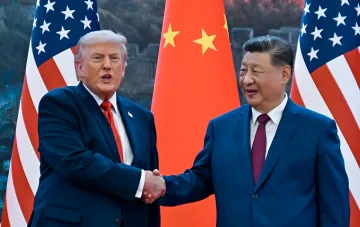
Justifying his position, Trump referred to geopolitical risks. According to him, if American companies move data center construction abroad, it will create conditions for China to "take control" of data center construction. In this light, the president's statement sounds like an attempt to keep critical digital infrastructure in national hands amid growing competition with the PRC in the field of AI.
Call to "Accept" Data Centers Close to Home
In addition to threats to companies, Trump appealed to American citizens, urging them to accept the construction of data centers near where they live. This reflects the typical problem of locating energy-intensive AI infrastructure facilities: they require large areas and capacities, which often encounters resistance from local residents.
Comments on Ukraine: "Chances Are Good"
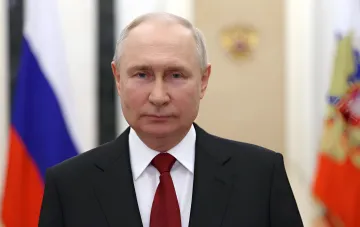
At the same press conference, Trump spoke about the war in Ukraine. He stated that, in his estimation, Vladimir Putin wants to end the conflict and that the chances of reaching a peace agreement are good. According to the Financial Times, the US president aims to secure a peace agreement between Ukraine and Russia by early January—before Democrats regain control of Congress.
Thus, within a few hours, Trump tied together three topics—tax policy regarding AI infrastructure, competition with China, and diplomacy on Ukraine—highlighting how technological and military agendas are increasingly intertwined in his rhetoric.