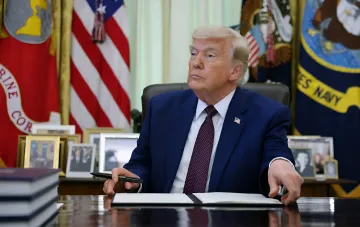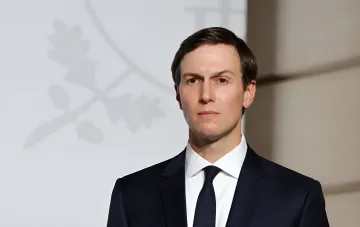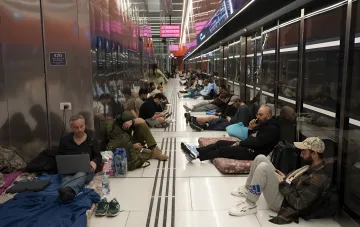
The dream of a "New Gaza" with gleaming skyscrapers and resort hotels, which Donald Trump actively promoted at the beginning of 2026, has collided with a harsh reality. The British newspaper The Guardian published an exposé revealing that the first contract issued by the "Peace Council" (Board of Peace) created by Trump has nothing to do with housing reconstruction for Palestinians. Instead of residential districts, a fortified military outpost is being built in the Gaza Strip.
Military Outpost Instead of the "Master Plan"
According to documents accessed by journalists, the first contractor is the American construction company Arkel International from Louisiana, known for its defense contracts in Iraq. The contract, currently in the final stages of approval, provides for the construction of a facility measuring 100 by 120 meters. Officially, it is positioned as a fortified checkpoint, but its functionality and infrastructure indicate the creation of a full-fledged military base.
This facility will serve as a base for a pilot contingent of the International Stabilization Forces (ISF), consisting of 150 soldiers from Morocco. Their deployment was approved by a UN Security Council resolution, but the actual scale of construction raises questions. According to sources, conditions for soldiers at the current stage will be Spartan: the contract specifies "army tents, cots, bio-toilets, and washbasins." However, this is only the first phase: a giant base capable of housing between 5,000 and 10,000 military personnel is planned for this location in the future.
Hidden Logic and the "Evacuation Route"
The choice of location for the base—approximately 1.5–1.6 km from the Israeli border—is not accidental. The territory where work is underway is under tight control by the IDF (Tzahal). The documents feature a special protected corridor called the "rapid evacuation route," which will connect the base directly to Israel. This will allow Moroccan soldiers to instantly leave the danger zone in the event of shelling or an attack. The soldiers themselves will be stationed in Gaza on a rotational basis, resting at a base inside Israel.
The use of a Moroccan contingent specifically is a subtle geopolitical move by the Trump administration. Morocco, being a key US ally outside NATO and a partner of Israel under the "Abraham Accords," allows Washington to create the appearance that Gaza is controlled by Muslim countries. However, in fact, this becomes a tool for American and Israeli control over the region, which is drawing criticism in the Arab world.
Contradictory Data
An international scandal is brewing around this news, and there are significant discrepancies in the versions of the parties involved. On the one hand, the "Peace Council" administration claims that building a military base is a necessary step to ensure security and create conditions for future reconstruction. On the other hand, critics and former allies of Trump, such as Marjorie Taylor Greene, accuse the president of betrayal. They claim he violated his main campaign promise: "no new US military missions abroad".
Furthermore, there are inconsistencies regarding dates and scale. At the beginning of the year, Jared Kushner presented the "Master Plan" for creating a metropolis, but the actual reconstruction of civilian infrastructure has completely stalled. More than 2 million Palestinians still live in tent camps, and the reconstruction fund at the World Bank is empty. Instead of the promised residential districts, Trump is starting with military bases, which casts doubt on the priorities of the "Peace Council".
Political Rift and International Reaction
Trump's actions have already caused a rift within the US. His former far-right allies accuse the president of dragging the country into new conflicts under the guise of peacekeeping. At the same time, Israeli and American media confirm the information about the contract, but comment cautiously on its details. The international community is watching the situation with concern, fearing that the "Peace Council" will become a tool for legitimizing a military presence rather than reconstruction.
This case demonstrates how far politics can drift from stated goals. Instead of a "New Gaza," the world is getting a new military base, and Trump's promises of peace and prosperity remain only on paper. The future of the Gaza Strip remains hazy, and the first contract of the "Peace Council" has become a symbol of the rift between rhetoric and reality.