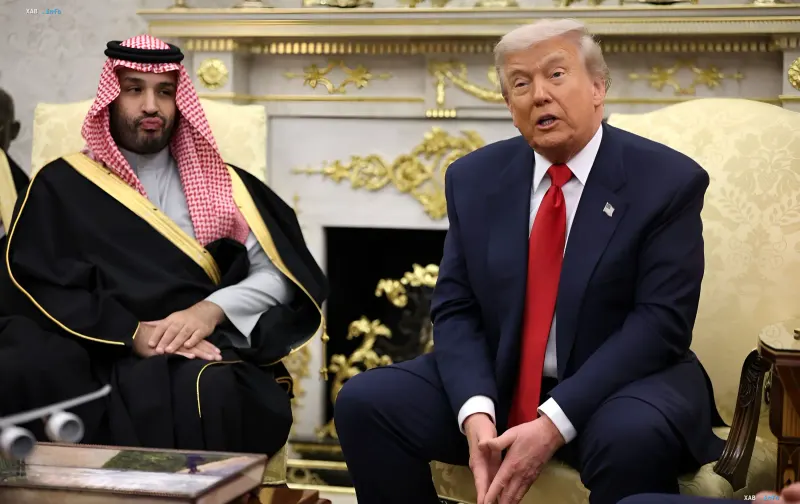
Donald Trump has officially approved a major 30-year nuclear agreement with Saudi Arabia. The document, the result of lengthy negotiations, opens the door for Riyadh to enrich uranium without adopting the so-called 'gold standard' of oversight by the International Atomic Energy Agency (IAEA).
The Essence of the Agreement and the Role of the US
According to CNN and the Wall Street Journal, as reported by RBC-Ukraine, American companies will provide Saudi Arabia with advanced technologies and expertise to develop its national atomic program. The White House plans to submit the document to Congress immediately after publication. Experts believe that once the agreement is adopted, there should be no problems, as the voices of critics will not be sufficient to block the initiative.
Previously, the Trump administration hesitated to make a decision. The main reasons for the delay were concerns about the escalation of conflict with Iran, as well as the risk that legislators would block the document due to its controversial provisions.
Rejection of International Guarantees
The key point of the deal is that Saudi Arabia will not sign the IAEA Additional Protocol. The official reason for the refusal lies in religious and political considerations: Riyadh fears that international inspectors might gain access to royal palaces or the holy city of Mecca.
Instead, the parties agreed on bilateral guarantees. They resemble a typical protocol but exclude clauses that irritate the Saudi side. Now, the terms must be ratified by the IAEA Board of Governors.
Geopolitical Risks and Regional Reaction
Any transfer of nuclear technology to Riyadh sparks sharp debates. The ability to independently enrich fuel opens the path to creating nuclear weapons, which poses a threat of destabilizing the entire Middle East. The agreement also contains a ban on purchasing similar technologies from third countries, however, the restrictions on inspections have already raised skepticism among US legislators.
Jerusalem has traditionally opposed Arab countries' access to full nuclear cycles. However, the current situation with Iran and its nuclear program remains complex and uncertain, despite US pressure. Under these conditions, Riyadh's position remains firm: Saudi Crown Prince Mohammed bin Salman previously promised that the kingdom would create its own nuclear weapons if Tehran were to acquire them.
Strengthening ties with Persian Gulf countries has become a key goal of the Trump administration. Last year, he announced agreements with the UAE worth over $200 billion during his visit to the region, confirming the course to strengthen strategic alliances in the Middle East.