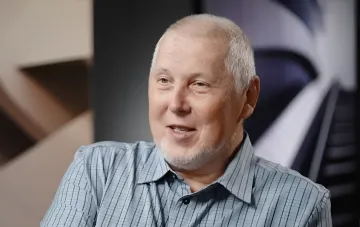
Amid growing societal skepticism towards artificial intelligence, technology industry leaders are forced to rethink their communication strategies. Dario Amodei, CEO of Anthropic, one of the leading developers of advanced AI models, recently voiced his position on the causes of the negative perception of AI. In his view, the problem lies not in the technologies themselves, but in a deep "crisis of trust" between society and the technology sector.
Trust crisis: why people fear technology
Amodei emphasizes that his warnings about AI risks are often perceived as pessimism, yet he believes he is simply informing the public about potential threats. "I think that ordinary people do not trust companies, authorities, or the tech industry and always just assume that we are preparing some new way to deceive them," he stated. According to Amodei, this wary attitude has been forming for decades and finds yet another manifestation in the case of AI.
Investor Gavin Baker, who criticizes Anthropic's leadership for fostering an overly pessimistic perception of AI, received a firm answer from Amodei: the problem is not that AI is dangerous, but that society does not trust those who develop it. This is a fundamental crisis of trust that cannot be overcome by words alone.
Promises vs. reality: why AI must cure cancer
The only thing Amodei agrees with critics of the industry on is the failure to fulfill promises regarding the provision of universal benefits. "This is indeed our fault, and I think critics should focus on this direction instead of discussing press releases and marketing," he noted. For example, promises to defeat cancer with the help of AI, according to Amodei, are more of a cliché than a motivating statement. In this case, people's attitude towards AI can only be changed by actually demonstrating its ability to cure cancer.
Amodei is convinced that AI must prove its value through real achievements, not marketing slogans. Only when AI can demonstrate its capabilities in solving global problems, such as fighting cancer, will society begin to perceive it as a tool for progress rather than a threat.
AI regulation: balancing safety and innovation
Amodei also disagrees with the views of liberal-minded experts on the process of government regulation of AI model releases. "Many people outside this bubble believe that regulation limits the power of corporations and benefits ordinary people," he countered. Anthropic tries to formulate its proposals in the field of AI regulation in such a way as to curb the expansion of large advanced companies for the sake of the progress of smaller competitors.
Amodei is convinced that AI is a technology that leads to the concentration of power. The distribution of models with open weights partially solves this problem, but cannot be considered a panacea, as the concentration of power shifts towards those who have the largest computing resources. In his words, "traffic rules" must appear in the industry that will take into account security risks, limit the influence of large companies, and also leave room in the market for models with open weights, while taking into account associated risks.
Contradictory data
There are disagreements between Amodei and some industry experts regarding how effectively regulation can solve the problem of power concentration. Some believe that regulation could slow down innovation and limit access to advanced technologies. Others, including Amodei, are convinced that without regulation, AI could become a tool in the hands of a few elites, exacerbating social inequality.
There are also disagreements regarding how realistic it is for AI to solve global problems, such as fighting cancer. Some experts believe this is just a marketing move, while others, including Amodei, are convinced that AI has huge potential in this area.
Conclusion: the path to trust through real achievements
Dario Amodei emphasizes that the key to changing society's attitude towards AI lies in real achievements, not marketing promises. Only when AI can prove its ability to solve global problems, such as fighting cancer, will society begin to perceive it as a tool for progress rather than a threat. At the same time, industry regulation must be balanced to ensure both safety and innovation.