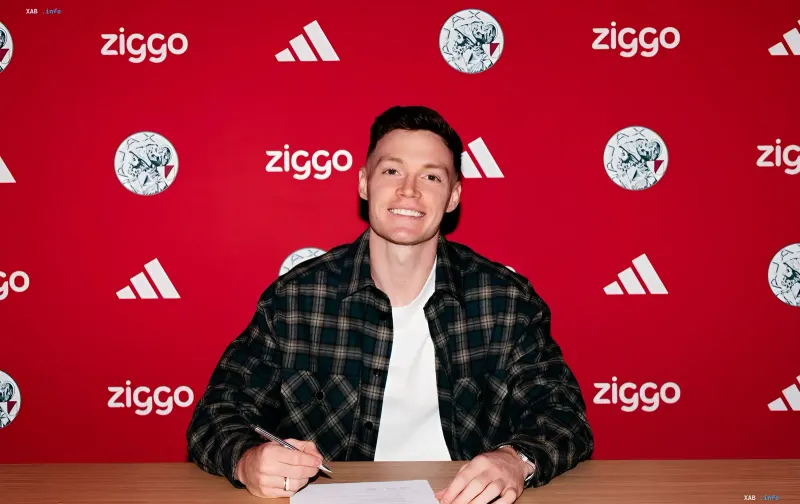
Ukraine national team winger Viktor Tsygankov has officially changed his club affiliation: Ajax and Girona have reached an agreement on the transfer of the 28-year-old footballer, as confirmed by an official statement from the Amsterdam club. This is reported by Sport RBC.UA, citing Ajax's press service. Thus, the summer conflict between the player and the Spanish club, which had been in the realm of rumours for several weeks, has ended with an actual move: Tsygankov has signed a contract with the Dutch giants and will wear the number 11 shirt for his new team.
Financial details of the deal
According to the Spanish outlet AS, the transfer of the Ukrainian cost Ajax €3.5 million, with a further €1 million provided in the form of bonuses for successful performances. The total amount therefore falls within a range of under €5 million, which looks modest for a player of his level and status and underscores just how strained Tsygankov's relationship with Girona had become by the time of his departure. Ajax's sporting director Jordi Cruyff stressed that the club expects a quick adaptation and an immediate boost from the Ukrainian: "We are happy that Viktor has signed with us. With his arrival we have added an experienced player who will strengthen the squad right away. He is also familiar with the style of play we want to implement. We are working to make him available for selection as soon as possible."
The summer scandal: why Tsygankov refused to take the field
The move was a logical conclusion to a turbulent summer in which an open conflict erupted between the midfielder and the club. At first, a possible departure was only discussed in the form of rumours, but in the match against Leganés, Tsygankov publicly refused to come on to the pitch. Information immediately emerged that the Ukrainian was using this as a way to pressure the management and force a transfer to another club. The footballer later published screenshots of private messages with club representatives on social media, concerning a ban on speaking with the press, and demanded a public apology from Girona for the defamation. Another indicator of the impending departure was the unexpectedly cancelled press conference of Tsygankov's agent — it was precisely then that the media space first began talking about Ajax.
Contradictory accounts
The versions from both sides regarding the reason for his refusal to take the field against Leganés contain a significant discrepancy. According to Girona's official position, the player's decision was due to his health: Tsygankov suffered a hypertensive crisis, and he spent the night before the match in hospital. At the same time, from the player's side and his entourage, this episode was presented as an element of pressure on the management to secure a transfer, and the subsequent publication of messages pointed to a conflict over the ban on speaking with the press and the demand for a public apology. Thus, the club's medical version and the player's "protest" refusal coexist in the public sphere without final reconciliation, and readers should take both perspectives into account when assessing the reasons for his departure.
Career: from Dynamo to Girona
Viktor Tsygankov is a product of Kyiv's Dynamo academy, for whose first team he played 236 official matches. In January 2023, the footballer moved to Spain's Girona, where over three and a half seasons he played 119 matches in all competitions. On the international stage, he is one of the leaders of the Ukraine national team, for which he has already made 67 appearances. It is precisely this combination — experience in a top league, status in the national team, and familiarity with the European style of play — that, according to Jordi Cruyff, made him an attractive reinforcement for Ajax.
Expectations for the new chapter
For Tsygankov himself, the move to Ajax means a change of league and club mentality, but not a radical break in his career trajectory: the Amsterdam club emphasises that the player is familiar with the style of play they intend to implement, and they expect to include him in the rotation as soon as possible. For Girona, the departure of one of its key players after three and a half seasons is a notable loss; however, the relatively low transfer fee suggests that the parting was driven less by market logic than by the exhaustion of the relationship within the club. The further dynamics — the speed of adaptation, his place in the squad, and his contribution to Ajax's play — will be the main criteria for assessing this transfer in the coming months.