In the desert expanses of eastern Nevada, a serious confrontation is brewing that could reshape the landscape of the American economy and national security. The state has discovered the largest tungsten deposit ever surveyed in the USA. However, the path to its development is blocked by one of the country's most influential agencies — the National Aeronautics and Space Administration (NASA).
Strategic resource under threat
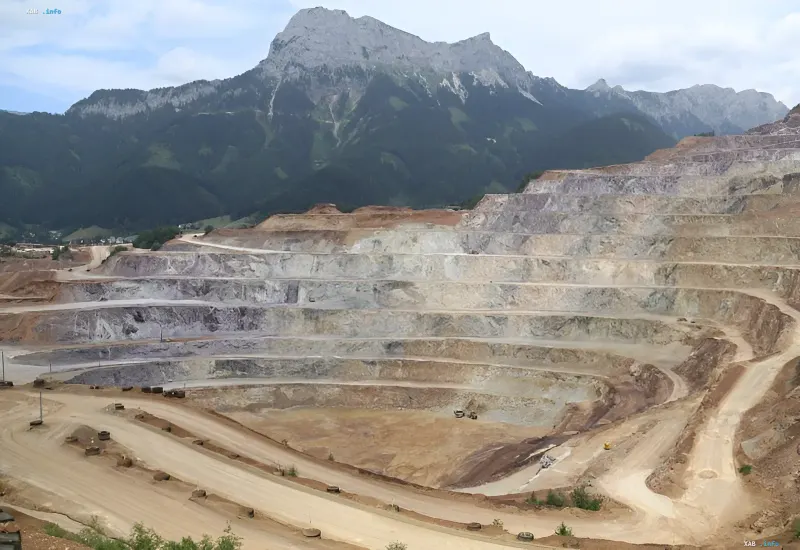
American mining company 3 Proton Lithium (3PL) has officially announced a discovery that surpasses all previously known deposits in the country in scale. Tungsten reserves in this region are estimated at a colossal 1.78 million tons. For comparison: this is five times larger than the next largest deposit in the USA.
The economic potential of the discovery is huge. Even accounting for the fact that a third of the territory must be reserved for the needs of the space agency, the potential value of the resources is estimated at $152 billion at current market prices. Within a 150-square-kilometer radius around the city of Elko, in addition to tungsten, significant deposits of lithium, boron, and potash have been discovered.
Why has tungsten become the 'gold' of the 21st century?
The situation with the supply of this metal in the USA is critical. Tungsten mining on US territory ceased completely ten years ago, and now American industry is 100% dependent on imports. About 80% of global supply volumes are controlled by China. Beijing uses this monopoly as a tool of foreign policy, which has led to a sharp spike in prices: since February of last year, the cost of the metal has risen by almost 600%.
The company 3PL argues that the urgent development of the deposit is necessary for national security reasons. Last year, the US Congress granted the company expedited status for coordinating projects related to critical minerals. The metal shortage has already forced authorities to seek alternatives: $1.6 billion was allocated through members of Donald Trump's family to develop deposits in Kazakhstan.
Space vs. the mine
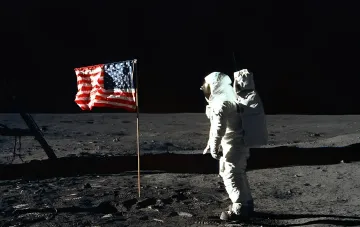
The main obstacle to the start of mining in Nevada is a ban imposed in 2023 for a period of 20 years. The initiator of the restrictions was NASA. The agency uses the unique conditions of the flat desert terrain to calibrate satellite equipment and exchange signals with satellites. According to the Financial Times, approximately one-third of the land claimed for mining is necessary for these purposes.
Developing the deposit will inevitably create interference for the operation of space infrastructure. NASA insists on maintaining the status quo, as this region is the only place in the USA suitable for such operations. In turn, 3PL is actively lobbying to lift the ban, arguing that the economic and strategic benefits of mining tungsten outweigh the risks to space communications.
Prospects and realities
Even if NASA concedes and grants access to the territory, solving the tungsten shortage problem will not be instantaneous. Developing such a giant deposit is a process that will stretch over years. Nevertheless, the outcome of this conflict will determine whether the USA can regain control over a strategically important resource or continue to depend on imports from China.