A large-scale redistribution of flows is beginning on the international energy market ahead of the European Union's total ban on imports of liquefied natural gas from Russia, which enters into force on January 1. The central event of this restructuring was a meeting at Russian Energy Week, where Turkey's Minister of Energy and Natural Resources Alparslan Bayraktar held talks with Novatek CEO Leonid Mikhelson, the company that is the primary owner of the Yamal LNG project. According to experts, the record volumes of gas being abandoned by Europe can now be redirected to the logistically convenient Turkish market, turning Ankara into one of the key beneficiaries of the sanctions restrictions.
Talks at REW: LNG and Energy Security
The Turkish Minister of Energy outlined the main goals of the meeting with Novatek's leadership in an official publication. The parties discussed in detail the possibilities for partnership in the liquefied gas sector, new supply routes, and structural changes in the global market. Bayraktar emphasized that Turkey "will continue to take strategic steps that will increase the country's energy diversity and strengthen supply security." Thus, Ankara is signaling an interest in long-term cooperation rather than a one-off purchase.
Record Volumes and a New Route
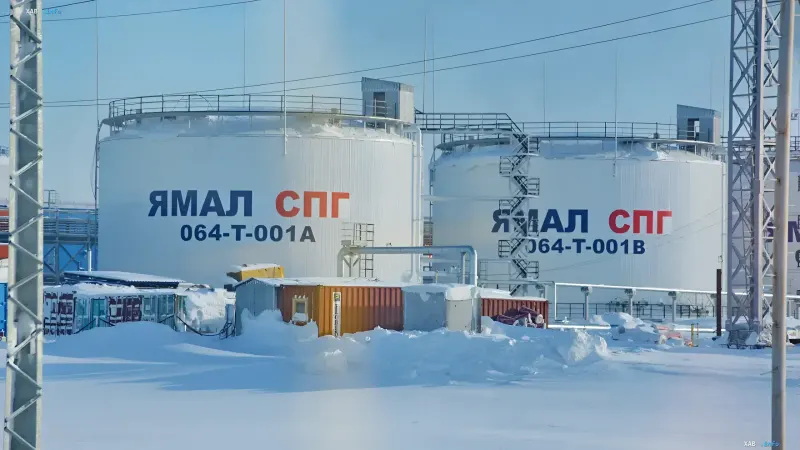
Until now, Yamal LNG has remained Russia's largest gas project, supplying products to Europe without hindrance. In the first seven months of this year, the volume of supplies to EU countries reached a record level of 9.8 million tons, equivalent to 13.5 billion cubic meters of gas. After the restrictions take effect on January 1, these volumes could be redirected to Turkey, the transport route to which is significantly shorter and cheaper than to Asia. At the same time, European companies are allowed to resell (re-export) Yamal gas to other states under long-term contracts until July 2027, creating an additional channel for fuel movement.
Competition with Gazprom and Winter Arbitrage
Turkey's rapprochement with Novatek could create serious competition for the traditional pipeline gas supplier, Gazprom. On the same day, Alparslan Bayraktar also held talks with Gazprom Management Committee Chairman Alexei Miller, discussing partnership in the natural gas sector. The delicacy of the situation lies in the fact that the validity periods of two major contracts for 22 billion cubic meters between Turkey and Gazprom expire right at the end of this year, and no new agreements have been announced yet. Experts from the National Energy Security Fund note that Turkey can advantageously take advantage of this winter's unusually high prices: there is a high probability of making significant profits by receiving cheaper Russian LNG and reselling freed-up gas volumes from other sources to Europe at a higher price — the so-called winter arbitrage.
Circuitous Routes for Russian Gas
The combination of these factors indicates that the European Union's new sanctions will not be able to completely stop Russian gas. On the contrary, they may return it to the global market via circuitous routes through major hubs such as Turkey, which acts simultaneously as a consumer and a potential transit country. For Moscow, this opens up an opportunity to maintain export revenues from LNG, for Ankara — to strengthen its position on the region's energy map, and for Europe — to face a more complex and expensive supply structure during the winter period.