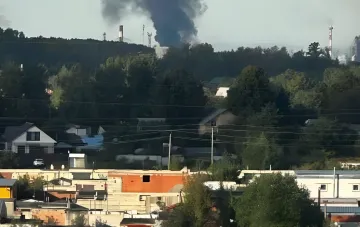
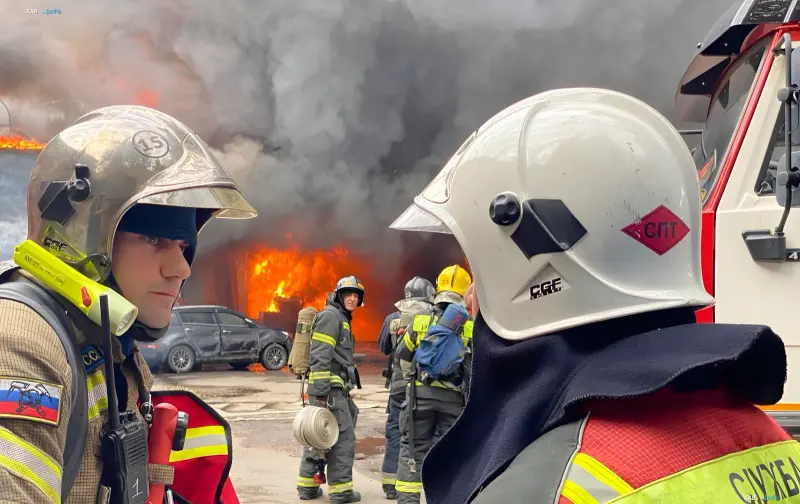
On the night of September 6, 2026, the Ukrainian Armed Forces, according to the General Staff of the Ukrainian Armed Forces, carried out a series of strikes on targets within Russian territory. According to a report cited by RBC-Ukraine, the targets included the Rostov-on-Don airfield and the Ryazan Oil Refinery. At both facilities, Ukrainian military officials stated that fires broke out, while the exact scale of the damage was still being assessed at the time the report was published.
Strike on the Rostov-on-Don airfield
As the General Staff of the Ukrainian Armed Forces claims, a fire broke out at the Russian Rostov-on-Don airfield as a result of the nighttime attack. The Ukrainian side did not disclose the type of weapon used and provided no specific data on the destruction at the site, limiting itself to confirming the outbreak of fire. According to military officials, the scale of the damage is currently being assessed, which is typical for the first hours after such strikes, when information is gathered as intelligence processing proceeds.
Ryazan Refinery hit again
The second significant target of the night was the Ryazan Oil Refinery, which, according to General Staff data, was hit "again" — meaning this was not the first strike on this facility. A fire broke out on the refinery's territory. According to the company Fire Point, the attack by Ukrainian drones struck the largest primary oil processing units, which, by its assessment, account for more than 77% of all primary processing capacity at the Ryazan Refinery. The enterprise is part of Rosneft and, according to company data, ranks among the top five Russian refineries in terms of processing volumes and product range; the Ukrainian side emphasizes that the plant is involved in meeting the needs of the Russian Armed Forces.
Wide coverage: 14 regions and strikes on air defense
The nighttime operation, according to General Staff data, was of a broad nature: RBC-Ukraine had previously reported that the Ukrainian Armed Forces did not strike Moscow, but deployed hundreds of drones against targets in 14 Russian regions. In Rostov Oblast, in addition to the airfield, Ukrainian defenders hit air defense facilities. In an earlier night shift, according to the same sources, the defenders struck a Russian MESH-network repeater, a radar station, and an electronic warfare station.
Contradictory data
There is a discrepancy among Ukrainian media outlets citing the General Staff report on the number of air defense facilities hit in Rostov Oblast. Thus, the outlet Kochegarka states in its headline that two "Pantsir" systems were hit, while Interfax-Ukraine, in its wording of the General Staff's statement, refers to three enemy air defense facilities. Moreover, neither side has published independent confirmation of the scale of damage at the airfield and the refinery: the Ukrainian side reports fires and is assessing the damage, while the Russian side does not comment on these specific hits in the provided sources. Until independent data emerges, both figures and the degree of damage should be regarded as claims by one side of the conflict.
Thus, the night of September 6, 2026, was marked by deep drone strikes on military and energy infrastructure in the south and center of Russia. The key question remains the actual damage to the Ryazan Refinery and the Rostov-on-Don airfield, which, according to Ukrainian military officials, is still being established.