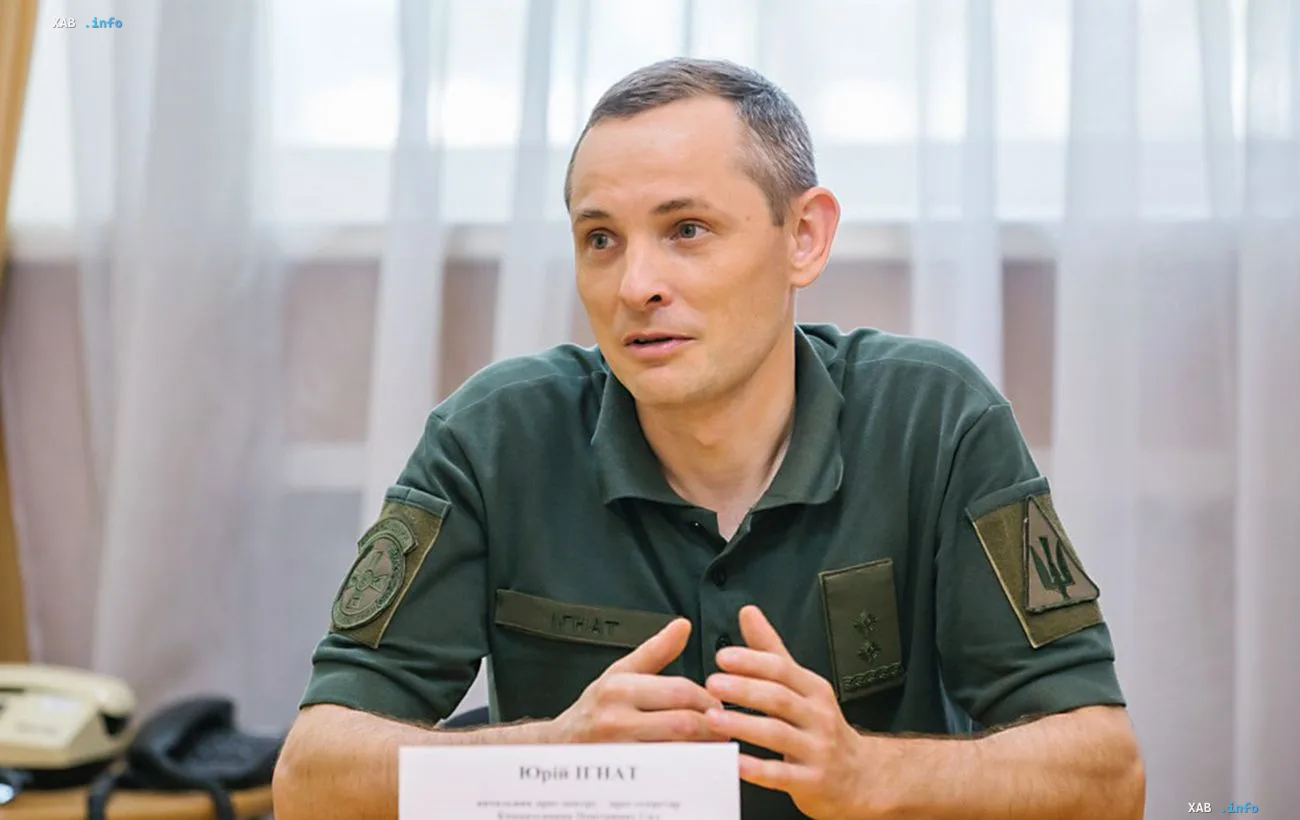
The Air Force of the Ukrainian Armed Forces has once again identified ballistic missiles as the most vulnerable direction for Ukraine in its air defense system. This was stated by Yuriy Ignat, head of the communications department of the Air Force Command of the Ukrainian Armed Forces, during a TV marathon broadcast, commenting on Russia's preparation for a new massive strike on the country's territory. According to him, it is precisely ballistics that can reach targets in a matter of minutes, including at night, which makes it a priority threat to cities and frontline regions.
Ballistics — the main vulnerability
Ignat emphasized that Kyiv "suffers a lot" from strikes, but other regions are also under fire — Odesa, Dnipro, Kharkiv, and the frontline oblasts. The military official explained that it is precisely the ballistic flight trajectory that reduces the time available for interception and requires specialized countermeasures. In this regard, in his assessment, Ukraine needs not only deliveries but also its own production of ammunition for the American Patriot systems, although such a process, as Ignat himself acknowledged, "will not be quick."
Which missiles Russia uses
Among the means of destruction that, according to Ignat, Russia employs along a ballistic trajectory, are the "Zircon" missiles, S-400 missiles, KN-23, and "Iskander-M." It is precisely the interception of these targets that, in his words, the Patriot systems are capable of performing; these systems are already being used by Ukrainian units and, as the military official emphasized, must remain one of the main long-range complexes. For their full operation, in his words, a stockpile of ammunition is required — not only during hostilities but also in peacetime: for loading missiles onto launchers, testing, and training exercises.
Contradictory data
The original source contains formulations that raise questions from the standpoint of military classification. First, the list of ballistic threats names "S-400 missiles," whereas the S-400 is a surface-to-air missile air defense complex, not a type of ballistic missile used against ground targets; it is possible that an inaccuracy in transmission was made in the quote. Second, the "Zircon" is officially classified as a hypersonic missile, not as classic ballistics, although it flies along a ballistic/ballistic-like trajectory. Finally, in the context of President Volodymyr Zelenskyy's meeting with the Prime Minister of the United Kingdom, the source mentions the name "Andy Burnham," which does not match the widely accepted information about who holds the post of UK Prime Minister and requires additional verification. Both versions — the verbatim quote from the source and the alternative classification — are presented openly for the reader's assessment.
Context: preparation for a strike and negotiations
Recall that President Volodymyr Zelenskyy previously reported that Ukrainian intelligence has information about Russia's preparation for a new massive strike. In his words, he discussed this issue, in particular, with the Prime Minister of the United Kingdom during a meeting at which the parties talked about security, the protection of Ukrainians, preparation for winter, and diplomatic possibilities. Thus, Ignat's statement about the shortage of Patriot ammunition fits into the broader context of anticipation for a new wave of strikes and ongoing negotiations on the supply of air defense systems.