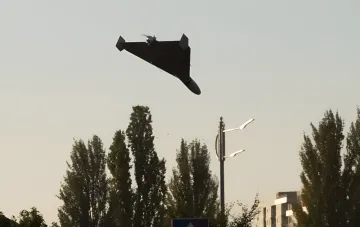
The Ukrainian electronic warfare system "Lima," developed with the participation of domestic specialists, has demonstrated unprecedented effectiveness in real combat conditions. According to military sources and publications in leading Western media, the complex managed to divert two Russian ballistic missiles—which were purposefully heading toward a key government facility in Kyiv—directly into the channel of the Dnipro River. This incident has served as further confirmation that modern electronic warfare technologies can effectively counter high-precision and high-speed enemy weapons, reshaping conventional perceptions of air defense capabilities.
Spoofing Technologies and the Signature of the "Night Watch"
Two enemy missiles were moving toward the Ukrainian capital at hypersonic speed, but after powerful radio interference, they lost control and crashed into the river. A characteristic sign of the "Night Watch" unit, which operates the complex, was a massive glitch in navigation apps on the mobile phones of Kyiv residents—at those moments, gadgets unexpectedly began showing that their owners were supposedly located far away in Peru. Using a similar method, the Ukrainian military had previously shot down a hypersonic "Kinzhal." The "Lima" system emits false navigation signals at a distance of up to 190 kilometers, forcing ballistic missiles to change course and break apart mid-air due to colossal overloads at ultra-high speeds.
Electronic Arms Race and New Challenges
The technological standoff between electronic warfare developers and missile manufacturers is constantly evolving. As early as late 2024, specialists discovered that Russian strike assets had begun featuring Chinese antennas capable of detecting the source of radio jamming and bypassing it in fractions of a second. In response, engineers from the Cascade company and military experts worked around the clock to create an upgraded version, "Lima Quant." In turn, the adversary began increasing the number of protective antennas on missiles and drones—from four to eight, sixteen, and even thirty-two units. Nevertheless, the threat of massive strikes remains: the country's leadership urges citizens not to ignore air raid alerts, and the Ministry of Defense continues negotiations with partners for supplies of additional air defense systems.
Contradictory Data
Despite the impressive successes of the "Lima" electronic warfare systems, certain disagreements persist within the expert community regarding the universality of such methods. While Western publications and developers focus on successful cases of redirecting ballistic missiles and hypersonic "Kinzhal" systems, some Ukrainian military experts and analysts emphasize that electronic warfare cannot fully replace classical air defense systems such as Patriot. Experts note that against certain types of guided aerial bombs and ballistic threats in urban environments, electronic suppression tools have limitations, which is why the combined use of air defense and electronic warfare remains the only reliable solution.