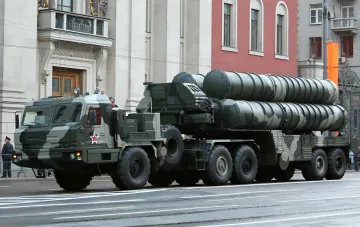
Ukrainian Defense Forces, between 19 September and the night of 20 September 2026, delivered a series of precision strikes on key objects of the Russian military infrastructure in the occupied territories. According to data published by the General Staff of the Ukrainian Armed Forces and reported by RBC-Ukraine, the operations resulted in the destruction of a Buk-M3 surface-to-air missile system, a Nebo-U radar station, a facility for the production of unmanned aerial vehicles, as well as several enemy command posts and command-and-observation points.
Strikes on air defense and radar systems
One of the most significant results of the operation was the destruction of a Buk-M3 surface-to-air missile system in the area of the settlement of Ukrayinka in Zaporizhzhia Oblast. The Buk-M3 is a modern air defense system capable of intercepting ballistic missiles, cruise missiles, and aircraft at considerable ranges. Its destruction significantly weakens the air defense shield of Russian forces in this sector of the front. In parallel, a Nebo-U radar station was hit in the area of Balka in Donetsk Oblast; this radar is used for detecting and tracking aerial targets at high altitudes. The destruction of this radar deprives the enemy of one of the elements of its early warning and air traffic control system.
Strikes on UAV production and command posts
In the area of Severodonetsk in Luhansk Oblast, the Defense Forces struck a drone production site, dealing a direct blow to the logistical chain of the drone war that Russia has been actively expanding throughout the conflict. In addition, two operational objects were hit in Donetsk Oblast: a command-and-observation point was destroyed in the area of the settlement of Zoriane, and an enemy drone control point was struck in the area of Staryi Mykhailivka. The combination of these strikes indicates a deliberate Ukrainian strategy aimed at dismantling the command-and-staff structure and the production base of the Russian occupation forces.
Massive nighttime attack on Moscow and the Voronezh region
On the night of 20 September, Ukrainian drones and missiles, including long-range Flamingo missiles, delivered a massive strike on the territory of Moscow. According to the data cited in the report, the attack set fire to the Gazpromneft-MNPZ oil refinery, which, according to available information, supplies around 40% of the Russian capital's fuel needs. A logistics facility was also hit. In addition to Moscow, long-range strikes were delivered on a facility in Voronezh Oblast. The scale of the nighttime operation and the choice of targets — energy and oil refining infrastructure — point to the strategic orientation of the strikes against the economic arteries of the Russian rear.
Contradictory data
The fact-checking sources provided did not reveal any significant discrepancies in dates, coordinates, or the list of struck objects: all four sources (RBC-Ukraine, Fakty, Obozrevatel, BR) unanimously refer to the General Staff of the Ukrainian Armed Forces report and reproduce an identical list of targets. At the same time, it should be noted that all the data listed are based exclusively on statements by the Ukrainian side. Russian official sources, at the time of preparing this material, had not published any independent confirmation or refutation of the destruction of specific air defense systems and production facilities. The exact scale of the damage, in particular at the Gazpromneft-MNPZ plant in Moscow, has also not yet been confirmed by independent international observers.
Strategic context of the strikes
The operation of 19–20 September 2026 demonstrates a sustained trend in which the Ukrainian Armed Forces combine tactical strikes on the enemy's tactical objects (SAM systems, radars, command-and-observation points) with strategic long-range attacks on Russia's rear infrastructure. The destruction of the Buk-M3 and Nebo-U, together with the drone factory and command posts, creates a comprehensive effect: the enemy loses not only individual pieces of equipment but also elements of the "production — command — defense" chain. The nighttime attack on Moscow using Flamingo missiles and the striking of an oil refinery that supplies a significant share of the capital's fuel market underscore that the Ukrainian side continues to expand the geography and depth of its long-range strikes, going beyond the frontline regions.