The massive overnight attack on Moscow and the Moscow region, which struck facilities of the Moscow Oil Refinery (Moscow NPPZ), has become one of the most resonant military episodes of recent weeks. Among the weapons used in the raid, Ukrainian President Volodymyr Zelenskyy, in his public comment, named a system under the codename «Pelican». However, it is precisely around this name that a real confusion has unfolded in the information space: some media outlets and Telegram channels quickly attributed «Pelican» to the FP-7 ballistic missile of the Ukrainian company FirePoint, while RBC-Ukraine's own sources provided a fundamentally different interpretation.
«Pelican»: a fixed-wing drone, not a missile
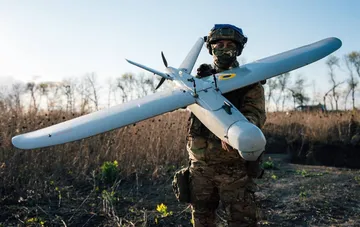
According to RBC-Ukraine sources, «Pelican» is a fixed-wing unmanned aerial vehicle, not a ballistic missile. Details of its design, range, and tactical-technical characteristics are not disclosed in open sources. President Zelenskyy, listing the weapons involved in the raid on Moscow, mentioned «Pelican» without specifying its class, which gave rise to speculation. In a number of public channels and media outlets, the name «Pelican» had previously appeared in connection with the FP-7 ballistic missile produced by FirePoint, and it was precisely this association that became the basis for erroneous publications. Nevertheless, as the publication's sources clarified, the reference is to a drone, not a missile.
Target of the attack: Moscow NPPZ and its units
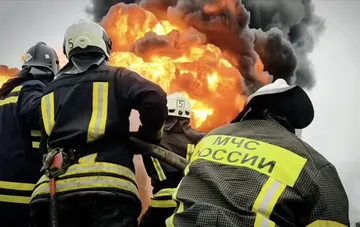
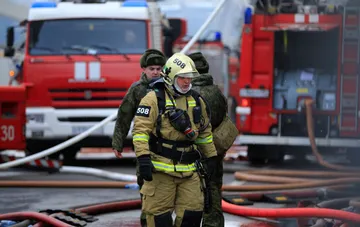
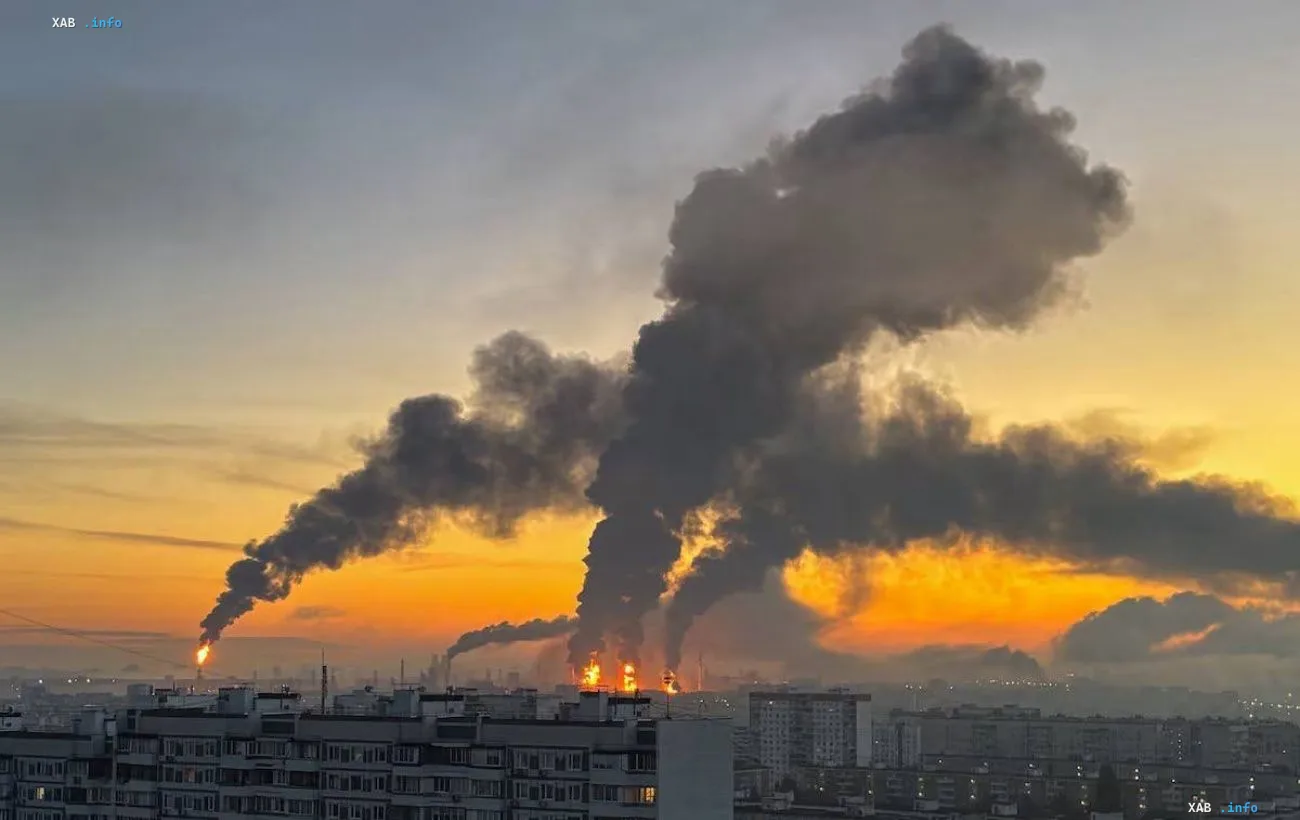
According to the General Staff of the Ukrainian Armed Forces, as a result of the strikes on Moscow NPPZ, three units of the enterprise were hit. A large-scale fire broke out on the plant's territory, and footage of the attack's aftermath quickly spread across social networks. Moscow NPPZ is one of Russia's largest oil refineries and supplies around 40% of Moscow's fuel needs. Strikes on oil refining facilities in the capital and its surroundings represent not only a tactical but also a significant economic signal, affecting the logistics and energy infrastructure of the country's largest city.
Chaos at the airports: hundreds of flights delayed or cancelled
In addition to direct damage to infrastructure, the massive attack led to serious consequences for civil aviation. A real collapse was recorded at Russian airports, including the Moscow hubs: hundreds of flights were delayed or cancelled. The temporary closure of airspace and the introduction of flight restrictions became a standard but extremely painful reaction for passengers and airlines to such attacks. The scale of the disruptions that evening significantly exceeded the figures of previous incidents, which indirectly points to the volume and duration of the raid.
Contradictory data
The key discrepancy in the publications concerns the nature of the «Pelican» weapon. On the one hand, a number of Ukrainian and Russian Telegram channels, as well as individual media outlets in the first hours after the attack, identified «Pelican» as the FP-7 ballistic missile of the FirePoint company, citing the fact that in the media space this name had previously been associated with that missile. On the other hand, RBC-Ukraine sources, who have more accurate information, directly stated that «Pelican» is a fixed-wing drone. President Zelenskyy, in his comment, did not specify the class of the weapon, limiting himself to listing the names. Thus, until official technical confirmation from the Ukrainian Defense Forces emerges, both versions — «ballistic» and «drone» — continue to circulate in open sources, although the weight of evidence, according to RBC-Ukraine, leans in favor of the drone version.
Context: a series of strikes on oil refining infrastructure
The strike on Moscow NPPZ fits into a broader campaign by the Ukrainian Defense Forces to hit oil refining industry facilities on Russian territory. Previously, similar attacks were carried out against refineries in various regions, leading to a temporary decrease in refining volumes and rising fuel prices. Hitting three units at once at one of the country's largest plants, which supplies up to 40% of Moscow's fuel market, may have delayed economic consequences for the capital region and, in a chain reaction, for the entire central part of Russia.