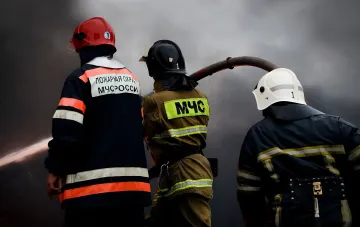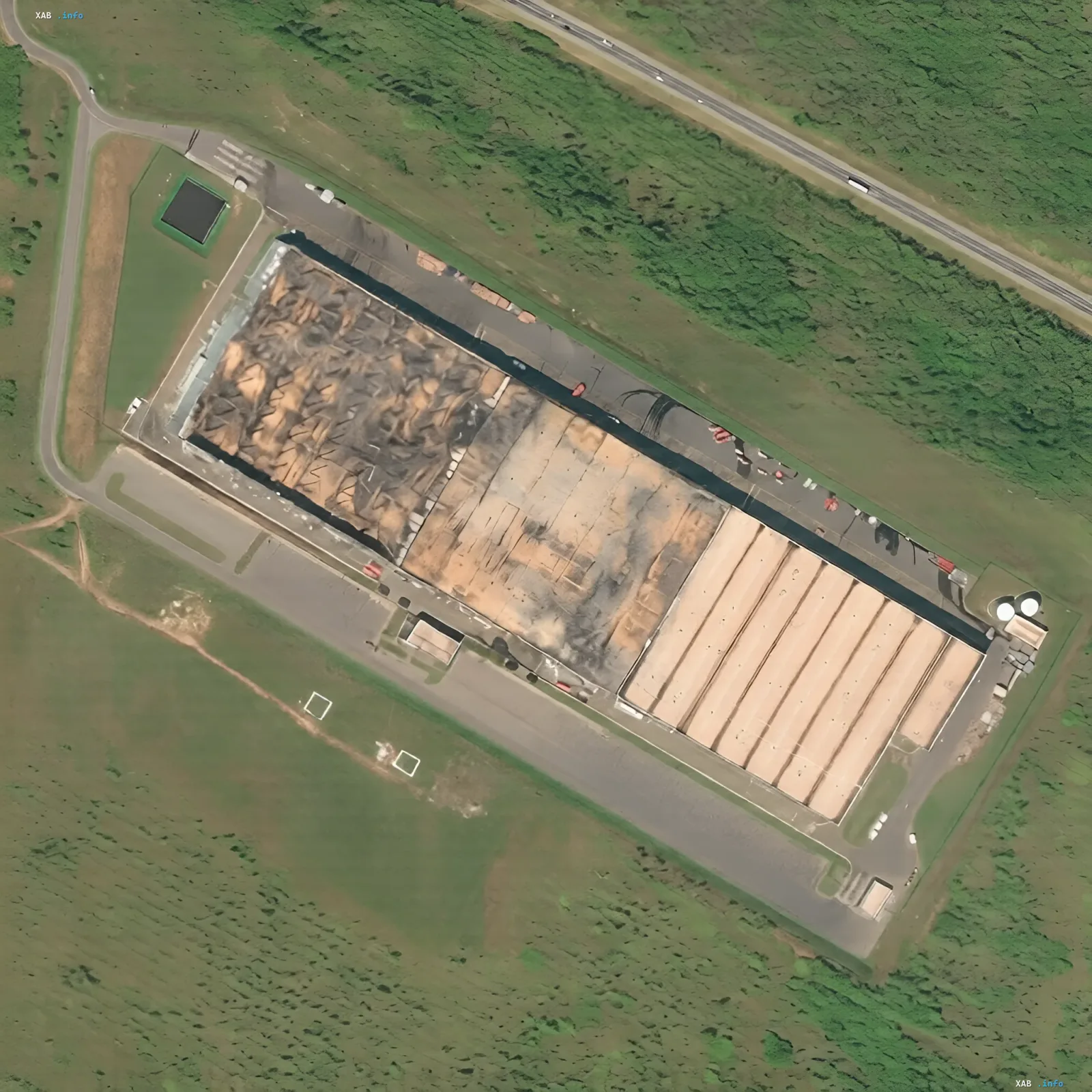
On the night of 22 August 2026, the distribution logistics hub of the Ozon marketplace in the "Chapaevsk" industrial park (Samara Oblast) was struck by long-range unmanned aerial vehicles, followed by a major fire. High-resolution satellite imagery, captured during daylight after the open flames were brought under control, recorded the aftermath of the incident and made it possible to move from operational reports to a quantitative assessment of the damage. The facility is the largest distribution centre of the marketplace in the Middle Volga region: the hub's total designed area is up to 135,000 sq. m, and the first phase covers approximately 76,000 sq. m. The incident was the first successful strike on Ozon infrastructure following a series of attacks on Wildberries terminals in mid-August, and it fits into a broader campaign targeting the distribution networks of e-commerce in the deep rear.
Orbital Verification of the Scale of Damage
Analysis of the satellite image indicates that the destruction of the main warehouse block is critical. Over an area of more than 45,000 sq. m — that is, more than 60% of the roof of the first phase — complete burnout and partial collapse of the roof covering into the building's interior were recorded. In the left and central parts of the building, the metal structures were deformed by the high temperatures of the fire, which led to the destruction of multi-level mezzanine racking; the charred floor beams and burned-out racking zones are clearly distinguishable in the image. The right section of the building visually retained the integrity of its roof, but it was subjected to heavy smoke and thermal exposure. The adjacent infrastructure of the loading docks is blocked by debris and soot traces, which rules out the possibility of promptly resuming operations without major reconstruction of the structure.
Operational Data and Legal Status of the Incident
According to the Ozon press service and Vyacheslav Fedorishchev, the governor of Samara Oblast, more than 500 employees of the duty shift were urgently evacuated from the building; the alarm systems activated within minutes. The presence of casualties has been officially confirmed. The complex's operations have been suspended for an indefinite period, the warehouse stock has been removed from marketplace fulfilment, and current customer shipments are being mass-cancelled. From legal and economic perspectives, this means a suspension of the performance of a significant volume of obligations to sellers and buyers, as well as the redistribution of logistics flows to the surviving nodes of the network. Independent experts estimate the total material damage — taking into account the destroyed sellers' goods and the cost of restoring the building — at over 7–9 billion rubles; this figure is of an expert-analytical nature and has not been confirmed by an official company report.
Macroeconomic Context: The Campaign Against E-commerce Logistics
The strike on Chapaevsk became the starting point for expanding the geography of attacks on e-commerce facilities. If in July and early August the main damage was inflicted on the Wildberries network (Elektrostal, Domodedovo and other terminals), then on 22 and 23 August the Ozon distribution hubs in Samara and Orenburg oblasts came under fire. As early as 23 August, a second strike was recorded within two days — on the hub in the "Orenburgie" SEZ (Orenburg, first phase over 40,000 sq. m), where the roof was damaged and more than 300 people were evacuated. Chapaevsk is located at a distance of approximately 850–900 km from the front line, and Orenburg at 1,250–1,300 km, which demonstrates the tactic of overloading point air defence in the deep rear and the systematic disruption of supply chains for goods of wide and dual use in the Volga region and the Urals. The synchronicity of the attack on Chapaevsk with the strike on the Novokuybyshevsk refinery of Rosneft indicates the coordination of strikes on logistics and production nodes within a single time window.
Contradictory Data
There are discrepancies between sources that must be taken into account when interpreting the incident. First, regarding losses: the Ozon press service and regional authorities confirm "casualties" and "injuries of varying severity," while a number of publications (including the esp.md headline) phrase the consequences as the presence of "dead and injured." There is no official confirmation of fatalities in the provided materials, so the version of deaths remains unconfirmed. Second, regarding damage: the 7–9 billion ruble estimate belongs to independent experts and is not supported by an official company calculation, and the actual cost of restoration will depend on the results of an engineering expert examination of the collapsed structures. Third, the extent of roof damage varies in different formulations from "over 50%" to "over 60%" of the first phase's area; the orbital data are consistent with the upper bound of this range.
Long-term Consequences for Supply Chains
The loss of the largest distribution node of the Volga region for an indefinite period creates a structural break in the marketplace's logistics network: the cancellation of orders and the removal of stock from the storefront directly affect the level of service and the financial liability to sellers whose goods were destroyed. In the medium term, a redistribution of flows to the surviving hubs, an increased load on neighbouring regions, and a review of insurance and reserve storage strategies are expected. At the macro level, the series of strikes on e-commerce facilities in the deep rear forms a new risk factor for the "warehouse consolidation" model, in which a significant part of the goods stock is concentrated in a limited number of large distribution centres, which increases their vulnerability and the economic cost of each incident.