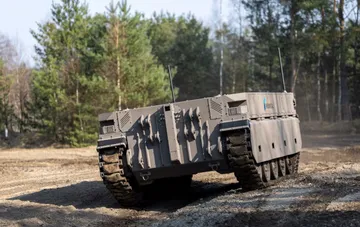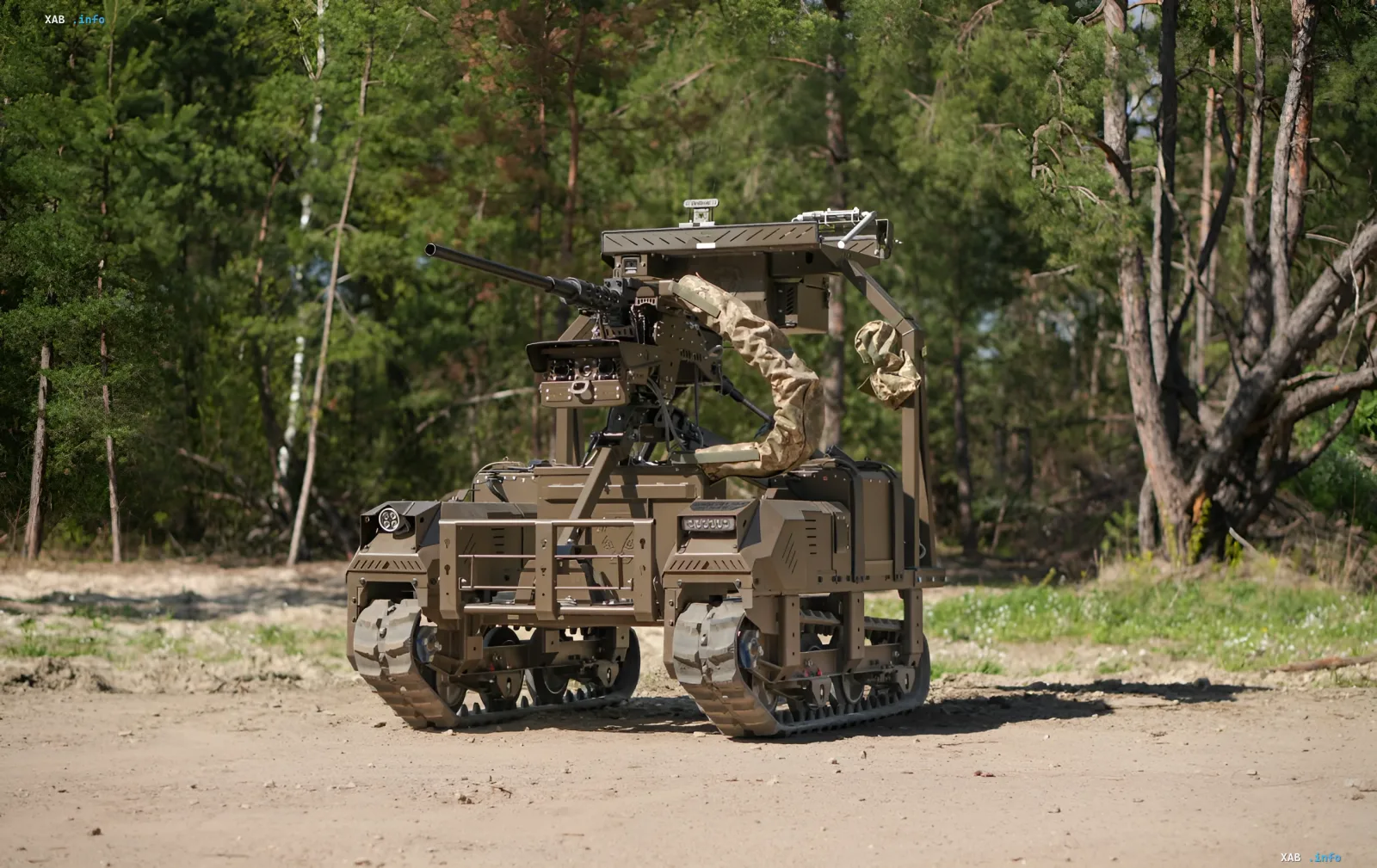
During a combat watch, operators of the NC13 strike ground robotic systems unit, part of the Third Army Corps, detected a group of six Russian soldiers moving toward Ukrainian positions. To halt the enemy's advance, a decision was made to deploy the Droid TW-12.7 reconnaissance-strike complex, equipped with a combat module mounting a 12.7 mm Browning machine gun. The UGV opened fire, stopping the assault group's advance, after which the unmanned systems battalion joined the operation: FPV drones delivered a series of precision strikes on the identified targets. According to a press release from DevDroid, provided to RBC-Ukraine, the entire operation took about 20 minutes. As a result, all six enemy soldiers were destroyed, and the Ukrainian positions remained under the full control of the Defense Forces.
"Stop and Finish" Tactics: A Joint Employment Model
The commander of the NC13 unit, callsign "Makar," emphasized in a press comment that this episode demonstrates a proven practical model of coordination between ground and aerial robotic systems. In his words, the UGV performs a "pinning" function: it halts the enemy's advance with fire from a heavy machine gun, fixes the targets, and creates conditions for the FPV crews to deliver the final strikes. The main value of such coordination, the commander noted, is the ability to avoid sending assault groups into clearing operations and to preserve personnel through distance and technological superiority.
Droid TW-12.7 Specifications: What the Complex Is
The Droid TW-12.7 is a tracked ground robotic complex equipped with a turret for a 12.7 mm M2 Browning machine gun. This configuration allows it to effectively engage lightly armored targets — infantry fighting vehicles, armored personnel carriers, armored vehicles — as well as unarmored vehicles. In addition, the complex is used to engage enemy personnel at short and medium ranges, as well as to suppress enemy squad positions and strongpoints with fire. The tracked chassis provides mobility in difficult terrain, as confirmed by photographs of the complex operating on dirt roads and in wooded areas.
The Broader Context: The Growing Role of UGVs at the Front
The operation involving the Droid TW-12.7 fits into the overall dynamics of recent months, during which the role of ground robotic complexes at the front continues to grow. Ukrainian units have already been practicing the delivery of UGVs into the enemy rear using heavy unmanned aerial vehicles, opening new tactical possibilities for surprise attacks. In early September 2026, it was announced that this direction was being scaled up at the state level: the National Guard of Ukraine received its first ten Protector UGVs, procured with the support of the German government. In parallel, the Ministry of Defense authorized the use of the Tanchik Droid 12.7 modification for reconnaissance and the destruction of enemy vehicles, while units of the Third Assault Brigade demonstrated the UGV's ability to hold positions for several weeks without the involvement of personnel.
Contradictory Data
No significant discrepancies in figures or dates were identified in the provided sources. However, it should be noted that information about the operation is based on a press release from the complex's manufacturer, DevDroid, and was transmitted via RBC-Ukraine. As of the time of publication, no independent confirmation from the enemy side or international observers regarding this episode had been received. In addition, in various sources the complex is referred to by the names "Droid TW-12.7" and "Tanchik Droid 12.7," which may indicate differences in modifications or in the terminology used by the manufacturer and the military department.