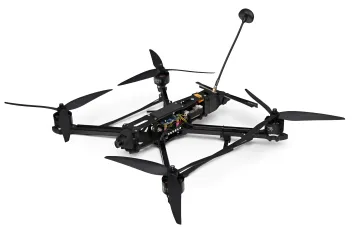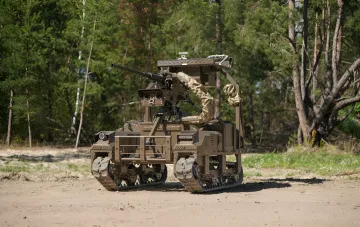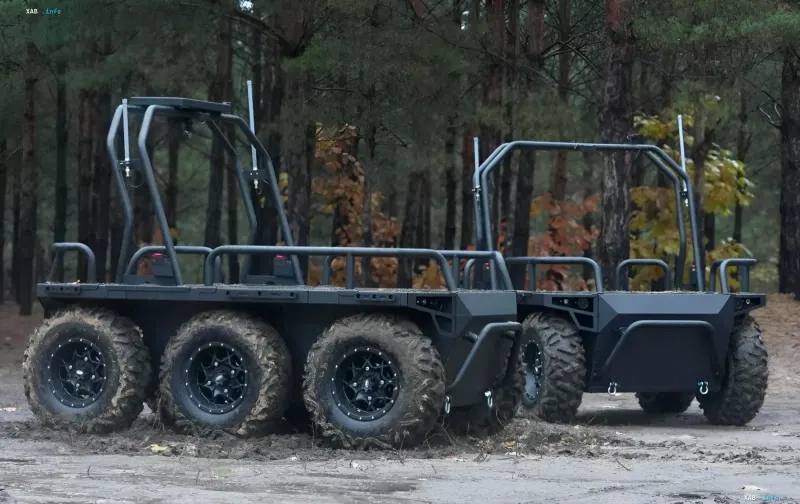
Ukrainian company Ratel Robotics has begun assembling interceptor drones capable of launching directly from ground robotic systems (GRSs). This was stated by company founder Taras Ostapchuk in an interview cited by RBC-Ukraine, referencing Forbes. According to him, special launch boxes are already being developed to hunt down enemy air targets, allowing the integration of aerial platforms into the company's existing ground robotic architecture.
From Strike FPVs to Interceptors: The Logic of Development
As Ostapchuk noted, the company has previously demonstrated the launch of strike FPV drones from Ratel ground robots. Now, management intends to expand this synergy toward countering aerial targets. The plans include first creating multi-rotor interceptors, and eventually fixed-wing drones. Concurrently, development is underway for launch boxes for their deployment from GRSs, as well as shared software to enable data exchange between ground and aerial platforms.
The Concept: Ground Robot as a Launch Platform
In this configuration, the ground robotic system acts as a mobile carrier: it delivers interceptors to the position and serves as the launch platform, while the aerial drones strike the target. Ostapchuk emphasizes that combining various platforms is one of the key directions for robotics development: they complement each other's capabilities and allow personnel to perform more tasks remotely, reducing risk to troops.
Context: GRSs Reach a New Level
The development of Ratel Robotics occurs against the backdrop of the active introduction of ground robotic systems into Ukrainian military practice. In September, the Croatian Komodo GRS produced by Rheinmetall underwent bridge-laying trials. The 3rd Army Corps became the first in the world to deploy a GRS from bombers into the enemy's rear. Meanwhile, Ukrainian company Tencore revealed the characteristics and key features of the MAT1LDA GRS, designed for movement on both land and water. All these developments indicate that ground robotics is becoming a multifunctional tool — from logistics and engineering support to direct fire engagement of targets.
What This Means for Air Defense Tactics
The transition to launching interceptors from mobile ground platforms potentially changes the approach to distributed air defense. Instead of stationary anti-aircraft installations or large mobile MANPADS, it becomes possible to deploy compact launch points in any location accessible to a GRS, complicating the enemy's task of detecting and suppressing air defense assets. The shared software mentioned by Ostapchuk is designed to automate the transmission of aerial threat data from the ground system to the aerial interceptor, shortening reaction times.