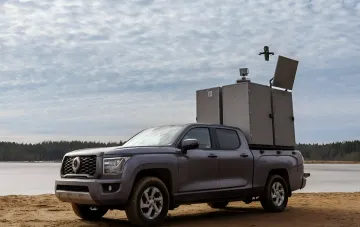
Since the beginning of 2026, the number of missions performed by Unmanned Ground Vehicles (UGVs) on the frontline has increased fivefold. While at the beginning of the year there were about seven thousand of them, by autumn the figure had reached approximately thirty-five thousand. This was stated in the RBC-Ukraine podcast 'THIS IS THE BASE' by Viktor Pavlov, a UGV battalion officer of the 3rd Assault Brigade and founder of the ground robot operators training school. According to him, the growth in the number of missions is not just a statistical trend, but a signal of a qualitative shift in tactics: UGVs are increasingly performing not only logistical and evacuation tasks, but also combat, engineering, and reconnaissance functions previously performed exclusively by humans.
From Logistics to Fire: Expanding Combat Functions
Until recently, the main role of ground robots boiled down to evacuating the wounded and delivering supplies to the frontline. Today, as Pavlov notes, the combat function of UGVs is growing: turrets are being installed on the complexes, which to a certain extent replace a machine gun crew or a grenade launcher position. UGVs take over sector surveillance, distracting enemy fire, reconnaissance, and engineering mining. 'Everything that people used to do — reconnaissance, observation, holding sectors, distracting fire — can be done by UGVs. We are on the way to this,' the officer emphasized. According to his estimate, logistics remains the foundation: it accounts for about 90% of all tasks, since without supplying the troops with provisions and ammunition, neither defense nor offensive is possible.
Drone Deployment and the Evolution of 'Kamikazes'
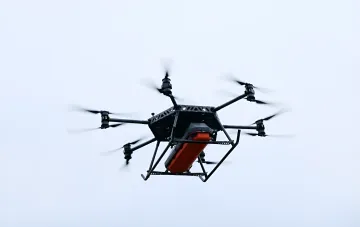
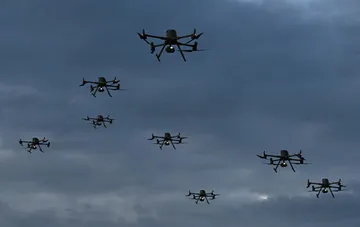
One of the most noticeable tactical innovations that Pavlov associates with Operation Vivaldi was the deployment of UGVs using Unmanned Aerial Vehicles (UAVs). According to him, this tactic was used by fighters of the NC-13 unit, which specializes specifically in strike ground robots: the complexes were dropped into the enemy's rear, creating an element of surprise for the foe. Other brigades have also begun using large UAVs to deliver robots to designated points. In parallel, the classification of strike assets is evolving: while previously a 'kamikaze' meant a drone weighing about 50 kilograms with a payload of about 30 kilograms, now more compact robots have appeared that can be lifted by a regular UAV. Pavlov predicts that in the near future a lineup of various types of strike UGVs for different combat missions will be formed.
Evacuation, Losses, and the Cost of a Single Mission
The evacuation of the wounded, according to Pavlov, has become one of the key reasons for the mass deployment of UGVs. In conditions of massive use of FPV drones by the enemy and constant aerial surveillance, carrying out a wounded person by a live evacuation group has become practically impossible. Ground robots take over this function, reducing personnel losses. On average, one UGV performs five to six missions, which, according to the officer, is a good indicator considering the intensity of fire. One complex is capable of carrying up to 200 kilograms of cargo — this is the equivalent of the load that ten people would have to carry on foot. 'This is at least 60 people who stayed alive and were not wounded,' Pavlov summarized, emphasizing that every robot mission is a saved life. The evacuation of civilians from frontline settlements is also practiced: individual units have prepared special operations specifically for this purpose.
Repurposing Old Equipment and the Role of Engineers
The issue of using outdated armored vehicles in an unmanned format, according to Pavlov, has already received practical confirmation. During Operation Vivaldi, for example, an armored personnel carrier stuffed with explosives performed a combat mission. The officer notes that the conversion of old Soviet equipment requires replacing internal components, installing communications, and adapting, but in the transition period, this is logical 'zero-waste production'. As an international context, he cited the example of India, where, according to reports, work is underway to convert T-72 tanks into unmanned systems. At the same time, Pavlov emphasizes the critical role of engineering units: neither UAVs nor UGVs work without engineers, since each asset requires adaptation to specific application conditions, communication setup, and, if necessary, modification.
International Interest and Development Horizon
Viktor Pavlov notes that the development of Ukrainian UGVs is closely monitored abroad, including by global automakers. According to him, the horizon of ground robot development is determined by a simple logic: 'At least until we replace people in dangerous places when performing dangerous tasks with an unmanned component.' Thus, the fivefold growth of missions in an incomplete year is only the first stage of transformation, in which ground robots turn from an auxiliary supply tool into a universal combat and engineering complex capable of performing almost any task previously assigned to a living fighter.