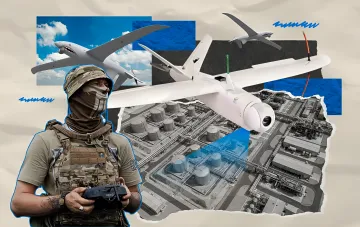
When unmanned technologies in an armed conflict are discussed, public and donor attention is almost always riveted on spectacular strike systems and interceptors. A striking video of a downed enemy object easily translates into fundraising, while the work of a reconnaissance drone remains invisible: there is no bright moment, the result cannot always be captured on camera, and the value of the information obtained onboard becomes obvious only in retrospect. This is precisely why, according to Kyrylo Lyukov, head of unmanned technologies at the Serhiy Prytula Foundation, raising funds for reconnaissance UAVs is significantly harder than for interceptors or strike drones. Meanwhile, reconnaissance is precisely what determines whether a threat will be detected in time, a wounded fighter evacuated, an enemy advance stopped, or a target accurately engaged. A reconnaissance drone, as the expert emphasizes, is a consumable item: regardless of the board's cost, every pilot understands that after launch, the apparatus may not return, and units need regular fleet replenishments rather than a one-time transfer of equipment.
Invisible Work: From Aerial Reconnaissance to Target Designation
The basic mission of a reconnaissance UAV is aerial reconnaissance: recording a section of the terrain and plotting the received information onto the layers of combat C2 systems and situational awareness systems. However, the role of such devices is not limited to primary observation. In daily combat work, reconnaissance personnel perform reconnaissance-in-depth of previously recorded objects, confirm fire damage, and provide objective control of strike results. A number of models additionally function as repeaters and target designators for strike drones working in pairs. In essence, the reconnaissance asset simultaneously performs the functions of "eyes," communications, and coordination for the unit. Losing such an apparatus during active work means stopping several interrelated processes and putting the entire group relying on its data at risk.
Multirotor vs. Fixed-Wing: A Matter of Crew Safety
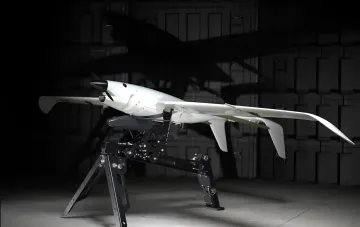
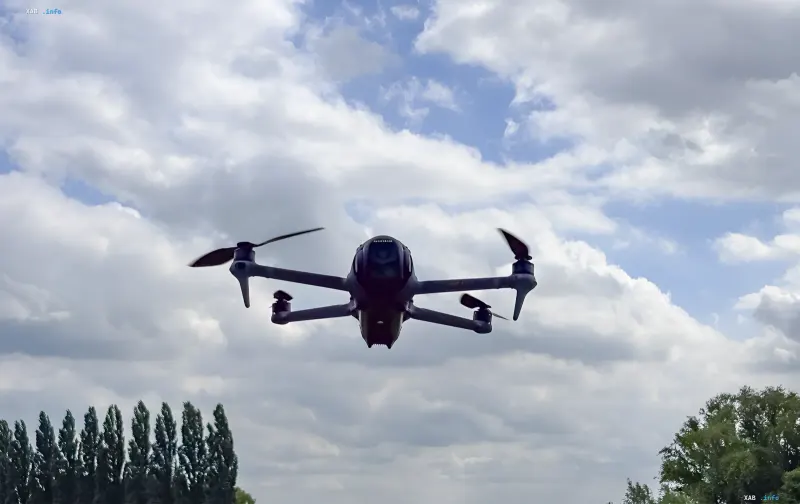
Reconnaissance UAVs are divided into multirotor and fixed-wing types. In intense combat conditions, the choice of apparatus type directly affects operator safety. Multirotor platforms—Mavic, Autel, and similar—operate within a radius of 7–15 kilometers from the contact line, and their crews are forced to stay in the so-called "kill zone," right next to the frontline. The fixed-wing type fundamentally changes the geometry of the task: the operating radius ranges from 30 to 100 kilometers and more, allowing for reconnaissance, fire correction, and recording strike results without exposing the crew to direct threat. As Lyukov notes, this is not just greater range, but a different class of tasks and a different level of safety for personnel.
The Ukrainian Drone Industry: From Early Developments to Dozens of Certified Platforms
The first systematic Ukrainian developments in the field of reconnaissance UAVs emerged back in 2014–2015. Starting in 2022, the market received a powerful forced impetus: a whole list of new manufacturers emerged, and by 2026, more than a dozen certified serial reconnaissance systems are operating in the country, which, according to experts, fully compete with Russian analogues. Among them are both long-known platforms in updated versions and entirely new solutions. In the upper segment are expensive multifunctional complexes like GOR and RayBird with an operating radius of up to 250–260 km and a working altitude of 3500–5500 m. In the lower segment are affordable mass solutions like Sokil, designed for daily tactical work at the unit level.
The Evolution of the Russian Drone: Mesh Networks, Optics, and Loitering Munitions
Over the past year and a half to two years, Russian reconnaissance UAVs have also evolved significantly. The enemy is making more active use of mesh networks and relay chains to ensure more stable communications and increase operating range. Optical sensors are being improved, allowing reconnaissance to be conducted from safer distances. According to the Ukrainian side, the greatest threat is posed by the Orlan-10 and Orlan-30 with gasoline engines and an operating radius of over 150 km. Zala and Supercam complexes, thanks to high-quality optics, operate as target designators for Lancet-type loitering munitions. In the tactical link, mass reconnaissance drones like Knyaz Veshchiy Oleg are used. The general trend recorded by Ukrainian specialists is obvious: enemy drones are becoming more complex targets and allowing the enemy to operate at greater depths.
A Multilevel System: Why a Single Platform Is Not Enough
An additional threat to Ukrainian reconnaissance crews is posed by enemy interceptor drones that deliberately hunt for unmanned aerial vehicles, primarily reconnaissance ones. The more expensive the complex, the more tangible its loss is for the unit. This does not mean abandoning expensive technological platforms—they are indispensable for tasks at long distances and significant depths. However, relying exclusively on them is impossible. According to Kyrylo Lyukov, Ukraine needs a multilevel aerial reconnaissance system in which each type of drone performs strictly defined tasks: complex and powerful complexes for operational depth, and affordable fixed-wing drones for daily tactical tasks that can be transferred to units in large quantities and regularly replenished. Only such an architecture makes it possible to simultaneously cover the tasks of reconnaissance, target designation, fire correction, and situational awareness at all levels—from tactical to operational.